
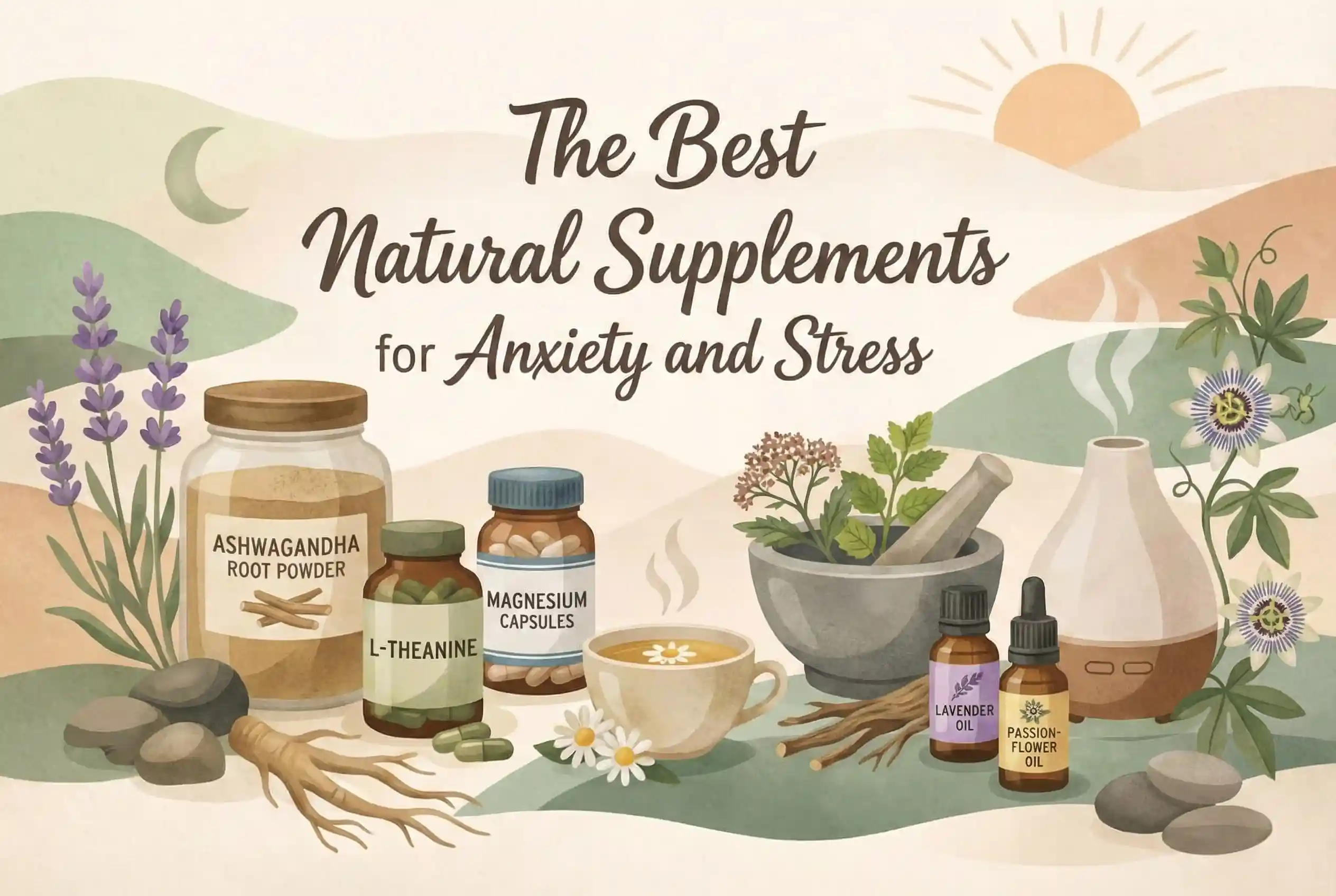
I had a client sit down in front of her laptop last month, visibly overwhelmed. She’d spent three hours researching supplements for anxiety and had fifteen tabs open on her browser. Magnesium, ashwagandha, CBD, L-theanine, B vitamins, passionflower, rhodiola, GABA… the list went on. “I just want to know what actually works,” she said. “I don’t want to waste money on things that do nothing.”
I get it. The supplement aisle is packed with promises, and online advice is contradictory at best. Everyone has a different “miracle cure” that worked for them, but that doesn’t mean it’ll work for you.
After 12 years of working with clients across Australia, I’ve seen what genuinely helps with anxiety and stress, and what’s just marketing noise. This article is about cutting through that noise and focusing on the supplements I actually prescribe, why I choose them, and what realistic expectations look like.
But first, let me be clear: supplements are one piece of the puzzle, not the whole solution.
Why Supplements Alone Won’t Fix Anxiety (The Reality Check)
This is what I tell every client in their first consultation: if your sleep is a mess, your blood sugar is all over the place, and you’re running on coffee and adrenaline, supplements won’t be the fix you’re hoping for.
The foundation has to come first. Regular meals, stable blood sugar, adequate sleep, some form of movement, and basic stress management. Without those basics in place, supplements are just expensive Band-Aids.
That said, when the foundations are reasonably solid (or we’re working on them), the right supplements can make a genuine difference. They can help you feel calmer, sleep better, and cope more effectively with daily stress. They just can’t do it alone.
Before I recommend anything, I’m looking at:
- How long anxiety has been present
- Sleep quality and patterns
- Energy levels throughout the day
- Digestive symptoms
- Medication history
- What’s already been tried
This helps me avoid the guesswork and choose supplements that actually suit your situation.
The Supplements I Recommend Most Often (And Why)
Magnesium: The One I Prescribe Most
If I had to pick one supplement I prescribe more than any other for anxiety, it’s magnesium. And for good reason. Most Australians are running low, and low magnesium shows up as tension, restlessness, poor sleep, and that wired-but-tired feeling.
Magnesium is involved in over 300 biochemical reactions in the body, including those that regulate your nervous system and stress response. When you’re stressed, you burn through magnesium faster. When you’re low in magnesium, you feel more stressed. It’s a cycle.
Not all magnesium is created equal. The form matters enormously:
- Magnesium glycinate: My go-to for anxiety. Well absorbed, calming, doesn’t upset digestion. This is what I use most often.
- Magnesium citrate: Better for constipation alongside anxiety, but can be too loosening for some people.
- Magnesium oxide: Cheap, poorly absorbed, mostly just a laxative. I avoid it.
I typically start clients on 300-400mg of elemental magnesium glycinate in the evening. Some people notice a difference within a few days (better sleep, less muscle tension), but the full benefit usually builds over 3-4 weeks.
The muscle tension connection is real. If you’re clenching your jaw, holding tension in your shoulders, or experiencing restless legs at night, magnesium is often the first thing I reach for.
Realistic expectations? You’re not going to feel sedated or “drugged.” It’s a gentle shift towards calm. Tighter muscles relax a bit. Sleep comes more easily. The edge comes off. If you’re looking for something more immediate or intense, magnesium won’t be it, but for long-term support, it’s foundational.
If anxiety has been a constant companion and you’re looking for targeted support, you can read more about how I approach anxiety and stress in consultations.
Withania (Ashwagandha): For the Wired and Tired
Withania, commonly known as ashwagandha, is the herb I turn to when stress has been chronic and cortisol patterns are likely out of balance. It’s particularly helpful for people who are simultaneously exhausted and anxious, the classic “wired and tired” presentation.
The research on withania is solid. It’s been shown to reduce cortisol levels, improve stress resilience, and help with both anxiety and sleep quality. Clinically, I see it help people who feel like their stress response is stuck in the “on” position.
Who this actually suits:
- People with long-term, chronic stress
- Those who feel burnt out but can’t switch off
- Clients experiencing fatigue alongside anxiety
- Anyone with disrupted sleep due to an overactive mind
Who I wouldn’t use it for:
- People with very low energy and sluggishness (it can be too calming)
- Those on thyroid medication without monitoring (it can influence thyroid function)
- During pregnancy
Dosing varies, but I typically use 300-600mg of a standardised extract daily, often split between morning and evening depending on the individual. It’s not a quick fix. You’re looking at 4-6 weeks before the full benefit becomes apparent.
If you’ve been running on empty for months or years, and stress feels deeply embedded, chronic stress support might be what you need.
L-Theanine: The Calm Focus Option
L-theanine is an amino acid found in green tea, and it’s one of my favourite options for people who need to stay mentally clear while feeling calmer. It promotes relaxation without sedation, which makes it useful for daytime anxiety.
Best for:
- Racing thoughts that interfere with focus
- Performance anxiety (work presentations, exams)
- People who can’t take anything that makes them drowsy
- Those who want to reduce caffeine jitters without giving up coffee
L-theanine increases alpha brain wave activity, which is associated with a calm but alert state. It also influences GABA, serotonin, and dopamine, all of which play a role in mood and anxiety regulation.
I often suggest 200mg once or twice daily. Some people use it in the morning alongside their coffee (it takes the edge off caffeine nicely), others prefer it mid-afternoon when stress peaks.
The effect is subtle but noticeable. You won’t feel heavily relaxed, but the mental noise quiets down. It’s easier to focus, and anxiety doesn’t spike as easily.
If poor concentration is part of your anxiety picture, you might find this page on concentration difficulties helpful.
Key Takeaway:
Magnesium, withania, and L-theanine are my top three go-to supplements for anxiety because they’re well-researched, generally well-tolerated, and I’ve seen them work consistently in practice. But they work best when matched to your specific presentation, not just taken because someone online said they’re good.
B Vitamins: When Stress is Depleting Your Reserves
B vitamins are often overlooked, but they’re critical when stress has been ongoing. Chronic stress depletes B vitamins, particularly B5, B6, and B12, and when you’re running low, anxiety, fatigue, and mood symptoms get worse.
B vitamins support your adrenal glands, help produce neurotransmitters like serotonin and GABA, and play a role in energy production. If you’re stressed and exhausted, B vitamins are often part of the picture.
Active vs. synthetic forms:
I prefer activated B vitamins (methylated forms like methylcobalamin and pyridoxal-5-phosphate) because they’re easier for the body to use, especially if you have genetic variations that affect B vitamin metabolism. That said, for most people, a good quality B complex does the job.
Who needs them most:
- People experiencing stress, fatigue, and mood symptoms together
- Those with poor diet or digestive issues affecting absorption
- Anyone recovering from burnout
Dosing depends on individual needs, but a B complex taken in the morning with food is typical. I avoid high-dose B vitamins in the evening as they can interfere with sleep for some people.
If burnout feels like where you’re at, this page on burnout and exhaustion covers how I approach it.
Passionflower and Zizyphus: For Sleep-Related Anxiety
When anxiety shows up most strongly at bedtime, keeping you awake or waking you in the night with racing thoughts, I often turn to herbs like passionflower and zizyphus.
Passionflower has a long history of use for anxiety and insomnia. It works by increasing GABA activity, which has a calming effect on the nervous system. It’s gentle, non-habit forming, and particularly useful for people who can’t switch their mind off at night.
Zizyphus (jujube seed) is a traditional Chinese herb that’s calming and nourishing for the nervous system. I use it for people who are anxious, restless, and struggling with poor sleep quality.
These aren’t sleeping pills. You won’t be knocked out. But they help create the conditions for sleep by calming the nervous system and reducing the mental hyperactivity that keeps you awake.
I typically use these in combination with magnesium and adjust dosing based on response. Realistic expectations: better sleep onset, fewer middle-of-the-night wake-ups, and less morning grogginess compared to conventional sleep medications.
For more on sleep difficulties and what helps, this page covers the broader picture.
What About the Trendy Ones? (My Honest Take)
CBD Oil
CBD oil is everywhere right now, and I get asked about it regularly. The evidence for anxiety is promising but still emerging, and the reality in Australia is that regulation makes access complicated.
Legally available CBD products in Australia are low-dose, and whether they’re strong enough to have a meaningful effect is debatable. Prescription CBD is an option, but it’s expensive and requires medical oversight.
I’m not opposed to CBD, but I rarely recommend it as a first-line option. There are more accessible, better-studied supplements that I’ve seen work reliably.
5-HTP and Tryptophan
These are precursors to serotonin, so the logic is that supplementing them will boost serotonin and improve mood and anxiety. In practice, it’s not that simple.
5-HTP and tryptophan can interact with antidepressants (SSRIs in particular), and individual responses vary widely. Some people feel better, others feel worse, and it’s hard to predict.
I’m cautious with these. If serotonin is genuinely low and we’ve confirmed that through assessment, they might be appropriate, but they’re not something I hand out liberally.
Omega-3s
Fish oil gets recommended for everything, including anxiety. There’s some evidence that omega-3s (particularly EPA) can help with mood and inflammation, but I don’t lead with fish oil for anxiety.
If there’s an inflammatory component or if mood symptoms are more prominent than anxiety, I’ll include omega-3s. Quality matters enormously. Look for a product that’s tested for heavy metals and has a high EPA content.
The Combinations That Work Better Together
I rarely prescribe just one supplement. Anxiety is complex, and combining supplements often gives better results than using one in isolation.
Example protocols I’ve used:
Anxious and wired:
- Magnesium glycinate (evening)
- L-theanine (morning and afternoon)
- Withania (morning)
Anxious and exhausted:
- Magnesium glycinate (evening)
- Withania (morning and evening)
- B complex (morning)
Panic-prone with poor sleep:
- Magnesium glycinate (evening)
- Passionflower (evening)
- L-theanine (as needed during the day)
Timing matters. Some supplements work better in the morning (B vitamins, sometimes withania), others in the evening (magnesium, passionflower). Getting the timing right makes a difference to how well they work and whether they interfere with sleep.
What Makes the Difference Between Success and Wasted Money
Quality Matters (But Not the Way You Think)
There’s a lot of noise about practitioner-only supplements being superior to what you can buy at the pharmacy or online. The truth is more nuanced.
Practitioner-only brands often have better quality control, standardised extracts, and therapeutic dosing. But there are also good quality products available through pharmacies and reputable online retailers.
What I look for:
- TGA listing (Australian Therapeutic Goods Administration approval)
- Standardised extracts for herbs (consistent active ingredient levels)
- Third-party testing for purity and potency
- Appropriate dosing (not underdosed to save money)
You don’t need to spend a fortune, but the cheapest option is rarely the best. If you’re going to invest in supplements, invest in quality.
If you want to understand more about how I work with clients, including supplement selection, this page outlines the process.
Testing Before Supplementing
Sometimes I recommend testing before supplementing. If I suspect thyroid dysfunction, nutrient deficiencies, or cortisol imbalances, pathology gives us a clearer picture and means we’re not just guessing.
When I order testing:
- Long-term anxiety with fatigue (thyroid, cortisol, nutrients)
- Suspected nutrient deficiencies (iron, B12, vitamin D, magnesium)
- To monitor response to treatment
Testing isn’t always necessary, but when it is, it changes the plan significantly. We’re targeting the actual problem rather than throwing supplements at symptoms.
For more on the functional testing I use, this page covers the options.
Dosing Appropriately
Just because something is natural doesn’t mean you can take as much as you want. More is not always better, and in some cases, it’s worse.
I start with lower doses and adjust based on response. This minimises side effects and helps us figure out the minimum effective dose, which is better for your body and your budget.
Duration matters too. Some supplements work quickly (magnesium for muscle tension, L-theanine for acute anxiety), but most need 4-8 weeks before you can properly assess effectiveness.
Important Reminder:
Supplements are tools, not magic. They work best when combined with foundational lifestyle changes like stable blood sugar, adequate sleep, and stress management practices. They’re not a substitute for addressing the root cause, but they can absolutely help you feel better while you’re working on the bigger picture.
Red Flags and When to Stop
Not everything works for everyone, and sometimes supplements cause problems.
Side effects people dismiss but shouldn’t:
- Digestive upset that doesn’t settle after a week
- Increased anxiety or agitation
- Sleep disturbances (waking more, vivid dreams)
- Headaches or dizziness
If something isn’t sitting right, stop taking it. Natural doesn’t mean risk-free.
Medication interactions I watch for:
- Antidepressants (especially with 5-HTP, St John’s Wort)
- Blood thinners (fish oil, some herbs)
- Blood pressure medication (withania, magnesium)
- Thyroid medication (withania, iodine)
Always tell your GP and any specialists what supplements you’re taking. Always.
When supplements mask a bigger issue:
If anxiety is severe, unrelenting, or interfering significantly with daily life, you need more than natural support. Please speak with your GP or a psychologist. Supplements are helpful for mild to moderate anxiety, but they’re not a replacement for mental health care when it’s needed.
What I Wish More People Knew
Supplements work best alongside lifestyle foundations. If you’re sleeping four hours a night, skipping meals, and living in chronic overwhelm, supplements will only get you so far. Address the basics first.
Individual variation is real. Your friend’s miracle cure might do nothing for you. We all respond differently based on genetics, gut health, stress levels, diet, and a dozen other factors. What works for someone else is a starting point, not a guarantee.
The 6-8 week rule. Most supplements need time to build in your system and create noticeable change. Patience is required. If something hasn’t worked after 8 weeks at a therapeutic dose, it’s probably not the right fit.
This isn’t about perfection. You don’t need to do everything perfectly. You just need to find what helps enough that life feels more manageable. That’s the goal.
Next Steps
In a consultation, we’d start by looking at your full picture: how anxiety shows up for you, what’s happening with sleep and energy, your stress triggers, what you’ve already tried, and what your goals are.
From there, I’d suggest a targeted plan that might include supplements, but also dietary adjustments, lifestyle strategies, and possibly testing if needed. The plan is specific to you, not a generic protocol.
I don’t recommend the same stack to everyone because everyone’s different. What you need depends on your symptoms, your history, and what’s going on underneath the surface.
If you’re tired of guessing and want a plan that actually makes sense for your situation, book a consultation and we’ll figure it out together.
Final Thoughts
I know how overwhelming this all feels. You’re reading articles, comparing supplements, trying to figure out what’s safe, what’s effective, and what’s just marketing hype. It’s exhausting.
The good news is that there are effective natural options for anxiety and stress. Magnesium, withania, L-theanine, B vitamins, and calming herbs like passionflower all have their place. The key is choosing them thoughtfully, using them at appropriate doses, and combining them with the lifestyle foundations that make everything work better.
Supplements are tools, not magic fixes. And honestly, that’s good news. It means you have some control. It means small, consistent changes add up. And it means you don’t have to do this perfectly to feel better.
If you’re ready to stop guessing and start getting real support, I’m here to help.