A client sat across from me recently, laptop open, showing me her supplement shelf through the video call. Twelve different bottles. All marketed for PCOS. Her skin? Still breaking out every month like clockwork.
“I’ve tried everything,” she said, frustrated. “Inositol, spearmint, chasteberry, berberine, some hormone balance powder I found on Instagram. Nothing’s touched the acne.”
This happens more often than you’d think. The supplement industry loves to lump “PCOS” into one category, but here’s the reality: PCOS acne has specific drivers, and not every PCOS supplement targets them. You can support ovulation, balance insulin, and improve your cycle while your skin stays exactly the same.
After 12 years of working with clients Australia-wide, I’ve learned which supplements actually shift hormonal acne and which ones are just expensive placeholders. This article breaks down what works, what doesn’t, and how to figure out what your skin actually needs.
Why PCOS Acne Is Different (And Why Generic Protocols Often Miss)
PCOS acne isn’t just “hormonal acne.” It’s driven by specific mechanisms: androgen excess (particularly DHT), chronic inflammation, and insulin resistance. But here’s the catch: not everyone has all three operating at the same level.
Some clients have sky-high insulin driving androgen production. Others have normal insulin but elevated free testosterone. Some have gut inflammation amplifying everything. And plenty have a combination.
The mistake I see constantly: grabbing the most popular PCOS supplement without understanding which pathway is actually dominant for you. Inositol might help your ovulation but do nothing for your skin if inflammation is the real driver. Spearmint might nudge testosterone down slightly, but if insulin resistance is cranking out androgens faster than spearmint can touch them, you’re not going to see results.
What I look for first is which mechanism needs the most support. You can’t supplement effectively without knowing what you’re targeting.
If you’ve been trying random supplements without improvement, this article on why PCOS acne isn’t responding goes deeper into the diagnostic side.
The Supplements That Actually Target Hormonal Acne Mechanisms
Let me be clear: I’m not going to list every supplement that’s ever been mentioned in the same sentence as “PCOS.” I’m walking you through the ones I use most often in practice because they target the actual mechanisms behind hormonal acne.
1. Zinc (Glycinate or Picolinate)
This is my go-to for almost every client with PCOS acne. Zinc works on multiple fronts: it reduces 5-alpha reductase (the enzyme that converts testosterone into the more potent DHT), it supports skin healing, and it dampens inflammation.
Dose range: 30-50mg elemental zinc daily, always with food to avoid nausea.
I typically use zinc glycinate or picolinate because they’re better absorbed and gentler on the stomach. The cheap zinc oxide or sulfate forms you find in retail multivitamins? Much less effective.
What to watch: long-term high-dose zinc (above 50mg daily for months) can deplete copper, so if you’re supplementing for an extended period, I either add a small amount of copper or monitor levels. Also, if you take it on an empty stomach, expect digestive upset.
Real client example: A 29-year-old with cystic jawline acne started on 40mg zinc glycinate daily along with dietary changes to address insulin. Within six weeks, new breakouts were noticeably less inflamed. By twelve weeks, she was getting maybe two small spots per cycle instead of ten angry cysts.
2. NAC (N-Acetyl Cysteine)
NAC is one of those quiet workhorses that doesn’t get enough credit. It improves insulin sensitivity, reduces oxidative stress, and supports the liver’s ability to clear excess androgens.
Dose: 600mg twice daily, usually morning and early afternoon.
What I’ve noticed clinically: NAC works particularly well for clients who have both acne and signs of insulin resistance (irregular cycles, difficulty losing weight, elevated fasting glucose or insulin). It’s not as directly skin-focused as zinc, but it addresses one of the upstream drivers.
One caution: some people find NAC slightly stimulating, so I don’t recommend taking it late in the day if you’re sensitive to that.
3. Vitamin A (Retinyl Palmitate)
Vitamin A regulates sebum production, supports healthy skin cell turnover, and modulates the immune response in your skin. It’s not a megadose approach (we’re not talking Accutane levels here), but therapeutic doses can make a real difference.
Dose: 3,000-5,000 IU daily from retinyl palmitate (the preformed version).
This is most useful for clients with very oily skin, cystic acne, or poor wound healing. I also see it help when someone’s skin just seems “stuck” and not turning over properly.
Important safety note: Vitamin A is teratogenic in high doses, meaning it can cause birth defects. If you’re pregnant or actively trying to conceive, this is one to skip entirely. For everyone else at these doses, it’s generally safe, but it’s worth mentioning to any healthcare provider you’re working with.
Key Points: Core Acne-Targeting Supplements
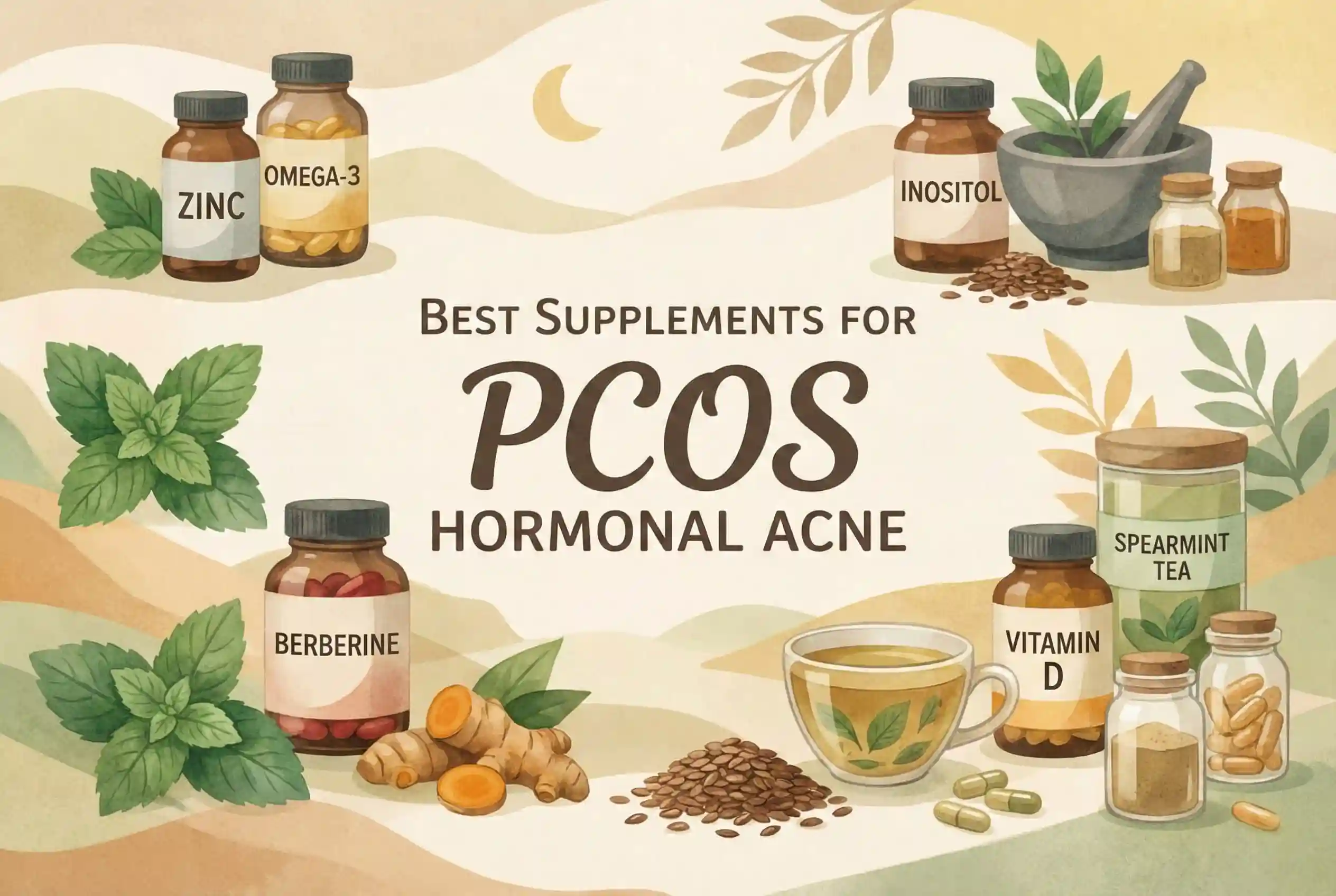
- Zinc (30-50mg daily): Reduces DHT production, supports healing, dampens inflammation
- NAC (600mg twice daily): Improves insulin sensitivity, supports androgen clearance
- Vitamin A (3,000-5,000 IU daily): Regulates sebum, supports skin turnover (avoid if pregnant/trying to conceive)
- Omega-3s (2-3g daily, high EPA): Reduces inflammatory pathways in skin
- Berberine (500mg 2-3x daily): For insulin-driven PCOS acne specifically
4. Omega-3 Fatty Acids (High EPA)
Omega-3s reduce the inflammatory pathways that make acne angrier and more persistent. They also have some modulatory effects on androgen activity, though that’s not their primary mechanism here.
Dose: 2-3g combined EPA/DHA daily. I prefer formulas with a higher EPA ratio when targeting acne specifically.
Quality matters here. Practitioner-grade fish oil is worth the extra cost because you’re avoiding oxidation (rancid fish oil can actually increase inflammation) and ensuring you’re getting what the label says.
What clients notice: breakouts become less red, less painful, and less inflamed. You might not see fewer total spots initially, but the ones you do get are much less dramatic.
5. Berberine (For Insulin-Driven PCOS Acne)
Berberine improves insulin sensitivity and, as a result, reduces the androgen production that gets triggered by insulin spikes. This is a targeted tool, not something I use for every case of PCOS acne.
Dose: 500mg two to three times daily with meals.
Who benefits most: Clients with clear signs of insulin resistance (elevated fasting glucose or insulin, android fat distribution, difficulty losing weight, constant sugar cravings). If insulin isn’t part of your picture, berberine probably isn’t your best choice.
Side effects: digestive upset is common initially. I start clients at 500mg once daily and build up slowly over a couple of weeks.
If you’re dealing with both insulin resistance and elevated cortisol (common combination), this article on cortisol and weight connects some of those dots.
6. DIM (Diindolylmethane)
DIM supports estrogen metabolism and may help reduce testosterone activity. It’s derived from cruciferous vegetables and works by promoting the breakdown of estrogen into less problematic metabolites.
Dose: 100-200mg daily.
I’ll be honest: DIM is more hit-and-miss than the others on this list. It works better when estrogen dominance is part of the clinical picture (heavy periods, breast tenderness, mood swings in the luteal phase alongside acne).
When I skip it: If someone’s already low in estrogen, has very dry skin, or is experiencing perimenopausal symptoms. DIM can sometimes push estrogen too low in those cases, which creates different problems.
The “PCOS Supplements” That Don’t Directly Fix Acne (But Might Still Help)
Let’s talk about the supplements everyone recommends for PCOS that don’t actually target acne mechanisms directly. That doesn’t mean they’re useless, it just means they’re not the right tool for this specific job.
Inositol (Myo + D-Chiro)
Inositol improves insulin sensitivity and supports ovulation. It’s genuinely helpful for the metabolic side of PCOS and for restoring regular cycles.
But here’s the thing: it doesn’t directly reduce androgens at the skin level. It might help the overall metabolic picture, which indirectly improves acne over time, but it’s not an acne-specific intervention.
When I still use it: As foundational support, especially if cycles are irregular or absent. I just don’t expect it to be the thing that clears the skin on its own.
If you’re dealing with PCOS more broadly, inositol is often part of the plan. Just not the only part.
Spearmint Tea/Extract
The research on spearmint shows it can reduce free testosterone levels. The catch? The effect is subtle, it takes at least three months to see any change, and it’s not a standalone solution.
My clinical experience: I’ve had a handful of clients notice a mild improvement with spearmint, usually in combination with other interventions. I’ve also had plenty who saw no change at all.
If you want to try it, go ahead (it’s low risk), but don’t expect it to be the miracle everyone claims it is.
What I Don’t Recommend (And Why)
Not every supplement marketed for hormones or PCOS is helpful for acne. Some can actually make things worse.
Vitex (Chasteberry): Can worsen androgen-driven acne in certain PCOS presentations. Vitex works by increasing progesterone, but in some people, that can inadvertently increase androgens as well. I’ve seen too many clients break out worse on Vitex to recommend it casually.
Saw Palmetto: Limited evidence for acne specifically, and better options available (like zinc, which does the same job more reliably).
Random “hormone balance” blends: Usually underdosed, scattergun approach. You’re paying for ten ingredients when maybe two are useful and none are at therapeutic levels.
Topical supplements without internal work: I don’t care how good your topical vitamin C serum is, acne is an inside-out problem. Skincare can support healing, but it won’t fix the hormonal drivers.
The Bigger Picture: Supplements Are Just One Piece
I could give you the most perfectly targeted supplement protocol in the world, and if your gut is a mess, you’re eating inflammatory foods constantly, and you’re chronically stressed, your skin won’t budge.
Gut health matters. I see better and faster results when we address SIBO, dysbiosis, or leaky gut first. If your gut lining is permeable and inflammation is pouring into your bloodstream, no amount of zinc is going to override that.
Diet still drives the bus. You can’t supplement your way out of a high-sugar, high-processed-food diet. Insulin spikes from diet will outpace any supplement trying to improve insulin sensitivity.
Testing helps. Knowing your androgen levels (total and free testosterone, DHEA-S), insulin, HbA1c, and inflammatory markers (like CRP) guides supplement choice. You’re not guessing, you’re targeting.
If gut issues are part of your picture, these articles go deeper:
- Best Supplements for Leaky Gut and Food Intolerances
- Complete Microbiome Mapping vs Standard Stool Test
How I Build a Supplement Plan for PCOS Acne (Real Process)
Here’s how I actually approach this in consultations, step by step.
Step 1: Identify the primary driver. Is it insulin resistance, chronic inflammation, or androgen excess at the forehead? Sometimes it’s obvious from symptoms and history. Sometimes we need testing to confirm.
Step 2: Start with 2-3 targeted supplements. Not ten. I typically start with zinc and omega-3s as a baseline, then add one more based on what’s driving things (NAC for insulin, vitamin A for very oily/cystic skin, berberine if insulin is clearly elevated).
Step 3: Give it 8-12 weeks before adding or changing anything. Skin takes time. Cell turnover is roughly 28 days, and you need several cycles of that to see real change. Changing supplements every three weeks because you’re not seeing results yet is just guessing in the dark.
Step 4: Adjust based on what’s shifting. I’m tracking more than just acne. Are cycles becoming more regular? Is energy improving? Is digestion settling? Those signs tell me we’re on the right track even if the skin is still catching up.
Realistic Timeline for PCOS Acne Improvement
- 4-6 weeks: Less inflammation, existing breakouts healing faster
- 8-12 weeks: Fewer new breakouts forming, less oil production
- 3-6 months: Noticeable reduction in frequency and severity, post-inflammatory marks starting to fade
If nothing has shifted after 12 weeks, we’re missing something (often gut-related or stress-driven).
When to Expect Results (Reality Check)
Let’s set realistic expectations, because this is where a lot of people give up too early.
Skin cell turnover: 4-6 weeks minimum before you’ll see visible change. The breakouts you’re dealing with this week were forming weeks ago. Supplements won’t reverse those immediately.
Hormonal shifts: It takes 2-3 full menstrual cycles to see pattern changes. One good month doesn’t mean you’re fixed. One bad month doesn’t mean nothing’s working.
What good progress looks like: Less inflammation first (breakouts are smaller, less red, less painful). Then fewer new breakouts forming. Then gradual fading of post-inflammatory marks. It’s incremental, not overnight.
Red flags: If absolutely nothing has shifted after 12 weeks, something’s being missed. Usually it’s gut-related (unaddressed SIBO, dysbiosis, food intolerances) or stress-related (chronic high cortisol overriding everything else).
Working With a Practitioner vs Going Solo
Some supplements are low-risk enough to try on your own. Others need more careful monitoring.
What you can try on your own: Zinc (at moderate doses), omega-3s, possibly NAC if you’re confident insulin is part of the picture. These are broad-benefit supplements with relatively low risk of side effects at standard doses.
When to get support: If you’ve tried multiple supplements for three months or longer without any improvement. If you’re not sure what’s actually driving your acne. If you have multiple health issues layered on top of PCOS (gut problems, thyroid dysfunction, chronic fatigue). If you’re taking medications and want to avoid interactions.
What I do differently in consultations: Functional testing to identify specific drivers. Individualised dosing based on your symptoms, history, and test results. Monitoring for interactions, side effects, or signs that we need to pivot. Addressing the layers beyond supplements (gut health, nervous system regulation, dietary patterns, lifestyle factors).
You can book a consultation here if you want that level of support.
Conclusion: Target the Mechanism, Not the Label
PCOS acne responds when supplements target the specific mechanism driving it: insulin resistance, inflammation, or androgen excess. Sometimes all three, sometimes just one or two.
The core supplements I use most often are zinc, NAC, omega-3s, and vitamin A (with berberine added if insulin resistance is clearly part of the picture). These aren’t random picks from a “best PCOS supplements” listicle. They’re chosen because they address the pathways that actually create hormonal acne.
But here’s the reality: supplements work best as part of a broader approach. Gut health, diet, stress management, and appropriate skincare all matter. If you’re only addressing one piece, you’re going to see limited results.
If your current supplement routine isn’t shifting things after a solid 12 weeks, it’s worth digging deeper into what’s actually driving your breakouts. Sometimes the answer isn’t more supplements, it’s finding the underlying issue that’s been amplifying everything else.