You’re three weeks past the worst of the flu, but you’re still exhausted by 2pm. Or you’ve “recovered” from COVID, yet that cough lingers and you’re catching every cold your kids bring home. Maybe you finally shook off glandular fever months ago, but your energy never quite came back.
I hear this story constantly in consultations. You visit your GP, get told “it just takes time,” and leave feeling frustrated because your body clearly needs something to help it along. After 12 years of supporting clients through post-viral recovery, particularly in the past few years with COVID-19, I’ve learned what actually moves the needle and what’s just expensive placebo.
Here’s what I want you to understand upfront: supplements can genuinely support your recovery, but they’re not magic bullets. They work best alongside proper rest, good nutrition, and realistic expectations about timeframes.
In this article, I’ll share the supplements I actually recommend in practice, why they work, how to use them properly, and just as importantly, what you can skip.
What Post-Viral Recovery Actually Looks Like
Let me be clear about something: post-viral recovery is different from fighting the active infection. During acute illness, your immune system is in full battle mode. During recovery, it’s trying to restore balance while repairing tissue damage and clearing inflammatory debris.
Common lingering symptoms I see include:
- Persistent fatigue that doesn’t respond to rest
- Brain fog and poor concentration
- Exercise intolerance (feeling worse after physical activity)
- Catching every infection going around
- Lingering cough or respiratory symptoms
- Sleep disruption despite being exhausted
Your immune system often stays “switched on” even after the virus clears. This ongoing inflammation is part of why you feel so worn down. It’s also why generic “immune boosters” often miss the mark—you don’t need to stimulate an already overactive system.
Timeline reality check: Most people expect to bounce back within a week or two. In practice, meaningful recovery from a significant viral infection often takes 4-12 weeks, sometimes longer. This isn’t failure on your part. It’s your body doing complex repair work.
When to seek medical review: If symptoms worsen, new symptoms emerge, you develop breathing difficulties, or you see no improvement after 8-12 weeks of appropriate support, insist on further investigation. Post-viral recovery is real, but so are complications that need medical attention.
Key Points: Post-Viral Recovery
- Recovery phase is different from acute infection – your immune system needs rebalancing, not boosting
- Common symptoms persist for weeks to months – fatigue, brain fog, exercise intolerance, frequent infections
- Realistic timeframes matter – expect 4-12 weeks for meaningful improvement, not days
- Medical review is essential if symptoms worsen or fail to improve over 8-12 weeks
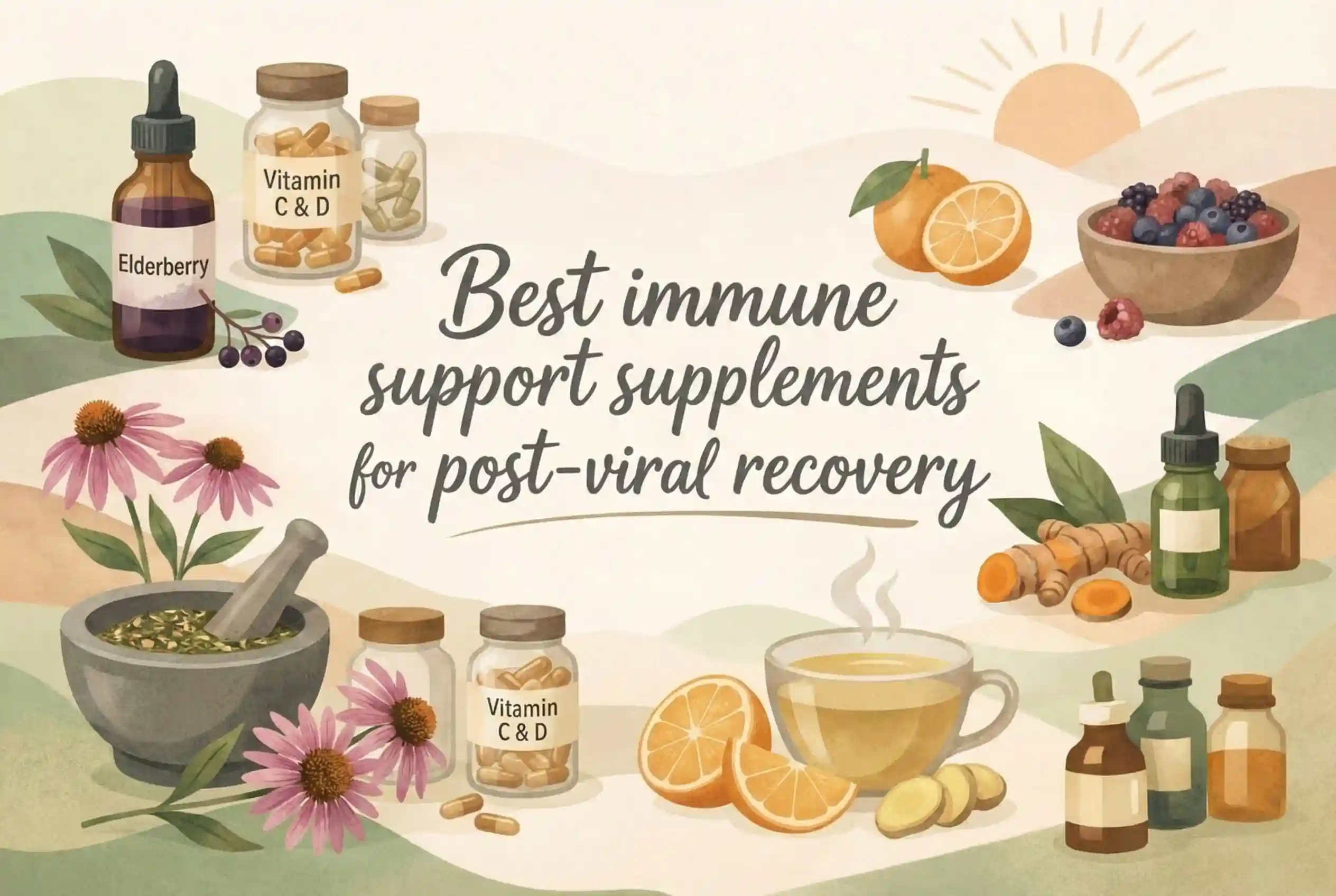
The Core Four: Supplements I Reach for First
These are my go-to recommendations for most people recovering from viral infections. They have solid evidence, clear mechanisms of action, and I’ve seen them work consistently in practice.
Vitamin C (But Not the Way You Think)
I’m not going to tell you to megadose vitamin C. Despite the hype, taking 10+ grams daily rarely makes sense for most people and often just gives you expensive urine and digestive upset.
What vitamin C does do during recovery is support immune cell function, act as an antioxidant to reduce inflammatory damage, and assist with tissue repair. Your immune cells use vitamin C rapidly during infection and recovery, which is why supplementation makes sense during this period.
My typical recommendation: 1-2 grams daily, split into two doses (500mg-1g twice daily). I usually suggest buffered vitamin C (calcium or sodium ascorbate) rather than straight ascorbic acid, as it’s gentler on the digestive system and less likely to cause reflux or upset stomach.
Duration matters. I’ll usually continue vitamin C supplementation for 4-8 weeks during active recovery, then reassess. Once you’re feeling genuinely better, you can often stop without issues.
Food sources complement supplementation: Citrus fruits, bell peppers, kiwifruit, strawberries, and broccoli all contribute. I’m not suggesting supplements replace food, but during recovery, you’re unlikely to get enough from diet alone to support healing.
Personal observation: Some clients respond noticeably to vitamin C supplementation (better energy, faster symptom resolution) while others see minimal difference. This often correlates with their baseline vitamin C status, which isn’t something we routinely test but can influence significantly by diet and stress levels.
Zinc (With Important Caveats)
Zinc is crucial for immune function and has direct antiviral effects. Your immune cells need zinc to function properly, and deficiency (which is more common than you’d think) significantly impairs your ability to fight and recover from infections.
The dosing sweet spot: 30-40mg of elemental zinc daily during recovery. This is enough to support immune function without causing problems. I’ll use this dose for 4-6 weeks, then either stop or reduce to a maintenance dose of 15mg if ongoing support seems warranted.
Here’s what many people don’t realize: high-dose zinc long-term causes copper deficiency. Zinc and copper compete for absorption, so prolonged zinc supplementation without copper consideration creates new problems. This is why I don’t recommend long-term high-dose zinc supplementation.
Timing matters too. Take zinc with food to minimize nausea, and separate it from calcium, iron, or high-fiber meals by a couple of hours for better absorption.
Signs you might already have adequate zinc: Strong appetite, good taste and smell function, healthy skin and nails, no frequent infections outside this recovery period. If these all apply, you might not need zinc supplementation.
Looking for more comprehensive immune support? I work with clients to identify and address their specific needs.
Vitamin D (Testing First, Then Supplementing)
I’m putting this bluntly: I always check vitamin D levels before supplementing. Always. It’s one of the few nutrients where testing is affordable, accessible, and actually changes what I recommend.
Why? Because vitamin D deficiency significantly impairs immune function and recovery from infections, but so does excessive vitamin D supplementation. The dose needed varies dramatically between individuals based on their starting level, body weight, genetics, and sun exposure.
In Australia, vitamin D deficiency is surprisingly common despite our sunny climate. Office work, sun protection practices, darker skin tones, and winter months all contribute. I’ve seen profound deficiency in clients who spend minimal time outdoors, even in Perth.
Typical dosing based on testing:
- Deficient (under 50 nmol/L): 4,000-5,000 IU daily for 8-12 weeks, then retest
- Insufficient (50-75 nmol/L): 2,000-3,000 IU daily for 8-12 weeks, then retest
- Adequate (75+ nmol/L): Maintenance of 1,000 IU daily or addressing the underlying cause of why you’re not maintaining levels
How long until you see improvement? Vitamin D levels increase relatively quickly (you’ll see blood level changes within weeks), but the functional improvements in energy and immune resilience often take 6-8 weeks to become noticeable.
Important: Vitamin D is fat-soluble, so take it with food containing some fat for proper absorption. It also requires magnesium to function properly, which is why I often recommend magnesium alongside vitamin D supplementation.
Medicinal Mushrooms (My Go-To for Immune Modulation)
This might surprise you, but medicinal mushrooms are often my first choice for immune support during post-viral recovery. Not because they’re trendy, but because they do something most “immune boosters” don’t: they modulate rather than simply stimulate.
During post-viral recovery, your immune system is often dysregulated, stuck in an inflammatory state. Stimulating it further can make things worse. Medicinal mushrooms help restore balance.
Reishi is my primary choice for calming overactive immune responses. It has anti-inflammatory properties, supports stress adaptation, and helps with the sleep disruption that’s so common during recovery. I typically use 1-2 grams of quality extract daily.
Cordyceps comes into play when energy and stamina are major issues. It supports mitochondrial function, improves oxygen utilization, and helps with exercise tolerance. This makes it particularly useful when you’re trying to gradually return to normal activity levels.
What to look for in mushroom extracts: Dual extraction (hot water and alcohol) to capture both polysaccharides and triterpenes, standardized beta-glucan content, and ideally organic cultivation. Cheap mushroom powders that aren’t extracted properly won’t give you the therapeutic compounds you’re after.
Realistic expectations: Medicinal mushrooms create subtle shifts over weeks, not instant energy boosts. I usually continue them for 8-12 weeks during recovery, sometimes longer for complex cases.
Who should avoid them: Anyone on immunosuppressant medications, those with autoimmune conditions (unless working with a practitioner), or people with mushroom allergies. Always check interactions with your medications.
Core Supplement Summary
Vitamin C: 1-2g daily split doses, buffered form, 4-8 weeks
Zinc: 30-40mg daily with food, 4-6 weeks maximum at this dose
Vitamin D: Test first, dose based on results, retest after 8-12 weeks
Medicinal Mushrooms: Reishi 1-2g or Cordyceps 1-2g daily, extracted forms, 8-12 weeks
The Support Players: When to Add These
Beyond the core four, there are additional supplements I reach for in specific situations. These aren’t necessary for everyone, but when indicated, they can significantly support recovery.
Probiotics (Not Always Necessary, But Sometimes Game-Changing)
Your gut health matters enormously during post-viral recovery. About 70% of your immune system is associated with your gut, and many viral infections (particularly COVID-19) directly impact gut function. Add in antibiotics if bacterial complications occurred, and you’ve got potential gut disruption affecting your recovery.
I don’t automatically recommend probiotics for everyone recovering from viral infections. But I do consider them when:
- Antibiotics were part of treatment
- Digestive symptoms emerged during or after infection
- Previous history of gut issues
- Repeated infections suggesting immune dysfunction
Specific strains I look for: Lactobacillus plantarum for immune modulation and gut barrier support, Bifidobacterium lactis for inflammatory balance, and Saccharomyces boulardii if antibiotics were involved or ongoing digestive upset exists.
Duration and dosing: I typically use a quality multi-strain probiotic at 20-50 billion CFU daily for 6-8 weeks, sometimes longer if gut issues persist. This isn’t forever—once gut function stabilizes, most people can maintain it through fermented foods and fiber intake.
Need more support for digestive health? Gut function impacts far more than just digestion.
B Vitamins (Especially After Stress on the System)
Viral infections are profoundly stressful to your body, and stress depletes B vitamins rapidly. B vitamins are essential for energy production, nervous system function, and managing the inflammatory response. They’re water-soluble, so you don’t store them well, making depletion easy during illness.
Signs you might benefit from B vitamin supplementation:
- Persistent fatigue despite adequate rest
- Brain fog and poor concentration
- Mood changes (irritability, low mood, anxiety)
- Tingling or numbness (B12 deficiency)
- Cracks at the corners of your mouth (B2 deficiency)
I usually recommend a B complex rather than individual B vitamins, as they work synergistically. The exception is B12—if deficiency is confirmed via testing, specific B12 supplementation makes sense.
Active forms vs. synthetic: For most people, a quality B complex with mixed forms works fine. If you have MTHFR gene variations or notice synthetic B vitamins don’t help, active forms (methylfolate instead of folic acid, methylcobalamin instead of cyanocobalamin) may work better.
Typical dosing: A B complex providing 25-50mg of B vitamins (except B12 and folate, which are measured differently) once daily, usually in the morning as B vitamins can interfere with sleep if taken evening. Duration of 4-8 weeks during active recovery, then reassess.
Quercetin (The Supplement Everyone Started Talking About)
Quercetin became popular during COVID-19, and like many trending supplements, the reality is more nuanced than the hype suggests.
What quercetin actually does: It’s a plant flavonoid with anti-inflammatory and antiviral properties. Research shows it can inhibit viral replication and reduce inflammatory signaling. Some studies suggest it may reduce severity and duration of viral infections when used appropriately.
I pair quercetin with vitamin C because they work synergistically—quercetin enhances vitamin C absorption and stability, while vitamin C helps regenerate quercetin after it’s been oxidized.
Who might benefit most: People with significant ongoing inflammation, those prone to frequent infections, or individuals recovering from respiratory viral infections specifically.
Realistic dosing: 500mg twice daily, taken with vitamin C and with food for better absorption. Duration of 4-8 weeks during recovery.
The research is promising but not definitive. I use quercetin as a support tool, not a primary intervention, and it works best as part of a comprehensive approach.
Considering functional testing to assess inflammation markers? This can help guide supplement choices more precisely.
What I Don’t Usually Recommend (And Why)
Let’s talk about what I typically skip, and why. This isn’t about these supplements being inherently bad, but about clinical priorities and cost-effectiveness.
High-Dose Everything (More Isn’t Better)
I regularly see people taking megadoses of multiple supplements simultaneously, hoping more will speed recovery. It doesn’t work that way, and often creates new problems.
The issues with aggressive supplementation:
Nutrient interactions: High-dose zinc blocks copper absorption. Excessive calcium interferes with magnesium, iron, and zinc. Large amounts of vitamin C can reduce copper status. These interactions mean you can actually create deficiencies by over-supplementing.
Absorption limits: Your body can only absorb so much at once. Beyond certain amounts, you’re literally flushing money down the toilet (or experiencing digestive upset from unabsorbed nutrients).
Liver burden: Your liver has to process everything you ingest. Excessive supplementation, particularly fat-soluble vitamins and herbs, adds unnecessary metabolic burden during a time when your body is already working hard to recover.
When aggressive supplementation makes sense: Rarely. Documented severe deficiencies, specific medical conditions, or under direct practitioner supervision. For standard post-viral recovery, moderate doses work better and safer.
“Immune Boosting” Blends (Too Vague, Often Ineffective)
Walk into any pharmacy and you’ll find shelves of “immune support” formulas. Most are a waste of money.
Why? Underdosed ingredients: These blends often contain 10-15 different ingredients, each at doses far below therapeutic levels. You’d need to take 6-8 capsules daily to get meaningful amounts, at which point you’re paying a premium for a poorly designed product.
Proprietary blends: When labels say “proprietary blend 500mg” without specifying individual ingredient amounts, assume the expensive herbs are present in tiny, ineffective amounts while cheap fillers make up the bulk.
Generic approach: Post-viral recovery isn’t one-size-fits-all. What helps someone recovering from influenza differs from what supports someone with post-COVID fatigue.
If you do choose a combination product: Look for clear labeling of individual ingredient amounts, therapeutic doses of key ingredients, and a focused formula (4-5 ingredients maximum) rather than kitchen-sink formulations.
Colloidal Silver, Olive Leaf Extract, and Other Popular Options
These show up frequently in questions, so let me address them briefly.
Colloidal silver: I don’t recommend it. The risk of argyria (permanent skin discoloration) with prolonged use, lack of strong evidence for viral infections, and better alternatives available make it an easy pass for me.
Olive leaf extract: Some antiviral and immune-modulating properties, but evidence is limited. When I have clients who’ve tried it and found benefit, I don’t discourage continued use, but it’s not my first recommendation. If considering it, look for standardized oleuropein content and use for limited periods.
I’m not saying these are useless, but my clinical reasoning prioritizes supplements with stronger evidence, clearer safety profiles, and consistent results in practice.
The Foundation: What Supplements Can’t Replace
Here’s what I need you to understand: supplements support recovery, they don’t drive it. The foundation remains the same boring basics you’ve heard before, because they actually matter most.
Sleep (Non-Negotiable)
Recovery happens during sleep. Your immune system repairs, inflammation resolves, and tissues heal while you sleep. Compromise sleep and you significantly slow recovery, regardless of how many supplements you take.
Practical tips for improving sleep during recovery:
- Prioritize sleep timing consistency over sleep duration (go to bed at the same time nightly)
- Keep your room cool (16-19°C is ideal)
- Limit screens 1-2 hours before bed, or use blue light filters
- Avoid caffeine after midday if sleep is disrupted
- Consider magnesium glycinate 300-400mg in the evening if sleep is particularly difficult
If poor sleep persists despite these measures, it may need separate attention. Sometimes ongoing sleep disruption is part of the post-viral syndrome itself and requires specific support.
Need help with energy and fatigue issues? Sleep problems often interconnect with broader energy dysregulation.
Nutrition That Actually Supports Recovery
Your body needs building blocks to heal, and supplements don’t provide calories, protein, or most nutrients in sufficient amounts.
Protein needs during healing: Your body uses significantly more protein during infection and recovery for immune function and tissue repair. I typically suggest 1.2-1.6g per kg body weight daily, spread across meals. This might be 80-120g daily for many people, higher than usual intake.
Practical sources: Eggs, fish, chicken, legumes, Greek yogurt, cottage cheese. If appetite is poor, smoothies with protein powder, bone broth, or smaller frequent meals work better than forcing large meals.
Anti-inflammatory eating patterns: Focus on colorful vegetables, omega-3 rich fish, olive oil, nuts, seeds, and berries. Minimize processed foods, excess sugar, and inflammatory fats during recovery. This isn’t about restriction—it’s about providing nutrients that support rather than hinder healing.
Hydration (boring but critical): Dehydration impairs every aspect of recovery. Aim for pale straw-colored urine. If plain water is difficult, herbal teas, broths, and water-rich foods all contribute.
Why restrictive diets during recovery often backfire: This isn’t the time for aggressive elimination diets, fasting, or very low-calorie eating. Your body needs resources to heal. Restriction adds stress and slows recovery.
Gradual Return to Activity
This is where many people sabotage their recovery. You have one good day, push hard to “catch up,” then crash for three days. This pattern of post-exertional malaise can actually prolong recovery significantly.
The pacing principle: Gradually increase activity based on how you feel the next day, not during the activity itself. If you feel worse the following day, you pushed too hard. Scale back and progress more slowly.
When to push gently vs. rest fully:
- Early recovery (first 2-4 weeks): Prioritize rest, gentle walks maximum
- Mid recovery (4-8 weeks): Gradually increase duration and intensity, but stop well before exhaustion
- Late recovery (8-12+ weeks): More normal activity, but still respecting limits
Start with 10-15 minutes of gentle walking and increase by 5-10 minutes weekly only if tolerating well. Resistance exercise can resume once cardiovascular activity is tolerated without next-day crashes.
Foundation Checklist
Sleep: 7-9 hours nightly, consistent timing, cool dark room
Protein: 1.2-1.6g per kg body weight daily, spread across meals
Hydration: Pale straw-colored urine, 2-3L fluid daily
Activity: Gradual progression based on next-day response, avoid boom-bust cycles
Anti-inflammatory diet: Colorful vegetables, omega-3 fish, minimize processed foods
How I Structure Post-Viral Recovery Plans in Practice
When clients come to me for post-viral recovery support, I don’t just hand out a supplement list. There’s a process that helps me understand what’s actually going on and what will help most.
Initial Assessment (What I Look For)
Symptom pattern and severity: Are you mildly fatigued or bedbound? Still coughing or that’s resolved? Brain fog interfering with work? The severity and pattern guide everything else.
Timeline: How long since acute infection? Recovery strategies differ at 2 weeks vs. 12 weeks post-infection. Early recovery focuses on reducing inflammation and supporting immune function. Later recovery addresses persistent dysfunction.
Other health factors: Pre-existing conditions, current medications, previous health history, and stress levels all influence recovery capacity and supplement choices.
Previous infection history: Do you always take months to recover from viruses? This suggests immune dysfunction or nutrient deficiencies that need addressing beyond just the current infection.
Want to understand how it works in more detail? My consultation process focuses on your specific situation.
Staged Approach (Not Everything at Once)
I rarely recommend starting all supplements simultaneously. Here’s a typical progression:
Week 1-2: Start with testing (vitamin D at minimum). Begin vitamin C and zinc if no contraindications. Assess baseline sleep, nutrition, and activity tolerance.
Week 2-4: Add vitamin D based on test results. Introduce medicinal mushrooms if immune dysfunction is significant. Adjust initial supplements based on response.
Week 4-6: Add probiotics if gut issues emerge or were present. Consider B vitamins if fatigue and brain fog persist despite initial support. Introduce quercetin if inflammation remains high.
Week 6-12: Continue what’s working, adjust or remove what’s not. Begin gradual reduction of supplements as recovery progresses. Focus on sustainable nutrition and lifestyle factors.
This staged approach allows us to identify what actually helps rather than throwing everything at the wall and hoping something sticks.
Monitoring Progress (What Actually Matters)
I don’t just ask “how are you feeling?” Here’s what I track:
Energy patterns: Are you less exhausted? Can you complete normal daily activities? Energy consistent or still highly variable?
Exercise tolerance: Can you walk further without next-day crashes? Return to previous activity levels? Post-exertional malaise improving?
Sleep quality: Falling asleep easier? Staying asleep better? Waking refreshed?
Cognitive function: Brain fog lifting? Concentration improving? Word recall better?
Infection frequency: Have you caught anything else since starting support? How quickly did you recover if you did?
Timeline for re-evaluation: Initial check-in at 3-4 weeks, comprehensive review at 8-12 weeks. If significant improvement isn’t occurring by 8 weeks, we need to reassess the approach or investigate further.
Ready for personalized assessment? You can book a consultation to discuss your specific recovery needs.
Red Flags: When Supplements Aren’t Enough
Post-viral recovery is real and common, but so are complications that need medical attention. Don’t let anyone, including me, dismiss worsening or severe symptoms as just needing more time.
Seek urgent medical review if:
- Symptoms are getting worse, not better, particularly after initial improvement
- New symptoms emerge that weren’t part of the original infection
- Breathing difficulties or chest pain develop or worsen
- Severe fatigue is worsening rather than gradually improving
- No improvement after 8-12 weeks of appropriate support and medical review
These could indicate post-viral complications, secondary infections, or conditions requiring specific medical treatment. Supplements support recovery from straightforward post-viral syndrome, not serious complications.
Some post-viral syndromes, particularly post-COVID conditions, can be severe and complex, requiring specialist medical input alongside supportive care. There’s no shame in escalating care when needed.
The Real Talk: What Clients Ask Me
These questions come up in almost every consultation about post-viral recovery. Here are the honest answers.
“How Long Until I Feel Better?”
I wish I could give you a definite answer, but here’s what I typically see in practice:
Early improvements (2-4 weeks): Energy slightly better, sleep improving, less frequent crashes. These are subtle shifts, not dramatic transformations.
Meaningful progress (6-8 weeks): Noticeable improvement in daily function, return to some normal activities, cognitive function clearer. You’re not fully recovered but definitely better.
Good recovery (12-16 weeks): Most symptoms resolved, return to near-normal activity levels, occasional bad days but generally functional. Some people are fully recovered by this point.
Complex cases (16+ weeks): Some people, particularly after severe infections or with multiple health factors, take longer. This doesn’t mean you won’t recover, but may require more comprehensive investigation and support.
Factors that speed recovery: Good baseline health, adequate rest, early intervention, good nutrition, minimal ongoing stress, younger age.
Factors that slow recovery: Pre-existing health conditions, poor sleep, inadequate nutrition, too early return to full activity, significant ongoing stress, multiple recent infections.
“Can I Just Take More to Speed Things Up?”
No, and here’s why that usually backfires:
Your body has specific capacities for nutrient absorption, metabolism, and utilization. Beyond these capacities, more supplementation doesn’t help recovery and often hinders it.
The stress on your system from over-supplementation: Your liver has to process everything you consume. Your kidneys have to filter excess nutrients. Your digestive system has to break down and absorb numerous pills. During recovery, when your body is already working hard to heal, this added metabolic burden can actually slow progress.
Better strategies for faster recovery: Prioritize sleep ruthlessly, eat adequate protein and anti-inflammatory foods, pace your activity appropriately, manage stress where possible, and give your body time. These drive recovery faster than any supplement protocol.
I know “be patient” is frustrating advice when you feel terrible. But trying to rush recovery through aggressive supplementation usually extends it instead.
“Why Didn’t My GP Recommend These?”
Different approaches to post-viral care, and both have value. Medical doctors focus primarily on excluding serious complications, managing severe symptoms, and treating conditions that require pharmaceutical intervention.
Complementary vs. contradictory: Naturopathic support for post-viral recovery typically complements medical care rather than contradicting it. I’m not suggesting supplements instead of necessary medical treatment—I’m suggesting they support your body’s healing alongside appropriate medical care.
Most GPs simply don’t have training in nutritional supplementation for post-viral recovery. It’s not part of standard medical education, and they’re focused on conditions requiring medical diagnosis and treatment. This doesn’t make either approach wrong—they serve different purposes.
Working alongside medical care: I always encourage clients to keep their GP informed about supplements they’re taking, particularly if on medications. Most doctors are fine with basic nutritional support during recovery, even if they wouldn’t specifically recommend it themselves.
Want to know more about my approach? I focus on evidence-informed, collaborative care that works alongside your medical support.
Practical Implementation (Making This Actually Work)
Knowing what supplements to take matters less if you can’t implement them consistently. Here’s how to make this practical.
Quality Matters (But It Doesn’t Have to Break the Bank)
Not all supplements are equal, but you don’t necessarily need the most expensive option to get good results.
What to look for in supplement quality:
- Third-party testing for purity and potency
- Clear labeling of active ingredient amounts
- Appropriate forms (buffered vitamin C, chelated minerals, extracted mushrooms)
- Manufacturing standards (GMP certified minimum)
- Absence of unnecessary fillers, colors, or binders
Practitioner-grade vs. retail: when it matters: For basic nutrients like vitamin C, zinc, and B vitamins, quality retail brands are often fine. For herbs, medicinal mushrooms, and specialty formulations, practitioner-grade products typically have better extraction methods, higher active compound concentrations, and more consistent results.
Where to compromise and where not to: You can usually find good-quality vitamin C, zinc, and vitamin D at reasonable prices from reputable retail brands. I’m less flexible on medicinal mushroom quality (cheap powders simply don’t work) and probiotic strains (specific strains matter for immune support).
Timing and Routine
The best supplement protocol is the one you’ll actually follow. Complexity kills compliance.
With food vs. away from food:
- With food: Zinc, vitamin D, quercetin, medicinal mushrooms
- Away from food: Generally unnecessary for these supplements
- Timing doesn’t matter much: Vitamin C (though some prefer splitting doses)
Morning vs. evening:
- Morning: B vitamins (can interfere with sleep if taken evening), vitamin C
- Evening: Magnesium if using for sleep support
- Either: Zinc, vitamin D, medicinal mushrooms, quercetin
Creating a sustainable routine: I suggest keeping supplements in a visible location where you’ll see them daily (kitchen counter, next to coffee maker, bathroom). Set a phone reminder for the first week until it becomes habit. Use a pill organizer if taking multiple supplements to simplify daily routine.
What to do when you forget doses: Don’t double up the next day. Just continue as normal. Missing occasional doses won’t derail your recovery. Obsessing about perfection creates stress that hinders healing more than missing a supplement dose.
Duration and Tapering
Supplements for post-viral recovery aren’t meant to be forever. Here’s how I approach reducing them.
How long to continue each supplement:
- Vitamin C: 4-8 weeks, then stop or reduce to maintenance
- Zinc: 4-6 weeks at therapeutic dose, then stop or reduce to 15mg maintenance
- Vitamin D: Ongoing if deficient, adjust dose based on retesting
- Medicinal mushrooms: 8-12 weeks, then stop or use cyclically
- Probiotics: 6-8 weeks, then stop or reduce frequency
- B vitamins: 6-8 weeks, then stop if symptoms resolved
Signs you’re ready to reduce: Sustained energy improvement, consistent sleep quality, return to normal activity without crashes, no recent infections for 4+ weeks.
Maintaining improvements after stopping: Focus on nutrient-dense whole foods, adequate protein, quality sleep, gradual activity increases, and stress management. The supplements supported your recovery, but these foundations maintain it.
I typically suggest reducing one supplement at a time every 1-2 weeks rather than stopping everything simultaneously. This allows you to identify if any particular supplement was more important for you than others.
Implementation Checklist
Purchase quality supplements from reputable brands with clear labeling
Create a routine with supplements in visible location, daily reminder if needed
Take with appropriate timing – zinc, D, quercetin, mushrooms with food; B vitamins in morning
Start staged approach – don’t begin everything simultaneously
Track your progress – energy, sleep, exercise tolerance, cognitive function
Plan for reduction after 8-12 weeks based on symptom improvement
Final Thoughts
Post-viral recovery is genuinely challenging, and you’re not imagining that you need support to bounce back. After 12 years of working with clients through this process, I’ve seen how the right supplements, at the right doses, for the right duration, can meaningfully support your body’s healing.
But here’s what I want you to remember most: supplements are one piece of the puzzle, not the whole solution. They work best when combined with adequate rest, proper nutrition, paced activity, and realistic timeframes.
The personalized approach based on your specific situation always works better than generic protocols. Your age, health history, severity of infection, timeline since infection, and individual nutrient status all influence what will help most.
Recovery isn’t linear. You’ll have good days and setback days. This is normal and doesn’t mean you’re failing or that the approach isn’t working. Gradually, the good days outnumber the bad ones, and function returns.
If you’re struggling with post-viral recovery and aren’t sure where to start, or if you’ve tried various supplements without improvement, professional guidance can help identify what’s missing. Sometimes it’s as simple as correcting a vitamin D deficiency. Other times, it requires more comprehensive assessment of immune function, nutrient status, and contributing factors.
You deserve support for your recovery. Don’t let anyone dismiss persistent symptoms as “just taking time” if you feel stuck or worsening. Trust your body’s signals and seek help when needed.
Have questions about your specific situation? You can contact me here or book a consultation to discuss your post-viral recovery needs in detail.
Key Takeaways
✓ Start with testing (especially vitamin D) rather than guessing what you need
✓ Core supplements for most people: vitamin C (1-2g daily), zinc (30-40mg for 4-6 weeks), vitamin D (dose based on testing), medicinal mushrooms (extracted forms)
✓ Add support supplements when indicated: probiotics for gut issues, B vitamins for persistent fatigue
✓ Quality and proper dosing matter more than quantity of supplements
✓ Foundation is essential: sleep, adequate protein, anti-inflammatory diet, paced activity
✓ Allow realistic timeframes: 4-12 weeks for meaningful recovery is normal
✓ Seek medical review if symptoms worsen, new symptoms emerge, or no improvement after 8-12 weeks
✓ Supplements support healing but don’t replace rest, nutrition, and appropriate activity pacing