
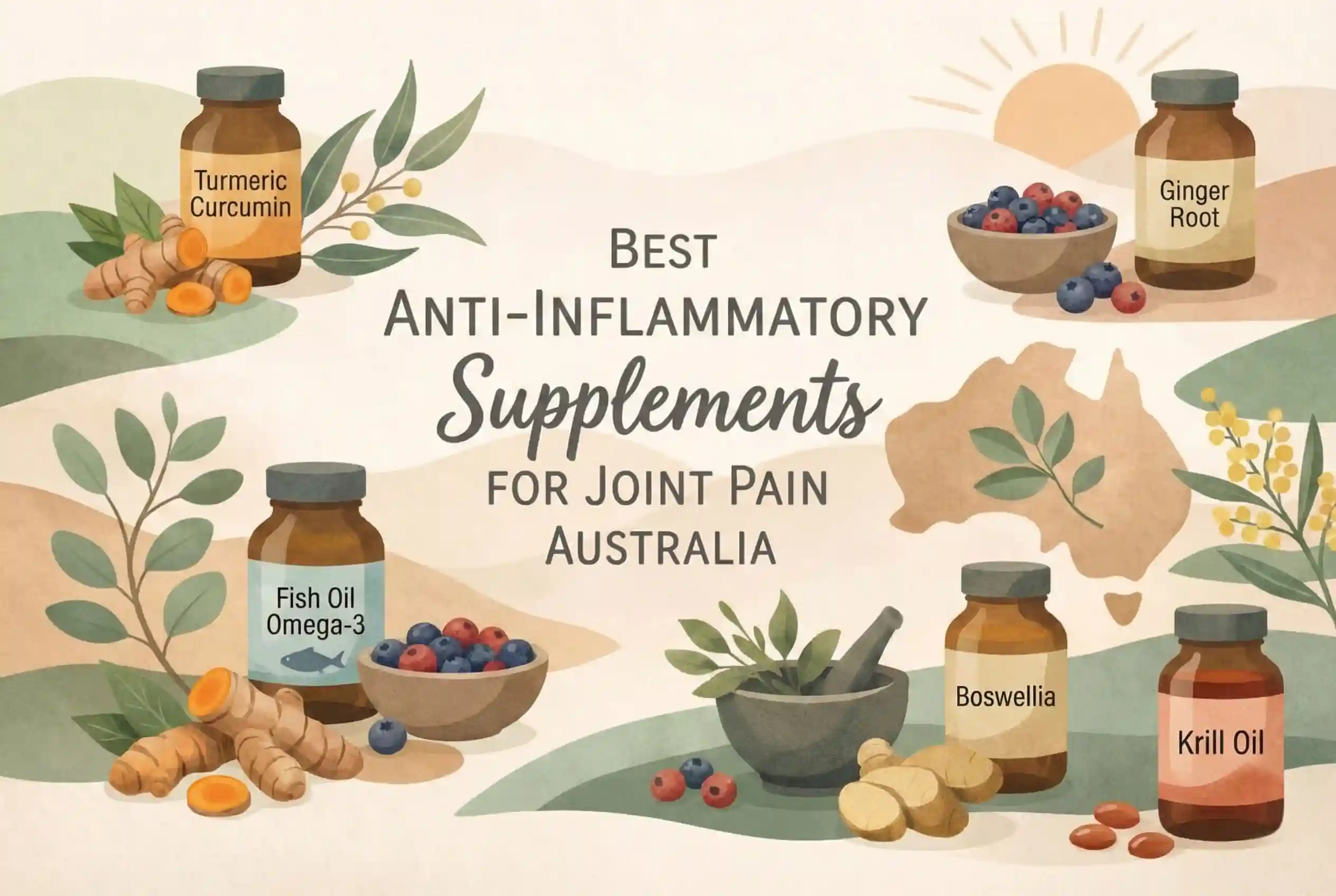
A few months ago, a client came to me with a shopping bag full of supplements. Six different products from the chemist, all promising joint relief. She’d been taking them religiously for three months. Her knees still hurt every morning.
“I don’t know what I’m doing wrong,” she said, pulling out bottles of glucosamine, turmeric tablets, collagen powder, and three others I couldn’t identify. “The reviews were good. The labels say they work. But nothing’s changed.”
This happens more often than you’d think. People spend hundreds of dollars on joint supplements, following generic advice or online reviews, without understanding what their body actually needs. The result? Cupboards full of half-used bottles and the same pain they started with.
I’ve spent 12 years helping Australian clients navigate joint pain, and I can tell you this: the right supplements absolutely can help, but only when they’re matched to your specific type of inflammation and used properly.
This isn’t a shopping list. It’s a practical guide to the supplements I actually use in clinic, why most people waste their money, and how to figure out what you genuinely need.
Why Most People Buy the Wrong Joint Supplements
Walk into any chemist and you’ll see an entire aisle dedicated to “joint health.” Glucosamine dominates the shelf space. Fish oil sits alongside collagen powder. Everything promises relief, but here’s what the labels don’t tell you: not all joint pain is the same.
There’s a massive difference between:
- Wear and tear (osteoarthritis, mechanical stress)
- Inflammatory patterns (systemic inflammation, autoimmune conditions)
- Acute injury recovery (post-trauma, surgical recovery)
What works beautifully for degenerative joint changes might do absolutely nothing for inflammatory arthritis. A supplement that supports cartilage repair won’t address the underlying inflammation driving your pain.
This is where most people get stuck. They buy based on what’s popular or what worked for their friend, without considering their own pattern. I see clients who’ve been taking glucosamine for years with zero improvement because inflammation, not cartilage loss, is their primary issue.
When Testing Actually Helps
I don’t order tests for everyone with joint pain. Sometimes the pattern is clear from your history and symptoms. But when things aren’t straightforward, or when you’ve tried multiple approaches without results, testing can save you months of guesswork.
Inflammatory markers like CRP and ESR tell us if systemic inflammation is driving your pain. Food sensitivity panels can identify triggers you’d never suspect. Comprehensive stool testing reveals gut inflammation that’s fuelling joint inflammation elsewhere.
The key is knowing when testing adds value and when it’s just expensive confirmation of what we already know.
If you’re dealing with chronic pain that isn’t responding to standard approaches, understanding the underlying drivers is crucial. You can read more about my approach to chronic pain here.
<div style=”background-color: #f8f9fa; padding: 20px; border-left: 4px solid #2c5f7c; margin: 30px 0;”>
Key Point: Personalisation Matters
Joint supplements aren’t one-size-fits-all. The supplement that transforms one person’s pain might do nothing for yours. Success comes from matching the right anti-inflammatory compounds to your specific inflammatory pattern, not from buying everything marketed for “joint health.” </div>
The Supplements I Use Most Often (And Why)
Let me walk you through the supplements I reach for most in clinic, based on what I’ve seen work consistently over 12 years. These aren’t trendy. They’re not exciting. But they’re evidence-backed and, when used correctly, genuinely effective.
Curcumin (Turmeric Extract)
You’ve probably heard that turmeric is anti-inflammatory. You’re not wrong, but here’s what most people miss: the curcumin in your average turmeric capsule is barely absorbed.
Raw turmeric powder, even at high doses, doesn’t deliver enough active curcumin to reduce inflammation significantly. You need an extract that’s been formulated for absorption. In Australia, look for:
- Meriva or BCM-95 complexes (bound to phospholipids for better uptake)
- Curcumin with piperine (black pepper extract that enhances absorption)
- Liposomal curcumin (encapsulated in fat for increased bioavailability)
Doses that actually work range from 500mg to 1000mg of curcumin extract daily, often split across two doses. Yes, that’s higher than the token 100mg you’ll find in basic supplements.
Who responds best? People with inflammatory joint patterns rather than purely mechanical wear and tear. I see the biggest shifts in clients with morning stiffness, joint warmth, and systemic inflammation markers.
Timeframe? Give it six weeks minimum. Some people notice changes in two to three weeks, but curcumin’s anti-inflammatory effects build over time.
Cautions: Can interact with blood thinners. May increase bleeding risk if you’re on anticoagulants. Always check with your GP if you’re on medication.
Fish Oil (Omega-3s)
Fish oil is everywhere, but most products on Australian shelves don’t contain nearly enough EPA and DHA to shift inflammation meaningfully.
Those 1000mg capsules? They might only contain 300mg of actual omega-3s. The rest is just fish oil filler. For anti-inflammatory effects, I typically use 2000mg to 3000mg of combined EPA and DHA daily. That usually means multiple capsules or a concentrated liquid formula.
EPA vs DHA: For inflammation specifically, EPA is the star player. Look for products with a higher EPA ratio, something around 2:1 or 3:1 EPA to DHA.
Quality matters. Australian regulations are decent, but oxidised fish oil is useless (and can smell terrible). Look for products that:
- List oxidation levels (peroxide value, TOTOX)
- Use smaller fish species (less mercury accumulation)
- Are third-party tested
- Come in dark bottles or blister packs
Reality check: Fish oil alone rarely eliminates joint pain. It’s excellent at reducing background inflammation, but if you have significant cartilage damage or acute inflammation, you’ll need more than omega-3s.
I often recommend fish oil alongside other anti-inflammatory support, particularly for cardiovascular health benefits. You can learn more about cardiovascular support here.
Boswellia (Indian Frankincense)
Boswellia doesn’t get the same press as turmeric, but it’s one of the more reliable anti-inflammatories I use in practice. The active compounds, boswellic acids, work differently to NSAIDs by inhibiting inflammatory pathways without the same gastric side effects.
Research shows it’s particularly effective for osteoarthritis and inflammatory bowel conditions. I use it most for:
- Knee osteoarthritis (strong evidence base)
- Generalised joint inflammation
- Clients who can’t tolerate NSAIDs
Typical dose: 300mg to 500mg of boswellia extract (standardised to 60-65% boswellic acids) two to three times daily.
It works well in combination with curcumin. They target different inflammatory pathways, so using both together can provide broader coverage than either alone.
Ginger Extract
Ginger is massively underrated. Most people think of it as a digestive aid or nausea remedy, but it’s a potent anti-inflammatory that works particularly well for muscle and joint pain.
The catch: You need doses higher than you’d get from ginger tea or a few slices in your stir-fry. Clinical trials typically use 500mg to 1000mg of standardised ginger extract daily.
Who tolerates it well? Most people. Who doesn’t? Clients with reflux sometimes find ginger aggravates their symptoms, though this is more common with raw ginger than encapsulated extract.
I often combine ginger with curcumin in protocols for inflammatory joint pain. It’s cost-effective, well-tolerated, and adds another mechanism of action to the mix.
SAMe (S-Adenosyl Methionine)
SAMe isn’t as common as the others on this list, but it’s surprisingly effective for specific cases, particularly osteoarthritis with a mood component.
What makes it different: SAMe doesn’t just reduce inflammation. It supports cartilage repair, improves joint function, and has documented antidepressant effects. For clients dealing with both joint pain and low mood (which often go hand-in-hand with chronic pain), it’s a useful option.
The downside: Cost. SAMe is more expensive than most joint supplements, and you need to take it consistently for at least two months to see results.
Dose range: 400mg to 800mg daily, taken on an empty stomach for best absorption.
Methylation note: SAMe is a methyl donor, so I’m cautious with clients who have certain MTHFR variations or who are already taking high-dose B vitamins. It’s not a concern for most people, but worth mentioning if you’re working with a practitioner on methylation support.
Collagen and Gelatin
Collagen has exploded in popularity over the last few years. Everyone’s adding it to their coffee or smoothies. But does it actually help joint pain?
The honest answer: Maybe, but don’t expect miracles.
Some research shows that collagen peptides can support cartilage regeneration and reduce joint pain, particularly in osteoarthritis. Other studies show minimal benefit. The quality of evidence isn’t as strong as it is for curcumin or fish oil.
When I recommend it: For clients with clear degenerative joint changes who’ve already addressed inflammation through diet and other supplements. Collagen isn’t a first-line intervention, but it can be a useful addition to a broader protocol.
What to look for: Type II collagen (not Type I) for joint support. Doses in successful trials typically range from 10g to 15g daily.
Timeframe: At least three months. Collagen works slowly, if it works at all. If you haven’t seen any improvement after three months, save your money.
If you’re dealing with ongoing joint issues and want to explore a more comprehensive approach, I cover this in my work around chronic pain management.
<div style=”background-color: #f8f9fa; padding: 20px; border-left: 4px solid #2c5f7c; margin: 30px 0;”>
Key Point: Start Simple, Build Strategically
You don’t need six supplements from day one. Start with one or two evidence-backed anti-inflammatories (like curcumin and fish oil), give them time to work, and add others only if needed. More isn’t always better, and it’s impossible to know what’s helping if you change everything at once. </div>
What About Glucosamine and Chondroitin?
Glucosamine and chondroitin are probably the most recognised joint supplements in Australia. They’re everywhere. But their popularity doesn’t match the evidence.
The research in a nutshell: Mixed results. Some studies show modest benefit for osteoarthritis, particularly in the knees. Others show no significant difference compared to placebo. The Cochrane review (the gold standard for evaluating evidence) concluded that benefits are small and inconsistent.
When I still recommend them: Occasionally, for clients with mild to moderate osteoarthritis who want to try a conservative approach before considering stronger interventions. I don’t expect dramatic results, but some people do notice improvement.
Sulfate vs hydrochloride: If you’re going to try glucosamine, use the sulfate form. Most positive studies used glucosamine sulfate, not hydrochloride.
My take after 12 years: Glucosamine isn’t where I start anymore. There are more reliable options for reducing inflammation and supporting joint health. If someone’s already taking it and feels it helps, I don’t discourage them. But I don’t prioritise it in new protocols.
Nutrients That Support the Supplements
Anti-inflammatory supplements work better when your foundational nutrition is solid. Three nutrients, in particular, play a huge role in joint inflammation and pain perception.
Vitamin D: The Inflammation Link Most People Miss
Low vitamin D is incredibly common in Australia, despite all our sunshine. (People work indoors, use sunscreen, cover up. We’re not getting the UV exposure we think we are.)
Why it matters for joints: Vitamin D modulates immune function and inflammation. Deficiency is associated with increased pain sensitivity, higher inflammatory markers, and worse outcomes in inflammatory arthritis.
I test vitamin D in nearly every client with chronic pain. When levels are low (under 75 nmol/L), correcting this alone can reduce pain significantly.
Typical dose for deficiency: 5000 IU to 10,000 IU daily until levels are optimal, then 2000 IU to 4000 IU for maintenance. This is higher than the general RDI because we’re correcting a deficiency, not just preventing one.
Magnesium: Muscle Tension, Pain Perception, Inflammation
Magnesium doesn’t get enough credit for pain management. It relaxes muscles, supports nerve function, and has mild anti-inflammatory effects.
Where I see it help most: Clients with joint pain complicated by muscle tension or poor sleep. Magnesium won’t fix osteoarthritis, but it can reduce the muscle guarding and tension that makes joint pain worse.
Forms that work: Magnesium glycinate or citrate, 300mg to 600mg daily (split into two doses if you’re on the higher end).
Zinc: Tissue Repair and Immune Modulation
Zinc supports tissue repair, immune regulation, and antioxidant activity. Deficiency impairs healing and increases inflammation.
I don’t always supplement zinc unless testing shows low levels, but it’s worth considering if you’re dealing with recurrent injuries or slow recovery.
If you’re interested in understanding more about what testing can reveal beyond standard blood work, I’ve written about functional pathology here.
What Doesn’t Work (In My Experience)
I’ve been doing this long enough to recognise patterns in what people waste money on. Here’s what I rarely recommend:
Overhyped ingredients with weak evidence. MSM, hyaluronic acid tablets, green-lipped mussel extract. They’re not necessarily harmful, but the evidence doesn’t justify the cost. If you’ve got money to spare, fine. If you’re on a budget, spend it on what actually works.
Proprietary blends that hide doses. Any supplement that lists a “joint support blend” without telling you how much of each ingredient it contains is a red flag. You can’t assess if it’s an effective dose if they won’t tell you the dose.
“Joint support” formulas that throw everything in. Glucosamine plus chondroitin plus MSM plus turmeric plus collagen plus six other things, all at token doses. These products are designed to tick every box on the label without delivering therapeutic amounts of anything.
When to save your money. If you’ve been taking a supplement for three months with zero change in pain, stiffness, or function, stop. Don’t keep taking something out of hope or habit. Reassess, try something different, or work with someone who can help you figure out what’s missing.
How to Build a Protocol That Actually Makes Sense
One of the biggest mistakes I see is people starting five supplements at once. They feel better after six weeks and have no idea which one helped. Or they feel worse and can’t pinpoint what’s causing side effects.
Here’s how I structure protocols in clinic:
Start With One or Two, Not Six
Pick one anti-inflammatory (curcumin or fish oil) and one foundational nutrient if needed (vitamin D if you’re deficient). Give it four to six weeks.
If you see improvement, great. If not, add a second anti-inflammatory or switch to a different mechanism.
Timeframes: When to Assess if Something’s Working
Curcumin and boswellia: 4 to 6 weeks
Fish oil: 8 to 12 weeks
Collagen: 12 weeks minimum
Vitamin D (if correcting deficiency): 6 to 8 weeks
Don’t expect overnight results. Inflammation takes time to shift. But if you’re three months in with no change at all, it’s time to reconsider your approach.
Combining Supplements Safely
Most anti-inflammatory supplements are safe to combine, but there are a few cautions:
- Blood thinners: Fish oil, curcumin, ginger, and boswellia all have mild blood-thinning effects. If you’re on warfarin or anticoagulants, talk to your GP before adding these.
- NSAIDs: You can generally take supplements alongside NSAIDs, but be mindful of additive effects. Don’t assume you can stop your medication without medical advice.
- Surgery: Stop fish oil and high-dose curcumin at least two weeks before surgery due to bleeding risk.
When to Involve Your GP or Specialist
If you have inflammatory arthritis (rheumatoid arthritis, psoriatic arthritis, ankylosing spondylitis), you need medical management. Supplements can support your treatment, but they’re not a replacement for disease-modifying drugs.
If your pain is severe, progressive, or accompanied by swelling, redness, fever, or systemic symptoms, see a doctor before trying supplements.
For straightforward osteoarthritis or general inflammatory joint pain, supplements are a reasonable first step. But if things aren’t improving, don’t suffer through it alone. Work with someone who can assess what’s going on and adjust your approach accordingly.
You can learn more about how I work with clients here.
<div style=”background-color: #f8f9fa; padding: 20px; border-left: 4px solid #2c5f7c; margin: 30px 0;”>
Key Point: Work Around Your Medications
Supplements aren’t always separate from medical treatment. Many can be used safely alongside medications, but some interactions matter. Always tell your GP what you’re taking, especially if you’re on blood thinners, immunosuppressants, or other medications that affect inflammation or clotting. </div>
Beyond Supplements: What Else Matters
I’d be doing you a disservice if I pretended supplements alone fix joint pain. They’re a tool, sometimes a very effective tool, but they’re not the whole picture.
Diet Patterns That Reduce Inflammation
An anti-inflammatory diet isn’t complicated. You don’t need to eliminate entire food groups or follow restrictive rules. The basics are straightforward:
- Prioritise whole foods over processed ones
- Include oily fish regularly (salmon, sardines, mackerel)
- Load up on vegetables, particularly colourful ones rich in antioxidants
- Limit refined sugars and heavily processed seed oils
- Watch your alcohol intake (it drives inflammation more than most people realise)
Some clients benefit from identifying specific food triggers (gluten, dairy, nightshades), but I don’t start there. Get the basics right first.
The Movement Paradox: Rest vs Load
This confuses people. “Should I rest my sore joints or keep moving?”
Both, strategically. Complete rest leads to stiffness and weakness. Excessive load inflames already irritated joints. The sweet spot is gentle, consistent movement that maintains range of motion and strength without aggravating pain.
Walking, swimming, cycling, yoga, tai chi. Movement that feels manageable and doesn’t leave you worse off the next day.
Sleep and Pain Perception
Poor sleep amplifies pain. It’s not just that pain disrupts sleep (though it does). Lack of quality sleep lowers your pain threshold, increases inflammatory markers, and makes everything feel harder to tolerate.
If sleep is a struggle, addressing this might reduce your pain more than any supplement. Magnesium helps. So does managing stress, limiting screen time before bed, and creating a consistent routine.
Stress and Inflammatory Markers
Chronic stress doesn’t just make you feel terrible. It drives systemic inflammation through cortisol dysregulation and immune system activation.
You can take the best supplements available, but if stress is running unchecked, you’re fighting an uphill battle.
I work with clients on nervous system regulation, realistic stress management strategies, and building habits that actually support recovery. Sometimes this matters more than the supplements themselves.
If you’re interested in exploring lifestyle changes alongside supplementation, I offer lifestyle coaching support here.
When to Get Professional Support
Some joint pain is straightforward. You tweak your knee, it’s sore for a week, it settles. You’re probably fine managing it yourself.
But if your pain is chronic, unresponsive to standard approaches, or impacting your quality of life, working with someone who can see the bigger picture saves you time, money, and frustration.
Red Flags That Need Medical Assessment First
See a doctor before trying supplements if you have:
- Severe pain that’s getting worse
- Swelling, redness, or warmth in joints
- Fever or systemic symptoms alongside joint pain
- Pain after trauma or injury
- Sudden onset of severe joint pain with no clear cause
These could indicate infection, fracture, autoimmune flare, or other conditions that need urgent assessment.
When DIY Supplementation Isn’t Cutting It
If you’ve tried multiple supplements for three months with no improvement, something’s missing. Maybe it’s the wrong type of supplement for your pattern. Maybe inflammation isn’t the primary driver. Maybe there’s an underlying issue (gut health, food sensitivities, hormonal imbalance) that needs addressing first.
This is where personalised support makes a difference. I assess your history, symptoms, previous treatments, and current health picture to figure out what’s actually going on and build a plan that targets your specific needs.
What a Naturopathic Consult Actually Looks Like for Joint Pain
Initial consult (60 to 90 minutes): We go through your full health history, current symptoms, what you’ve tried, what’s worked, what hasn’t. I’m looking for patterns, underlying drivers, gaps in previous approaches.
Testing (if needed): Inflammatory markers, comprehensive stool analysis, food sensitivity panels, nutrient status. Not everyone needs testing, but when we do it, it’s targeted and useful.
Treatment plan: Tailored to you. Not a generic protocol. We start with the most impactful changes, layer in supplements strategically, and adjust as we go based on how you’re responding.
Follow-up support: Regular check-ins to assess progress, troubleshoot, and refine the plan. Joint pain rarely resolves overnight. Consistent support makes a difference.
You can book a consultation here if you’d like to work together.
Final Thoughts
Joint pain is frustratingly individual. What works brilliantly for one person does nothing for another. This is why I can’t give you a one-size-fits-all answer, as much as I wish I could.
But here’s what I can tell you after 12 years in practice: the right supplements, used strategically, absolutely can reduce inflammation and improve joint function. You just need to match the intervention to the problem, give it time, and be willing to adjust if it’s not working.
Start with the evidence-backed basics. Curcumin and fish oil are reliable first steps for most people. Add in foundational nutrients like vitamin D if you’re deficient. Give things time, but don’t waste money on things that clearly aren’t helping.
And if you’ve been struggling with this alone and not getting anywhere, consider working with someone who can help you figure out what’s actually going on. You don’t need to keep throwing money at supplements that aren’t working.
Frequently Asked Questions
How long before I see results from anti-inflammatory supplements?
It depends on the supplement and your individual pattern. Curcumin and boswellia typically show effects within 4 to 6 weeks. Fish oil takes longer, usually 8 to 12 weeks. Collagen, if it’s going to help at all, needs at least 12 weeks.
The key is consistency. Taking supplements sporadically won’t give you accurate information about whether they’re working. Give each intervention a fair trial before deciding it’s not for you.
Can I take these with my arthritis medication?
Usually, yes, but it depends on the medication. Most anti-inflammatory supplements can be used safely alongside NSAIDs or paracetamol.
The main caution is blood thinners. Fish oil, curcumin, ginger, and boswellia all have mild anticoagulant effects. If you’re on warfarin or other anticoagulants, check with your GP before adding these.
If you’re on immunosuppressants or disease-modifying drugs for inflammatory arthritis, talk to your rheumatologist. Some supplements can interact with these medications.
Never stop prescription medication without medical advice, even if supplements seem to be helping.
Are practitioner-only brands really better than chemist brands?
Often, yes, but not always. Practitioner-only brands generally have:
- Higher doses of active ingredients (not just filler)
- Better absorption forms (bioavailable extracts, not cheap powders)
- Third-party testing for purity and potency
- No unnecessary fillers or additives
That said, some chemist brands are decent, and some practitioner brands are overpriced. The key is knowing what to look for on the label: active ingredient amounts, bioavailability enhancers, third-party testing certification.
If you’re serious about getting results, invest in quality. If you’re just experimenting, mid-range chemist brands are fine to start with.
Do I need to take these forever or can I stop once pain improves?
It depends on the underlying cause. If your pain is driven by chronic inflammation (autoimmune patterns, systemic inflammation, ongoing inflammatory diet), you’ll likely need ongoing support to keep inflammation in check.
If your pain is related to an acute injury or temporary inflammatory flare, you might be able to reduce or stop supplements once things settle.
In practice, most people do best with ongoing foundational support (like fish oil and vitamin D) and use other anti-inflammatories (curcumin, boswellia) during flare-ups or periods of increased pain.
Trial and error. Reduce slowly and see how you go. If pain returns, you have your answer.
What’s the best single supplement to start with for joint pain?
If I had to pick one, I’d say curcumin (in a well-absorbed form). It has the strongest evidence for reducing inflammatory joint pain, it’s well-tolerated by most people, and it works relatively quickly compared to other options.
Second choice would be fish oil, but you need a high-quality product at therapeutic doses (2000mg to 3000mg of EPA and DHA combined). Don’t bother with low-dose capsules.
That said, the best supplement for you depends on your specific pattern. If you’re not sure where to start or you’ve tried these without success, it’s worth getting personalised advice rather than continuing to guess.