A client came to me last year, 52 years old, completely exhausted. She’d look in the mirror and barely recognize herself. Her joints ached constantly, her skin looked dull and tired, and her energy was non-existent. “Is this just what getting older looks like?” she asked me.
I get this question a lot. And my answer is always the same: aging is inevitable, but how you age has some wiggle room.
We talked about antioxidants in that appointment. Not because they’re magic pills that turn back time, but because they support your body’s natural repair systems. The problem? She’d been overwhelmed by conflicting advice. Should she take resveratrol? What about glutathione? Are the cheap ones from the chemist just as good?
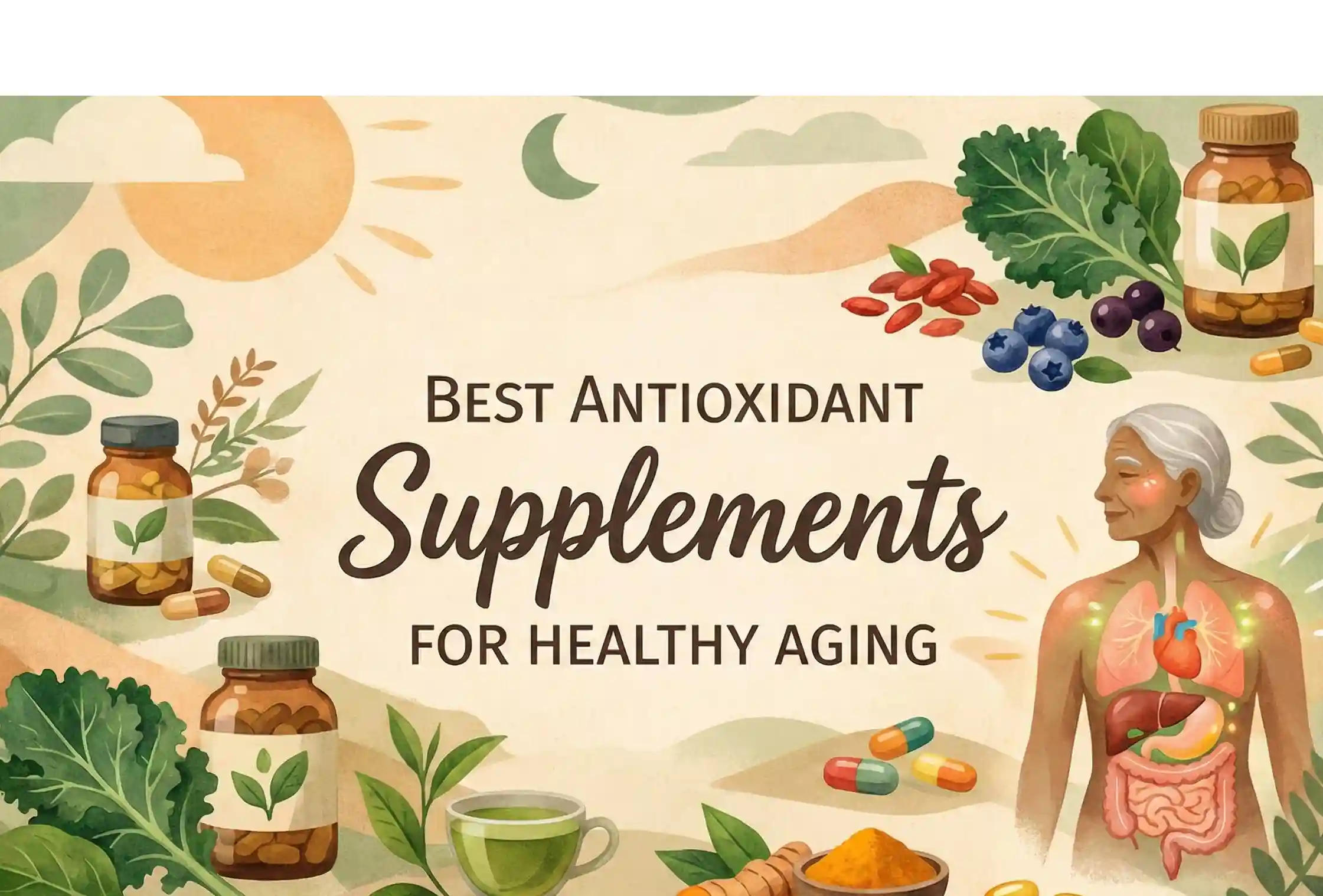
After 12 years in practice, I’ve seen what actually works. I’ve also seen what doesn’t. This article isn’t about chasing anti-aging miracles or spending a fortune on trendy supplements. It’s about the antioxidants I genuinely use in my practice, why quality matters, and what you can safely skip.
What Antioxidants Actually Do (Without the Science Lecture)
Think of antioxidants as your body’s cleanup crew. Every day, your cells create waste products called free radicals. When you’re young and healthy, your body handles this naturally. But as we age, the system gets overwhelmed. Accumulated damage, slower repair mechanisms, increased inflammation. It all adds up.
Antioxidants neutralize these free radicals before they damage your cells. They support everything from your skin and joints to your cardiovascular system and brain function.
Here’s what I want you to understand: antioxidants won’t reverse aging. They won’t give you the skin you had at 25 or the energy you had at 30. But they can support your body’s ability to repair itself, reduce unnecessary inflammation, and help you feel more like yourself.
I’ve watched this play out over a decade of client work. The people who age best aren’t the ones taking 20 different supplements they saw on Instagram. They’re the ones who build sustainable foundations and stick with them.
The Antioxidants I Use Most Often in Practice
Vitamin C (But Not All Forms Are Equal)
Vitamin C is foundational. It supports collagen production (hello, skin and joints), immune function, and general cellular protection. It’s one of the first things I consider when someone’s asking about aging well.
But here’s where it gets tricky: not all vitamin C supplements are created equal.
Ascorbic acid is the most common form. It’s cheap, it’s effective, but it can be harsh on sensitive stomachs. If someone comes to me with digestive issues or they’re taking higher doses, I’ll recommend buffered forms like calcium ascorbate or sodium ascorbate. They’re gentler and better tolerated.
Dosing reality check: Most people do well with 500-1000mg daily. Some therapeutic situations call for more, but there’s a point where you’re just creating expensive urine. Your body can only absorb so much at once.
And let’s be clear: supplements aren’t a replacement for actual food. Capsicums, broccoli, citrus, berries. These matter. A lot.
Vitamin E (The Complex One)
Vitamin E gets confusing fast because there are multiple forms, and the cheap synthetic version (dl-alpha-tocopherol) isn’t what you want.
What you’re looking for is mixed tocopherols. This includes all the naturally occurring forms of vitamin E, not just one isolated compound. It supports cardiovascular health, protects cell membranes, and helps with skin integrity.
When do I recommend it? Cardiovascular support, skin concerns, general cellular protection. But I’m cautious with dosing. High doses can interact with blood thinners and other medications. More isn’t always better.
Real talk: you probably don’t need megadoses of vitamin E. A good quality supplement at moderate doses, combined with food sources like nuts, seeds, and leafy greens, is usually plenty.
CoQ10 (Ubiquinol vs. Ubiquinone)
This is one of my go-to recommendations for anyone over 40, especially if they’re dealing with low energy and fatigue.
CoQ10 supports cellular energy production. Every cell in your body needs it, but your heart and muscles need it most. It also acts as a powerful antioxidant, protecting cells from oxidative damage.
Here’s what matters: there are two forms. Ubiquinone (the oxidized form) and ubiquinol (the reduced, active form). As we age, our bodies get less efficient at converting ubiquinone to ubiquinol. So if you’re over 40, ubiquinol is usually the better choice.
Who benefits most from CoQ10?
- Anyone over 40 (natural production declines)
- People on statin medications (statins deplete CoQ10)
- Chronic fatigue cases
- Cardiovascular support
Dosing typically ranges from 100-300mg daily, and it absorbs best when taken with fats. I usually suggest taking it with breakfast or lunch rather than on an empty stomach.
Glutathione (The Master Antioxidant)
Glutathione is called the “master antioxidant” for good reason. It doesn’t just neutralize free radicals on its own. It also recycles other antioxidants like vitamin C and E, giving them a second life. It supports detoxification pathways, immune function, and cellular repair.
Sounds perfect, right? Here’s the problem: oral glutathione is poorly absorbed.
Your digestive system breaks it down before it gets where it needs to go. Liposomal forms improve absorption somewhat, but they’re expensive and the evidence is still mixed on how effective they really are.
My approach? I focus on supporting your body’s natural glutathione production through precursors:
- N-acetylcysteine (NAC): provides cysteine, one of the building blocks of glutathione
- Glycine: another glutathione precursor, also supports sleep
- Selenium: necessary for glutathione enzymes to function
When do I use glutathione support? Detoxification concerns, chronic inflammation, immune challenges, liver support. But I keep my expectations realistic about oral supplementation.
Polyphenols (Resveratrol, Quercetin, Curcumin)
These plant compounds get a lot of attention in anti-aging research, and some of that attention is deserved. But here’s my experience: they work best as part of a bigger picture, not as standalone miracle workers.
Resveratrol (found in grapes and berries) has promising research for cardiovascular support and longevity. The catch? Absorption is terrible. You need specific formulations or you’re wasting your money. I use it selectively, not routinely.
Quercetin is one I reach for more often. It supports immune function, helps with inflammatory responses, and works beautifully for seasonal concerns. It’s also reasonably well-absorbed compared to other polyphenols.
Curcumin (from turmeric) is excellent for inflammation and joint health. I use it frequently for clients with chronic pain or joint issues. But formulation is everything. Plain curcumin powder is poorly absorbed. You need enhanced forms with piperine (black pepper extract) or liposomal delivery.
The pattern here? These compounds have real benefits, but only if the supplement is properly formulated. Cheap versions are often a waste of money.
Alpha Lipoic Acid
This is one I don’t talk about as much, but it’s quietly effective. Alpha lipoic acid (ALA) supports blood sugar regulation, protects nerve tissue, and regenerates other antioxidants in your system.
I recommend it most often for:
- Blood sugar and metabolic support
- Neuropathy or nerve-related concerns
- General cellular protection, especially in combination with other antioxidants
Typical dosing ranges from 300-600mg daily. Some people experience mild digestive upset initially, which usually settles within a week or two.
What I Don’t Usually Recommend (And Why)
After 12 years in practice, there are patterns. Some things work. Some things don’t. And some things work in theory but rarely make a meaningful difference in real life.
Megadose single antioxidants top my list of what to avoid. Taking massive amounts of one isolated antioxidant can actually throw off your body’s natural balance. The research doesn’t support it, and I’ve never seen good outcomes from it.
Trendy “superfood” capsules are usually overpriced and under-dosed. If you want the benefits of acai, spirulina, or whatever’s currently popular, eat the actual food. Don’t pay $60 for 10mg of freeze-dried powder in a capsule.
Synthetic beta-carotene is worth mentioning because some studies have shown increased lung cancer risk in smokers taking high-dose synthetic beta-carotene. Natural mixed carotenoids from food? Fine. High-dose synthetic supplements? I skip them.
Random antioxidant blends with 30 ingredients at fairy dust doses frustrate me. You can’t fit therapeutic amounts of 30 different compounds into 2 capsules. It’s marketing, not medicine.
The Quality Conversation (Because It Actually Matters)
I need to talk about quality because this is where a lot of people waste money or, worse, take supplements that don’t actually contain what’s on the label.
Practitioner-grade supplements exist for a reason. They’re third-party tested, they use bioavailable forms, they contain actual therapeutic doses, and they’re manufactured to higher standards. The cheap multivitamin from the supermarket might say “vitamin E” on the label, but it’s probably synthetic dl-alpha-tocopherol in a dose too low to matter.
Does this mean you need to spend a fortune? No. But it does mean being selective.
When to invest in quality:
- CoQ10 (form and dose matter significantly)
- Curcumin (cheap versions aren’t absorbed)
- Any fat-soluble vitamins (A, D, E, K)
- Herbal extracts where standardization matters
When food sources are probably enough:
- Vitamin C (unless you have specific therapeutic needs)
- Basic polyphenols (eat berries, drink green tea, use spices)
- General antioxidant support (colorful vegetables daily beats a mediocre supplement)
I’ve seen people spend hundreds on supplements that do nothing and ignore the basics that would actually make a difference. Don’t be that person.
What Aging Well Actually Looks Like in Practice
Here’s what I’ve learned after working with hundreds of clients: the people who age best aren’t taking 20 supplements.
They’re the ones who:
- Sleep 7-8 hours consistently
- Manage their stress (imperfectly, but consistently)
- Move their bodies regularly
- Eat real food most of the time
- Take a few well-chosen, high-quality supplements
Antioxidants are one piece. They support your body’s repair systems. But they can’t compensate for chronic stress, terrible sleep, and a diet built on processed food.
The clients who come back year after year saying “I feel great” have nailed the foundations. They’re not chasing trends. They’re not taking exotic supplements they saw on social media. They’ve built sustainable habits that actually fit their lives.
This is where lifestyle coaching becomes valuable. It’s not sexy. It’s not exciting. But it’s what works.
How I Help Clients Choose the Right Approach
Your 45 looks different from someone else’s 45. Your health history, your current symptoms, your stress levels, your budget. It all matters.
When someone comes to me asking about antioxidants and aging, we start with how I work with clients. I want to understand what’s actually going on, not just throw supplements at symptoms.
Sometimes we use functional testing to look at oxidative stress markers, nutrient status, inflammatory markers. This gives us actual data to work with rather than guessing.
Then we build a plan that fits:
- Your life (because a supplement routine you won’t stick to is pointless)
- Your budget (I’m not interested in bankrupting you)
- Your actual needs (not everyone needs everything)
We adjust based on how you feel. We simplify when things get overwhelming. The goal is sustainable support, not perfection.
If you’re struggling with where to start or what makes sense for your situation, book a consultation. We’ll figure it out together.
Final Thoughts
Aging isn’t optional. But how you feel through it? That has some wiggle room.
Start simple. Be consistent. Adjust based on how you actually feel, not what’s trending online.
The goal isn’t perfection. It’s feeling capable and energized in your own skin. It’s waking up without feeling like you’ve been hit by a truck. It’s having the energy to do the things that matter to you.
That client I mentioned at the start? She’s doing well. We simplified her supplement routine, focused on the basics, and built sustainable habits. She’s not 30 again. But she feels like herself. And that’s the whole point.
Key Takeaways: What Actually Matters
Start with foundations:
- Vitamin C (500-1000mg daily, buffered if sensitive stomach)
- CoQ10 if you’re over 40 (100-300mg ubiquinol with food)
Support glutathione production through precursors:
- NAC (N-acetylcysteine)
- Glycine
- Quality protein intake
- Selenium from food or supplements
Choose quality over quantity:
- Practitioner-grade matters for CoQ10, curcumin, fat-soluble vitamins
- Third-party testing is non-negotiable
- Skip fairy dust doses in massive “blends”
Pair supplements with whole food antioxidants:
- Colorful vegetables daily
- Berries, especially darker ones
- Nuts, seeds, quality fats
- Herbs and spices (turmeric, ginger, rosemary)
Be patient and realistic:
- Give supplements 8-12 weeks before deciding if they’re working
- More isn’t better. Balance matters.
- Supplements support foundations (sleep, stress, movement, food). They don’t replace them.
Work with someone who can personalize this:
- Individual needs vary significantly
- Testing can provide actual data
- Professional guidance prevents expensive mistakes
Sarah Mitchell is a degree-qualified naturopath (BHSc) and member of ATMS & ANTA, providing evidence-informed, personalized support via online consultations throughout Australia. After 12+ years in practice, her approach focuses on sustainable habits, realistic expectations, and consistent guidance that actually fits your life.