
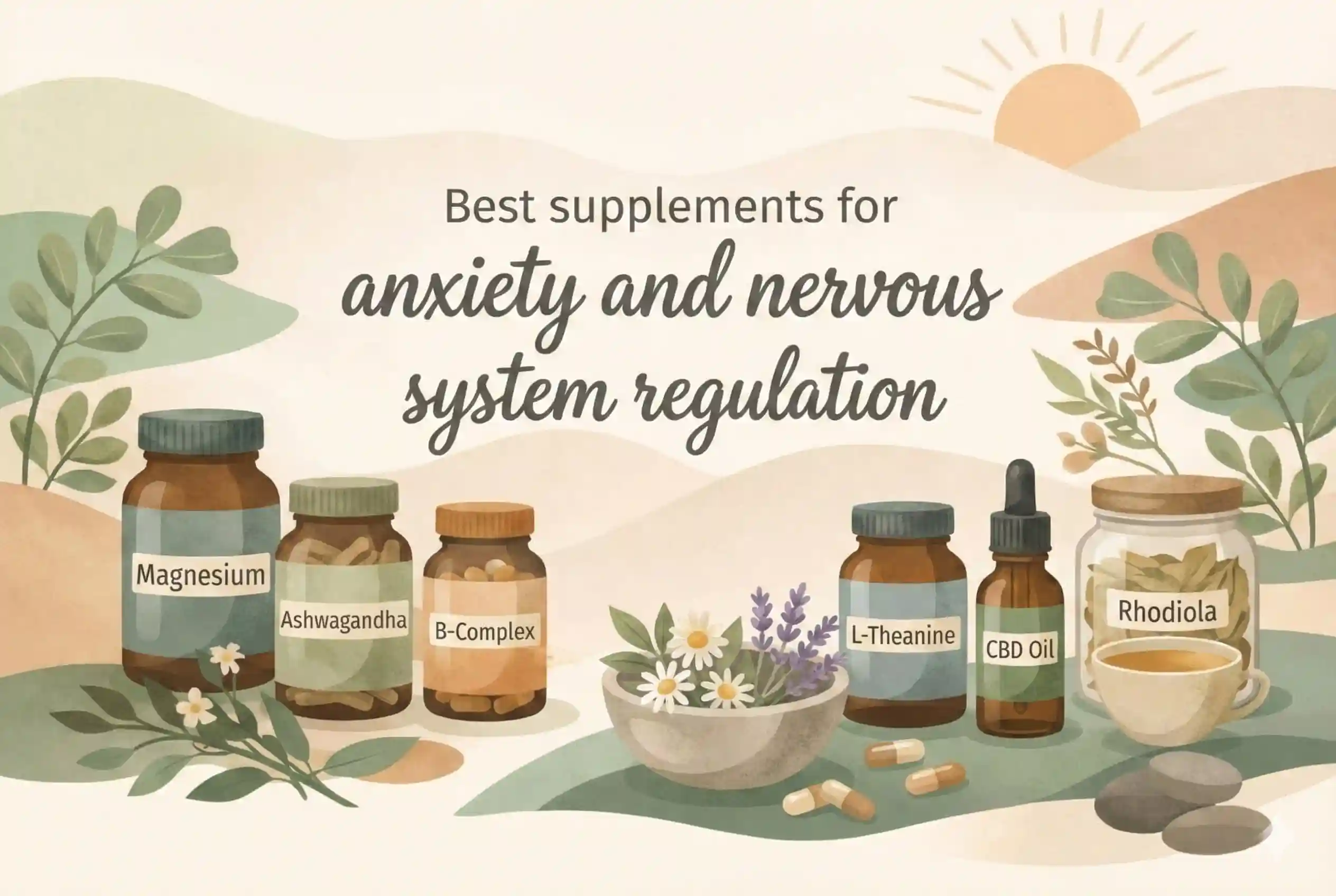
I’ve been working with anxious, overwhelmed clients for over 12 years now, and one of the first questions I get asked is: “What supplements should I take for my anxiety?”
I get it. When you’re standing in front of the supplement aisle (or scrolling through an online store), the options are overwhelming. Magnesium citrate versus glycinate versus threonate. Ashwagandha with or without standardised withanolides. L-theanine doses ranging from 100mg to 400mg. It’s enough to make anyone’s anxiety worse.
This article is my attempt to cut through that noise. I want to share what I’ve actually seen work consistently in practice, how to know if you need these supplements, and what realistic timelines look like for results.
Let’s get into it.
The Foundation: Why Supplements Alone Aren’t Enough
Here’s the reality check I give every client: supplements support a regulated nervous system, but they don’t replace the basics.
Sleep quality, blood sugar stability, and daily nervous system practices matter more than any capsule ever will. I’ve seen clients spend hundreds of dollars on supplements while still running on five hours of sleep, skipping breakfast, and never taking a proper lunch break. That doesn’t work.
Supplements make the most difference when you’re dealing with nutritional deficiencies, recovering from prolonged stress, or actively building new habits that need a bit of extra support. They’re part of the picture, not the whole solution.
If you’re new to nervous system regulation practices, I’d recommend starting with simple, accessible techniques. I’ve written a practical guide on vagus nerve exercises for instant anxiety relief that covers what actually works in real life.
1. Magnesium: The Most Underrated Mineral for Anxiety
Magnesium is involved in over 300 enzymatic reactions in your body, including the production of GABA (your calming neurotransmitter) and the regulation of your HPA axis (your stress response system).
The problem? Most people don’t get enough from food, and chronic stress depletes it even further.
Forms That Actually Work
Not all magnesium supplements are created equal. The form matters enormously:
- Magnesium glycinate: Best for sleep quality and muscle tension. This is my go-to for clients who clench their jaw, have restless legs, or wake frequently during the night.
- Magnesium threonate: Crosses the blood-brain barrier more effectively, so it’s excellent for racing thoughts and mental anxiety.
- Magnesium taurate: Particularly helpful if you experience heart palpitations or that “fluttery” chest feeling with anxiety.
What I’ve Seen in Practice
The clients who respond best to magnesium are the ones who:
- Finally sleep through the night without waking at 2am
- Notice reduced jaw clenching and shoulder tension
- Feel less reactive to daily stressors
- Experience fewer muscle cramps and twitches
Dosing: 300-400mg of elemental magnesium in the evening, taken consistently.
Key Point: If you’re getting loose stools, you’re either taking too much or using a poorly absorbed form like magnesium oxide or sulfate. Switch to glycinate or threonate.
2. L-Theanine: The Calm-Without-Drowsiness Option
L-theanine is an amino acid found naturally in green tea. It increases alpha brain wave activity, which creates a state of relaxed alertness. You feel calmer, but not sedated.
What I love about L-theanine is how fast it works. Most clients notice an effect within 20-40 minutes, which makes it perfect for situational anxiety.
Real-World Use
I recommend L-theanine for:
- Taking the edge off before presentations or difficult conversations
- Managing anxiety during busy work periods
- Days when you need to stay focused but feel wired
- As a gentler alternative to benzodiazepines for occasional use
Dosing: 100-200mg as needed for acute anxiety, or 200-400mg daily for ongoing support.
L-theanine pairs particularly well with magnesium and B vitamins. I often use all three together for clients dealing with chronic stress.
3. Ashwagandha: The Adaptogen for Wired-and-Tired
Ashwagandha is one of the most well-researched adaptogenic herbs, and for good reason. It modulates cortisol levels, supports HPA axis recovery, and improves your overall stress resilience.
I prescribe ashwagandha when clients are stuck in that exhausting “wired but tired” state. You know the feeling: you’re physically exhausted but mentally unable to switch off. Your sleep is disrupted, you’re irritable, and you feel like you’re running on stress hormones.
If that sounds familiar, you might find my article on natural ways to lower cortisol helpful. It covers the full picture of cortisol regulation, not just supplements.
The Form Matters
Look for standardised extracts like KSM-66 or Sensoril. These are clinically studied forms with consistent levels of active withanolides.
Dosing: 300-600mg daily, taken consistently for at least 6-8 weeks. Ashwagandha is not a quick fix; it works by gradually restoring balance to your stress response system.
Important Caution
Ashwagandha isn’t suitable for everyone. I avoid it in:
- Active hyperthyroidism (it can stimulate thyroid function)
- Pregnancy and breastfeeding
- Some autoimmune presentations (though this is individualised)
Always work with a practitioner if you’re on thyroid medication or have complex health conditions.
4. Activated B Complex: The Energy-Without-Jitters Vitamin
B vitamins are cofactors for neurotransmitter production, methylation pathways, and mitochondrial function. In plain English: they help your body produce the neurochemicals you need to feel calm and focused, and they support your cellular energy production.
When B vitamin levels are low, you often see a specific pattern: fatigue with anxiety. You’re exhausted, but you’re also wired. Your brain feels foggy, but you can’t relax.
What I Look For
I use activated B complexes that contain methylated forms:
- Methylfolate (not folic acid)
- Methylcobalamin (not cyanocobalamin)
- Pyridoxal-5-phosphate or P5P (active B6)
This matters especially if you have MTHFR gene variations, which affect how your body processes B vitamins. I’ve written a detailed guide on MTHFR and what it means for your energy and detox if you want to understand this better.
Dosing: A quality practitioner-grade B complex once daily with food.
Watch For: Overstimulation if you take B vitamins too late in the day. Some people feel energised from B vitamins, so morning or lunchtime dosing usually works best.
5. Omega-3s (EPA/DHA): The Anti-Inflammatory Brain Support
Chronic inflammation disrupts neurotransmitter function and increases anxiety. Omega-3 fatty acids, particularly EPA, have anti-inflammatory effects that support mood regulation and emotional balance.
The research on EPA for anxiety and depression is solid. Studies consistently show that higher EPA ratios (compared to DHA) are more effective for mood support.
What to Look For
- At least 1000mg combined EPA/DHA daily, with a higher EPA ratio preferred (2:1 or 3:1 EPA to DHA)
- Third-party tested for heavy metals and purity
- Kept refrigerated to prevent oxidation
Timeline: Omega-3s are not a quick fix. You’re looking at 6-12 weeks of consistent use before you notice meaningful mood shifts. But when they work, the effect is stable and sustained.
6. Taurine: The Underused Amino Acid for Panic and Palpitations
Taurine doesn’t get enough attention, but it’s incredibly effective for a specific type of anxiety: the physical, jittery, heart-racing kind.
Taurine supports GABA receptor function, regulates calcium in heart cells, and stabilises nervous system excitability. In practice, this means it can reduce:
- Panic attacks
- Heart palpitations
- Physical restlessness and jitteriness
- That “jump out of your skin” feeling
Dosing: 500-1000mg twice daily.
Why isn’t taurine talked about more? Honestly, I think it’s because there’s less marketing behind it. It’s not as trendy as adaptogens, but I’ve seen it work wonders for clients who experience anxiety as a physical sensation in their chest and body.
What About GABA, 5-HTP, and Inositol?
These three supplements come up often, so let me address them:
GABA: The problem is that GABA doesn’t cross the blood-brain barrier well when taken orally. You’re better off supporting your body’s own GABA production with magnesium, L-theanine, and taurine.
5-HTP: This can be helpful short-term, but it needs careful consideration if you’re on SSRIs or have any serotonin-related issues. I use it occasionally, but it’s not first-line.
Inositol: Excellent for OCD-type anxiety and rumination. The therapeutic dose is high (12-18g daily in divided doses), which puts some people off, but it can be genuinely transformative for intrusive thoughts and repetitive worry patterns.
These are second-tier options I reach for in specific presentations, not my starting point.
How to Actually Use Supplements Without Wasting Money
Here’s my practical advice after watching hundreds of clients navigate supplement protocols:
Start with one or two supplements, not six at once. If you throw everything at the wall, you won’t know what’s actually helping.
Give each supplement 4-6 weeks before deciding it’s not working. Most nutrients need time to build up in your system and create meaningful change.
Track your symptoms in a simple way:
- How’s your sleep quality?
- How reactive do you feel to daily stressors?
- What’s your physical tension like (jaw, shoulders, chest)?
- How’s your mental clarity and focus?
This gives you actual data to work with, rather than vague impressions.
I also strongly recommend working with someone who can assess your individual needs. Nutrient testing, health history, and medication interactions all matter. If you’re wondering whether practitioner-grade supplements are worth the investment, I’ve written about quality versus retail brands and what actually makes a difference.
Quick Reference: Starting Protocol for Anxiety
If you’re new to supplements and want a simple starting point:
- Magnesium glycinate: 300-400mg in the evening
- L-theanine: 200mg in the morning or as needed
- Activated B complex: Once daily with breakfast
Run this for 4-6 weeks and assess. Add other supplements based on your specific symptoms and response.
When Supplements Aren’t Enough: What Else to Consider
Sometimes, anxiety persists despite good supplementation. When that happens, it’s worth looking deeper.
Underlying Nutrient Deficiencies
Iron, vitamin D, and zinc deficiencies can all present as anxiety and fatigue. Standard blood tests often miss these because “normal” ranges are broad, and what’s optimal for nervous system function is different from what’s considered “not deficient.”
I’ve written extensively about the hidden gaps in standard blood work and why functional pathology often reveals what gets missed.
Gut Health and Inflammation
The gut-brain axis is real. Chronic gut inflammation, dysbiosis, and intestinal permeability all affect neurotransmitter production and mood regulation.
If you have digestive symptoms alongside anxiety (bloating, irregular bowel movements, food sensitivities), addressing gut health might be more important than any anxiety supplement.
Thyroid Dysfunction
Hypothyroidism and hyperthyroidism can both cause or worsen anxiety. If you’re tired and anxious, struggling with temperature regulation, or noticing changes in your weight or menstrual cycle, thyroid function is worth investigating.
HPA Axis Dysregulation
Sometimes the issue isn’t just low nutrients or inflammation. Sometimes your entire stress response system is dysregulated from prolonged stress, trauma, or burnout. This requires a more comprehensive protocol that addresses sleep architecture, circadian rhythm, blood sugar regulation, and nervous system retraining.
This is exactly the type of work I do with clients in consultations. If you’re dealing with stress and mental health issues that haven’t responded to basic interventions, personalised support makes all the difference.
Final Thoughts: Supplements as Part of a Bigger Picture
After 12 years of working with anxious clients, here’s what I know for sure: no single supplement fixes anxiety on its own.
The clients who do best are the ones who combine targeted supplementation with:
- Consistent nervous system regulation practices
- Stable blood sugar through balanced meals
- Sleep hygiene that actually supports restorative rest
- Addressing root causes (nutritional deficiencies, gut health, hormones)
Supplements give you support while you build those foundations. They’re the scaffolding, not the building itself.
If you’re feeling stuck, overwhelmed, or unsure where to start, this is exactly what I help clients with. Together, we create a personalised plan that fits your life, your symptoms, and your goals—not some generic protocol from the internet.
You can book a consultation here if you’d like that kind of support.
Sarah Mitchell is a degree-qualified naturopath (BHSc) and member of ATMS & ANTA, providing evidence-informed, personalised support via online consultations to clients across Australia. With 12+ years of clinical experience, Sarah specialises in helping people cut through conflicting health advice and build practical, sustainable plans that actually work.