After 12 years of supporting clients with histamine intolerance, I’ve learned something important: the supplement aisle is full of promises, but only a handful of products actually move the needle. I’ve watched clients spend hundreds of dollars on “allergy support” blends that did nothing, while a strategic combination of evidence-based supplements changed everything within weeks.
The truth is, histamine intolerance is complicated. Your body’s ability to break down histamine depends on multiple enzymes, nutrients, and pathways working together. There’s no single magic pill. But when you understand what’s actually happening and choose supplements that target the right mechanisms, real relief is possible.
In this article, I’m sharing what I’ve seen work consistently in practice, what usually wastes money, and how to build a supplement protocol that actually makes sense for your body.
What Histamine Intolerance Actually Is (Brief Context)
Let’s start with a quick refresher. Histamine intolerance happens when your body can’t break down histamine fast enough, leading to a build-up that triggers symptoms like headaches, flushing, digestive issues, anxiety, and skin reactions.
Your body has two main enzymes responsible for clearing histamine:
- DAO (diamine oxidase): breaks down histamine in your gut
- HNMT (histamine N-methyltransferase): clears histamine inside your cells
When these enzymes aren’t working properly, or when you’re exposed to more histamine than your body can handle (from food, stress, or environmental triggers), symptoms appear.
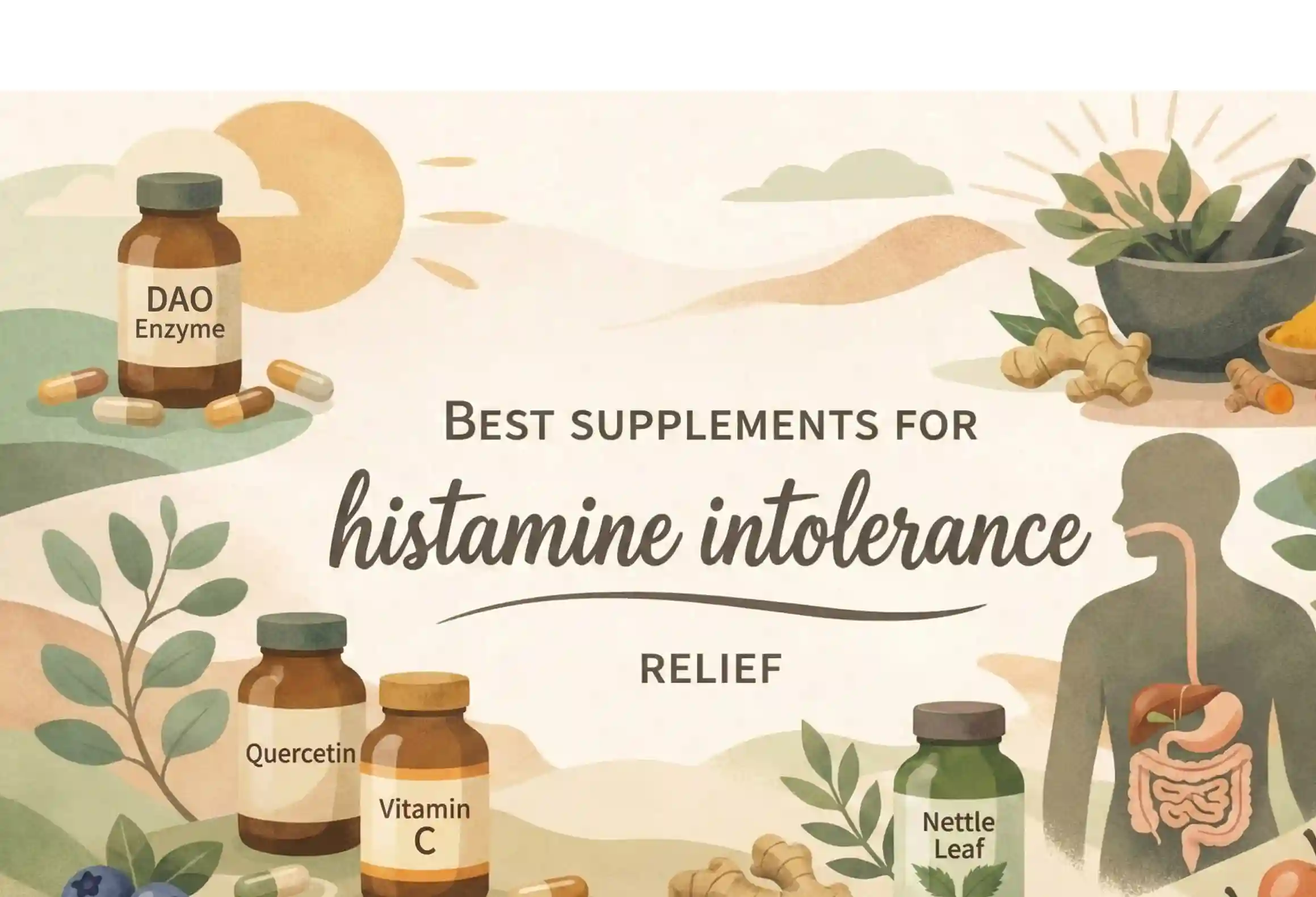
Supplements matter because they can support these enzymes, stabilise mast cells (the cells that release histamine), and reduce overall inflammation. But the key is targeting the right pathways with the right nutrients at the right time.
For more context on symptoms and triggers, check out my detailed guide: Histamine Intolerance Symptoms and Food List: Practical Tips That Work.
The DAO Enzyme Problem (And Why Most People Start Here)
DAO is your primary defence against dietary histamine. It lives in your gut lining and breaks down histamine before it enters your bloodstream. When DAO levels are low, even moderate-histamine foods can trigger symptoms.
Why Some People Don’t Produce Enough DAO
Several factors can reduce DAO production:
- Gut damage: inflammation, leaky gut, SIBO, or dysbiosis
- Genetics: some people naturally produce less DAO
- Nutrient deficiencies: DAO needs vitamin B6, copper, zinc, and vitamin C to function
- Medications: NSAIDs, antacids, and some antibiotics can block DAO activity
Do DAO Supplements Actually Work?
This is the question I get asked most. The honest answer: sometimes.
I’ve had clients who responded beautifully to DAO supplements, especially when eating out or during unavoidable high-histamine meals. They’d take a capsule 15 minutes before eating and notice significantly fewer symptoms.
But I’ve also seen plenty of people waste money on DAO supplements that did absolutely nothing. Here’s why:
Quality matters enormously. Most over-the-counter DAO supplements are underdosed or poorly formulated. The effective dose is typically 10,000-20,000 HDU (histamine degrading units) per capsule, taken with meals. Anything less is unlikely to help.
Timing matters. DAO works in the gut, not systemically. It’s most effective when taken right before eating, not hours later or on an empty stomach.
They’re a band-aid, not a solution. DAO supplements can help manage symptoms short-term, but they don’t address why your body isn’t producing enough DAO in the first place.
Supporting Your Own DAO Production
Rather than relying on supplements forever, I focus on helping clients rebuild their natural DAO production. This means:
- Healing the gut lining: addressing leaky gut, SIBO, or dysbiosis (more on this in my article How I Help Clients Heal Leaky Gut Naturally)
- Correcting nutrient deficiencies: ensuring adequate B6, copper, zinc, and vitamin C
- Reducing gut inflammation: removing triggers, supporting digestion, and balancing the microbiome
When you address the root cause, DAO production improves naturally and symptoms reduce long-term.
Key Takeaway
DAO supplements can provide short-term relief during meals, but they’re not a long-term solution. Focus on gut healing and nutrient repletion to restore your body’s natural histamine-clearing capacity.
Quercetin: The Mast Cell Stabiliser Everyone Talks About
Quercetin is a plant compound (a flavonoid) that works differently from DAO supplements. Instead of breaking down histamine after it’s released, quercetin prevents mast cells from dumping histamine in the first place. It’s what we call a mast cell stabiliser.
I use quercetin frequently in practice, especially for clients whose symptoms are triggered by environmental factors like pollen, dust, or stress. It’s particularly helpful for:
- Seasonal allergies and hay fever
- Skin reactions (hives, flushing)
- Respiratory symptoms
- Stress-induced histamine flares
Does It Actually Work?
In my experience, yes, but with caveats. Quercetin tends to work well for mast cell activation issues, where your body is releasing too much histamine. It’s less helpful if your main problem is poor histamine breakdown (low DAO).
Most clients notice results within 2-3 weeks if quercetin is going to help. If you’ve been taking it for a month with no change, it’s probably not the right tool for you.
Dosing That Actually Works
The research-backed dose is 500-1000mg daily, split into two doses (morning and afternoon). Lower doses rarely make a difference.
Here’s the catch: quercetin has terrible bioavailability on its own. Your body doesn’t absorb it well. That’s why I always recommend pairing it with:
- Bromelain (a pineapple enzyme): enhances absorption and adds anti-inflammatory benefits
- Vitamin C: improves quercetin uptake and has its own histamine-lowering effects
Look for combination formulas that include all three, or take them together.
Vitamin C: Underrated and Genuinely Helpful
If I had to choose one supplement for histamine intolerance, it would be vitamin C. It’s cheap, well-tolerated, and genuinely effective for most people.
How It Works
Vitamin C naturally degrades histamine in the blood. It also supports DAO enzyme function by acting as a cofactor. Plus, it stabilises mast cells and reduces inflammation. It’s doing multiple jobs at once.
I use vitamin C with almost every histamine client because it’s safe, affordable, and consistently helpful.
Dosing and Forms
I typically recommend 1000-2000mg daily, split into two doses. If you’re sensitive or have a reactive gut, start with 500mg and build up gradually.
Form matters:
- Buffered vitamin C (calcium ascorbate or magnesium ascorbate): gentler on the stomach
- Liposomal vitamin C: better absorption, especially if you have digestive issues
- Avoid high-dose ascorbic acid if you’re prone to diarrhea
The Bonus Benefits
Beyond histamine, vitamin C supports:
- Immune function
- Collagen production and skin health
- Stress resilience (your adrenals burn through vitamin C during stress)
- Antioxidant protection
One Caution
Occasionally, I see clients who react poorly to high-dose vitamin C, experiencing increased symptoms or digestive upset. If this happens, drop the dose or switch forms. Not every supplement works for every body.
B6 (P5P): Essential for DAO Production
Vitamin B6 is a cofactor for DAO, meaning DAO literally cannot function without it. If you’re B6 deficient, your histamine-clearing capacity is compromised.
Why the Active Form Matters
Most B6 supplements contain pyridoxine HCl, which your body has to convert into the active form: pyridoxal-5-phosphate (P5P). For people with methylation issues or poor conversion (hello, MTHFR gene variations), this conversion doesn’t happen efficiently.
That’s why I always recommend P5P instead of standard B6. It’s the form your body can actually use immediately.
Common Deficiency Signs
You might be low in B6 if you experience:
- Brain fog and poor concentration
- Mood swings or low mood
- PMS symptoms
- Tingling in hands and feet
- Poor dream recall
Dosing
I typically use 25-50mg of P5P daily. This is a physiological dose that supports DAO without overdoing it.
Important: Don’t go overboard with B6. Very high doses (above 100mg daily for extended periods) can cause nerve damage. Stick to moderate amounts.
Key Takeaway
Vitamin C, quercetin with bromelain, and P5P form a foundational trio for histamine intolerance. They support different pathways: mast cell stabilisation, histamine degradation, and DAO enzyme function.
Magnesium: The Nervous System Calmer
Magnesium doesn’t directly break down histamine, but it plays a crucial role in preventing stress-induced histamine release. It stabilises mast cells and calms your nervous system, reducing the triggers that cause histamine dumps in the first place.
Stress is a massive histamine trigger. When you’re anxious, overwhelmed, or sleep-deprived, your body releases more histamine. Magnesium helps break that cycle.
Best Forms for Histamine Intolerance
Not all magnesium is created equal. Some forms are better tolerated and more effective than others.
Good choices:
- Magnesium glycinate: well-absorbed, calming, doesn’t cause diarrhea
- Magnesium threonate: crosses the blood-brain barrier, excellent for anxiety and brain fog
- Magnesium malate: supports energy production, good if you’re also dealing with fatigue
Avoid:
- Magnesium citrate: can worsen diarrhea (though fine if you’re constipated)
- Magnesium oxide: poorly absorbed, mostly just a laxative
Dosing
I typically recommend 300-400mg of elemental magnesium daily, taken in the evening. It supports sleep quality, reduces muscle tension, and helps buffer the nervous system.
Real Benefits I See in Practice
Clients on magnesium consistently report:
- Better sleep quality
- Reduced anxiety and feeling less “wired”
- Fewer stress-related symptom flares
- Less muscle tension and fewer headaches
It’s not a direct histamine-buster, but it creates the conditions for your body to manage histamine more effectively.
Omega-3s: Anti-Inflammatory Support
Omega-3 fatty acids (EPA and DHA) reduce inflammation and stabilise mast cells. They’re particularly helpful if your histamine intolerance comes with skin issues, joint pain, or generalised inflammation.
The anti-inflammatory effects are well-established. Omega-3s shift your body away from producing inflammatory compounds and help regulate immune function.
Quality Matters
Not all fish oil is created equal. Look for:
- Third-party tested for heavy metals and oxidation
- High EPA/DHA content (at least 500mg combined per capsule)
- Triglyceride form (better absorbed than ethyl ester form)
Rancid or oxidised fish oil can actually increase inflammation, so quality is non-negotiable.
Dosing
I typically recommend 2000-3000mg of combined EPA/DHA daily. This usually means 2-3 capsules of a good-quality fish oil.
If you’re vegetarian, algae-based omega-3 supplements are a solid alternative.
Probiotics: Proceed with Caution
This is where things get tricky. The gut microbiome plays a huge role in histamine metabolism, but most probiotic supplements make histamine intolerance worse, not better.
The Problem
Many common probiotic strains actually produce histamine:
- Lactobacillus casei
- Lactobacillus reuteri
- Lactobacillus bulgaricus
- Most fermented foods (sauerkraut, kimchi, yogurt, kefir)
I’ve seen clients unknowingly trigger flares by taking “gut health” probiotics full of histamine-producing bacteria.
Low-Histamine Strains That Can Help
There are a few strains that either don’t produce histamine or may even help break it down:
- Bifidobacterium infantis
- Bifidobacterium longum
- Lactobacillus plantarum
- Bifidobacterium lactis
These strains can support gut healing without worsening symptoms. But even with the right strains, I usually wait until gut healing is underway before introducing probiotics. If the gut lining is still damaged, probiotics can sometimes cause more harm than good.
If you’re considering probiotics, functional testing can help guide the decision. I cover this in depth here: Complete Microbiome Mapping vs Standard Stool Test: What Actually Makes Sense for Your Gut.
What Usually Doesn’t Work (Or Makes Things Worse)
Let me save you some money and frustration. Here are the supplements I see people waste time on:
Fermented Supplements
- Kombucha-based probiotics
- Fermented cod liver oil
- Fermented vitamin blends
These are full of histamine and usually make symptoms worse.
High-Dose Niacin (Vitamin B3)
Niacin triggers histamine release, causing flushing and itching. If you need B vitamins, choose a niacinamide or inositol hexanicotinate form instead.
Generic “Allergy Support” Blends
Most contain a random mix of herbs and nutrients with no targeted action. They’re usually underdosed and full of problematic ingredients like quercetin without bromelain, or histamine-producing probiotics.
Collagen Supplements
I know collagen is trendy for gut healing and skin health, but it’s high in histamine. Many clients report worsening symptoms on collagen powder.
Bone Broth Powders
Same issue. Bone broth is slow-cooked for hours, which increases histamine content. Powdered versions are even more concentrated. If you react to bone broth, skip the powder.
Key Takeaway
Avoid fermented supplements, high-histamine foods in supplement form (collagen, bone broth), and probiotic strains known to produce histamine. Not every “healthy” supplement is appropriate for histamine intolerance.
My Supplement Protocol Framework
Here’s how I typically structure supplement protocols for histamine intolerance. The key is layering support in phases, not throwing everything at the problem at once.
Phase 1: Stabilise and Support (Weeks 1-4)
Start with mast cell stabilisation and direct histamine support:
- Quercetin with bromelain: 500mg twice daily
- Vitamin C: 1000mg twice daily
- Magnesium glycinate: 300-400mg before bed
These create immediate symptom relief and calm the system down.
Phase 2: Build Enzyme Function (Weeks 4-8)
Once symptoms are more stable, add nutrients that support DAO production:
- P5P (B6): 25-50mg daily
- Zinc: 15-30mg daily (if deficient)
- Copper: 1-2mg daily (only if testing shows deficiency)
This helps rebuild your body’s natural histamine-clearing capacity.
Phase 3: Address Root Causes (Ongoing)
This is where gut healing becomes the priority:
- Repairing leaky gut (more on this: How I Help Clients Heal Leaky Gut Naturally)
- Addressing SIBO or dysbiosis (see Best Natural Treatment for SIBO Australia)
- Balancing the microbiome with appropriate probiotics
- Supporting stress management and nervous system regulation
Why Timing Matters
Loading up on 10 different supplements on day one usually backfires. Your body needs time to adjust, and you need to see what’s actually helping. Start simple, assess, then add more support as needed.
Testing Before Supplementing
I’m a big advocate for testing, not guessing. Functional testing takes the guesswork out of supplementation and saves you time and money in the long run.
What I Look For
Depending on the client’s symptoms and history, I might order:
- DAO enzyme levels: to assess histamine-clearing capacity
- Nutrient panels: B6, zinc, copper, magnesium, vitamin C
- Comprehensive stool testing: to identify gut infections, dysbiosis, or inflammation
- Full thyroid panel: thyroid dysfunction often overlaps with histamine issues
For more on the difference between standard and functional testing, read The Hidden Gaps in Your Blood Work: Functional Pathology vs Standard Testing.
Testing isn’t essential, but it dramatically speeds up progress by showing you exactly what your body needs.
The Reality Check
Let’s be honest: supplements are tools, not magic bullets. They create the conditions for healing, but they’re not a substitute for addressing diet, stress, and gut health.
Here’s what I want you to know:
Diet still matters more than anything. If you’re eating high-histamine foods daily, supplements will only get you so far. You need to reduce your histamine load first.
Gut healing takes time. Most people need 3-6 months of consistent work to see significant, lasting improvement. Some respond faster, but patience is essential.
Progress isn’t linear. You’ll have good weeks and rough weeks. Setbacks don’t mean failure. They’re part of the process.
Everyone’s different. What works brilliantly for one person might do nothing for another. This is why individualised support matters.
If you’re dealing with ongoing fatigue alongside histamine issues, you might find this helpful: Is a Naturopath Worth It for Chronic Fatigue? What 12 Years of Practice Has Taught Me.
Final Thoughts
If I were starting a histamine intolerance protocol from scratch today, I’d begin with these three:
- Vitamin C (1000mg twice daily)
- Quercetin with bromelain (500mg twice daily)
- Magnesium glycinate (300-400mg before bed)
These three cover multiple pathways: mast cell stabilisation, histamine degradation, and nervous system support. They’re safe, affordable, and effective for most people.
From there, I’d assess progress after 3-4 weeks and add targeted support based on symptoms and (ideally) testing results.
The goal isn’t to stay on supplements forever. The goal is to create enough stability to do the deeper work: healing your gut, rebalancing your nervous system, and rebuilding your body’s natural histamine-clearing capacity.
It’s absolutely possible to get your life back. I’ve watched hundreds of clients move from daily symptoms and strict elimination diets to eating a wide variety of foods without issue. It takes time, patience, and the right support, but it happens.
If you’d like personalised guidance through this process, book a consultation and let’s create a plan that actually fits your body and your life.
Sarah Mitchell is a degree-qualified naturopath (BHSc) and member of ATMS & ANTA, providing evidence-informed, client-centred naturopathic care via online consultations throughout Australia.