There’s a particular kind of panic that sets in when you notice more hair circling the shower drain than usual. Or when your ponytail feels noticeably thinner. Or when that part line seems to be widening week by week.
I see this in clinic constantly. Hormonal hair loss isn’t just about vanity (though let’s be honest, it affects how we feel about ourselves). It’s often a visible sign that something deeper is shifting hormonally. And while there’s no shortage of supplements promising to restore your hair to its former glory, most of what’s out there is either underdosed, misdirected, or straight-up marketing.
In 12 years of practice, I’ve learned what actually works and what’s just expensive hope in a bottle. Here’s what I’ve found helps, when it helps, and why testing matters more than guessing.
What Actually Causes Hormonal Hair Loss
Before we talk supplements, let’s get clear on what’s driving the hair loss in the first place. Hair doesn’t just fall out randomly. It responds to hormonal signals, and when those signals are off, hair growth suffers.
The main hormonal culprits I see:
- Elevated androgens (common in PCOS, or when testosterone converts too readily to DHT)
- Thyroid dysfunction (both overactive and underactive thyroid can trigger hair loss)
- Postpartum hormone shifts (the dramatic drop in estrogen after birth)
- Perimenopause (declining estrogen and progesterone)
- Chronic stress and elevated cortisol (your body deprioritises hair growth when it’s in survival mode)
Here’s the frustrating part: hair loss is a lagging indicator. What you’re seeing now in the mirror reflects what was happening hormonally three to six months ago. Hair grows slowly, and it falls out slowly. This is why quick fixes rarely work, and why patience is non-negotiable.
Most clients come to me having already tried five different supplements without ever testing what’s actually going on. That’s like throwing darts in the dark and hoping one lands.
The Supplements That Actually Make a Difference
Let me be clear upfront: these work when they match your specific deficiency or hormonal pattern. They’re not a magic bullet, and they’re certainly not one-size-fits-all.
1. Iron (If Deficient or Suboptimal)
Iron deficiency is one of the most common causes of hair loss I see in practice, especially in women. But here’s what most people don’t realise: your iron can be technically “normal” on a standard blood test and still be too low for optimal hair growth.
Ferritin (your iron storage protein) needs to be above 70 µg/L for healthy hair growth. Many labs consider anything above 15 “normal,” but that’s nowhere near optimal for hair.
What works:
- Iron bisglycinate (gentle, well-absorbed, less likely to cause constipation)
- Start with 24-30mg elemental iron daily, taken with vitamin C
- Avoid taking with tea, coffee, or calcium (they block absorption)
Realistic timeline: Three to six months minimum before you see visible improvement. Hair doesn’t respond overnight.
Common mistake: Supplementing without testing. Too much iron is just as problematic as too little, and you won’t know where you stand without a blood test.
Need help with iron absorption? I’ve written a detailed guide on managing iron supplements without the side effects. Read it here.
2. Zinc (Especially for PCOS-Related Hair Loss)
Zinc plays a crucial role in androgen metabolism. It helps regulate the enzyme (5-alpha reductase) that converts testosterone into DHT, the androgen most directly linked to hair thinning.
If your hair loss is driven by elevated androgens (think PCOS, or androgenic alopecia), zinc is one of the most effective supplements you can use.
What works:
- 30-50mg elemental zinc daily (as zinc picolinate or zinc citrate)
- Take with food to avoid nausea
- Long-term use requires monitoring (zinc can lower copper over time)
Signs you might need it beyond hair loss:
- Irregular or absent periods
- Acne (especially jawline and chin)
- Excess facial or body hair
- Slow wound healing
Testing your zinc and copper levels before supplementing long-term is smart. The ratio between the two matters, and you don’t want to tip it too far in either direction.
If you’re dealing with hormonal acne alongside hair loss, you might find my article on PCOS acne helpful.
3. B Vitamins (Particularly B6, B12, and Folate)
B vitamins support red blood cell production, which means they’re directly involved in delivering oxygen and nutrients to your hair follicles. They also play a role in hormone metabolism and nervous system function (relevant if stress is part of your picture).
What works:
- Active forms matter: methylcobalamin (B12), pyridoxal-5-phosphate (B6), and methylfolate (not folic acid)
- A good quality B complex is often more effective than isolated B vitamins
- Doses vary, but I typically use 50-100mg B6, 500-1000mcg B12, and 400-800mcg folate
Why active forms?
Some people have genetic variations (like MTHFR) that make it harder to convert synthetic B vitamins into their active, usable forms. Using the active versions bypasses that issue entirely.
Realistic timeline: Two to four months before you notice a difference. B vitamins support the growth phase of hair, so you need consistent intake over time.
If you’ve been told you have an MTHFR variation and you’re not sure what it means, I’ve broken it down in plain language here.
4. Vitamin D (Foundational, Often Overlooked)
Vitamin D receptors are found in hair follicles, and vitamin D plays a role in follicle cycling (the process that determines whether a hair is growing, resting, or shedding). Low vitamin D is associated with increased hair shedding and slower regrowth.
Australian context: Despite living in a sun-drenched country, vitamin D deficiency is incredibly common. Sunscreen (which we rightly use), indoor work, and winter months all contribute.
What works:
- Aim for blood levels between 100-150 nmol/L (not just “above 50”)
- Most people need 2000-5000 IU daily to maintain optimal levels
- Take with a meal containing fat (vitamin D is fat-soluble)
Testing is essential here. You can’t guess your vitamin D status, and over-supplementing isn’t helpful either.
5. Omega-3s (Anti-Inflammatory Support)
Chronic low-grade inflammation affects hair follicles. It disrupts the growth cycle and contributes to increased shedding. Omega-3 fatty acids (EPA and DHA) are potent anti-inflammatories, and they support scalp health and circulation.
What works:
- 2-3g combined EPA/DHA daily
- Look for a high-quality fish oil that’s third-party tested for purity and freshness
- Store in the fridge (omega-3s oxidise easily, and rancid oil does more harm than good)
Realistic timeline: Three to four months before you see a difference. Omega-3s work slowly and steadily.
6. Saw Palmetto (For Androgen-Driven Loss)
Saw palmetto is a herb that acts as a natural DHT blocker. It works similarly to the pharmaceutical finasteride, though less aggressively. If your hair loss is driven by elevated androgens (especially in a male-pattern distribution), saw palmetto can help.
What works:
- 320mg daily (standardised extract)
- Best used alongside zinc and dietary changes
- Takes 4-6 months to see results
When to skip it:
If your hair loss is driven by thyroid issues, postpartum hormone shifts, or low iron, saw palmetto won’t help. It’s specific to androgen-driven loss, so you need to know what you’re dealing with first.
7. Collagen and Protein Support
Hair is made of protein (keratin, specifically). If your overall protein intake is low, or if your digestion isn’t breaking down and absorbing protein efficiently, your body will prioritise more critical functions over hair growth.
What works:
- Focus on dietary protein first: aim for 1.2-1.6g per kg of body weight daily
- Collagen peptides (10-20g daily) can support hair structure, though the evidence is modest
- Bone broth, quality meat, fish, eggs, and legumes matter more than any supplement
Reality check: Collagen supplements are heavily marketed for hair health, but the research is mixed. They’re not a waste, but they’re not a miracle either. Prioritise whole food protein, and consider collagen as a top-up if your diet is already solid.
What I Don’t Recommend (And Why)
Let’s talk about the supplements that get far more attention than they deserve.
Biotin: The Overhyped Darling
Biotin is in every hair supplement on the market, but true biotin deficiency is rare. Unless you’re deficient (which is uncommon unless you have a genetic condition or you’re on certain medications), high-dose biotin rarely makes a meaningful difference.
Why I’m cautious:
- It can skew thyroid blood test results (making it look like you have hyperthyroidism when you don’t)
- Most “hair, skin, nails” formulas are built around biotin because it’s cheap, not because it’s effective
- If you’re taking 5000-10,000mcg daily and planning to test your thyroid, let your doctor know (or stop it for a week before testing)
When it might help: If you have a true biotin deficiency (rare), or if you’re on long-term anticonvulsant medication. Otherwise, it’s usually not the answer.
Generic “Hair, Skin, Nails” Formulas
These multi-ingredient formulas promise everything but often deliver nothing. They’re typically underdosed across the board (a bit of biotin, a bit of zinc, a bit of silica, a bit of collagen), which means you’re not getting therapeutic amounts of anything.
Why I don’t use them:
- They take a scattergun approach without addressing the root cause
- You’re paying for 15 ingredients when you might only need three
- The doses are too low to make a clinical difference
Better approach: Invest in good testing, identify what you actually need, and use targeted, therapeutic doses of those specific nutrients.
Expensive Proprietary Blends With No Studies
If a supplement brand won’t tell you the exact dose of each ingredient (hiding behind a “proprietary blend”), I’m immediately skeptical. You deserve to know what you’re taking and in what amount.
I’d rather you spend money on good testing than throw it at supplements that might not address your issue.
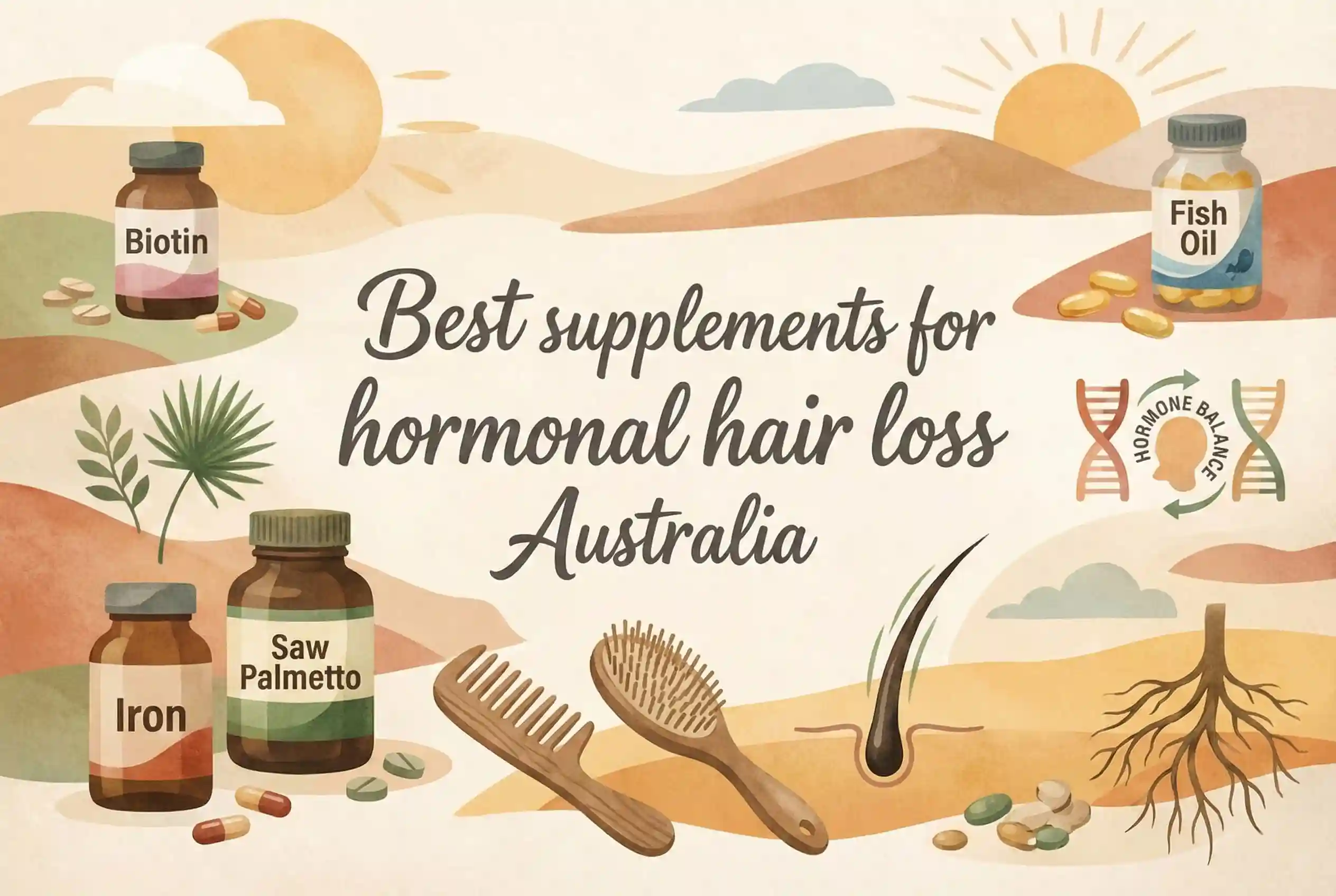
### Key Takeaways: What Actually Works – **Iron (if ferritin is below 70):** 24-30mg elemental iron as bisglycinate, with vitamin C – **Zinc (for androgen-driven loss):** 30-50mg daily, monitor long-term – **B vitamins (active forms):** B complex with methylcobalamin, P5P, and methylfolate – **Vitamin D:** 2000-5000 IU daily, aim for blood levels 100-150 nmol/L – **Omega-3s:** 2-3g EPA/DHA daily, high-quality and fresh – **Saw palmetto (for DHT-driven loss):** 320mg daily, be patient – **Protein and collagen:** Prioritise whole food protein first **What to skip:** High-dose biotin (unless deficient), generic hair formulas, proprietary blends
The Bigger Picture: Supplements Are Just One Piece
Here’s the truth: supplements help, but they’re not the whole story. If you’re deficient in iron or zinc, supplementing will make a difference. But if your hair loss is driven by chronic stress, poor sleep, blood sugar imbalance, or undiagnosed thyroid dysfunction, no supplement protocol will fix that on its own.
What actually matters:
Testing comes first. You need to know what’s driving the hair loss before you start supplementing. That means thyroid function (TSH, free T3, free T4, thyroid antibodies), iron studies (ferritin, serum iron, transferrin saturation), androgens (testosterone, DHEA-S, SHBG), and sometimes cortisol.
Diet and protein intake. Hair is made of protein, and if your intake is low or your digestion is compromised, you’re already starting from behind. Aim for 1.2-1.6g protein per kg of body weight daily, and make sure you’re absorbing it well.
Stress management and sleep. Elevated cortisol from chronic stress literally shifts your body into survival mode. Hair growth is not a priority when your body thinks it’s under threat. Calming your nervous system is not optional if you want your hair to recover.
Scalp health and circulation. Blood flow to the scalp matters. Massage, regular movement, and managing inflammation all play a role.
Realistic timeline. Hair grows slowly. The average rate is about 1cm per month, and hair cycles through growth, rest, and shedding phases over months and years. You won’t see visible improvement for at least three to six months, and full recovery can take 12-18 months. Patience is part of the protocol.
Working With a Practitioner vs Going Solo
You can absolutely try supplements on your own, but here’s what I’ve seen play out over and over: people spend hundreds of dollars on supplements they don’t need, miss the ones they do need, and end up frustrated and confused.
A scattergun approach wastes money. Testing narrows it down. Instead of trying seven different supplements and hoping one works, you find out what’s actually low or imbalanced and target that.
Monitoring and adjusting matters. Iron needs rechecking every three months. Zinc can affect copper over time. Thyroid function can shift. Having someone track your progress and adjust your protocol makes a big difference.
Avoiding interactions and overdosing. Some supplements interact with medications. Some nutrients compete for absorption. Too much of certain vitamins (like iron or vitamin A) can cause harm. A practitioner helps you navigate that safely.
When you work with a naturopath on hormonal hair loss, you’re not just getting a supplement list. You’re getting testing, interpretation, a targeted plan, and ongoing support to adjust as your body responds.
Want to understand how I approach testing? I’ve written a detailed guide on functional pathology vs standard testing.
If you’d like personalised guidance, you can book a consultation here.
Final Thoughts
Hormonal hair loss is frustrating. It’s slow to arrive, and it’s slow to reverse. It’s also deeply personal, and it affects how you feel about yourself in ways that go beyond the physical.
But here’s what I want you to know: you’re not powerless. Targeted, evidence-based support works. It just requires patience, the right testing, and a willingness to address the root cause rather than chasing quick fixes.
If you’ve been throwing supplements at the problem without seeing results, it’s worth stepping back and getting clear on what’s actually driving the hair loss. Once you know that, the path forward becomes much clearer.
And if you need help figuring that out, I’m here.
Sarah Mitchell
BHSc (Naturopathy) | ATMS & ANTA Member
Book a consultation | Learn more about how I work