
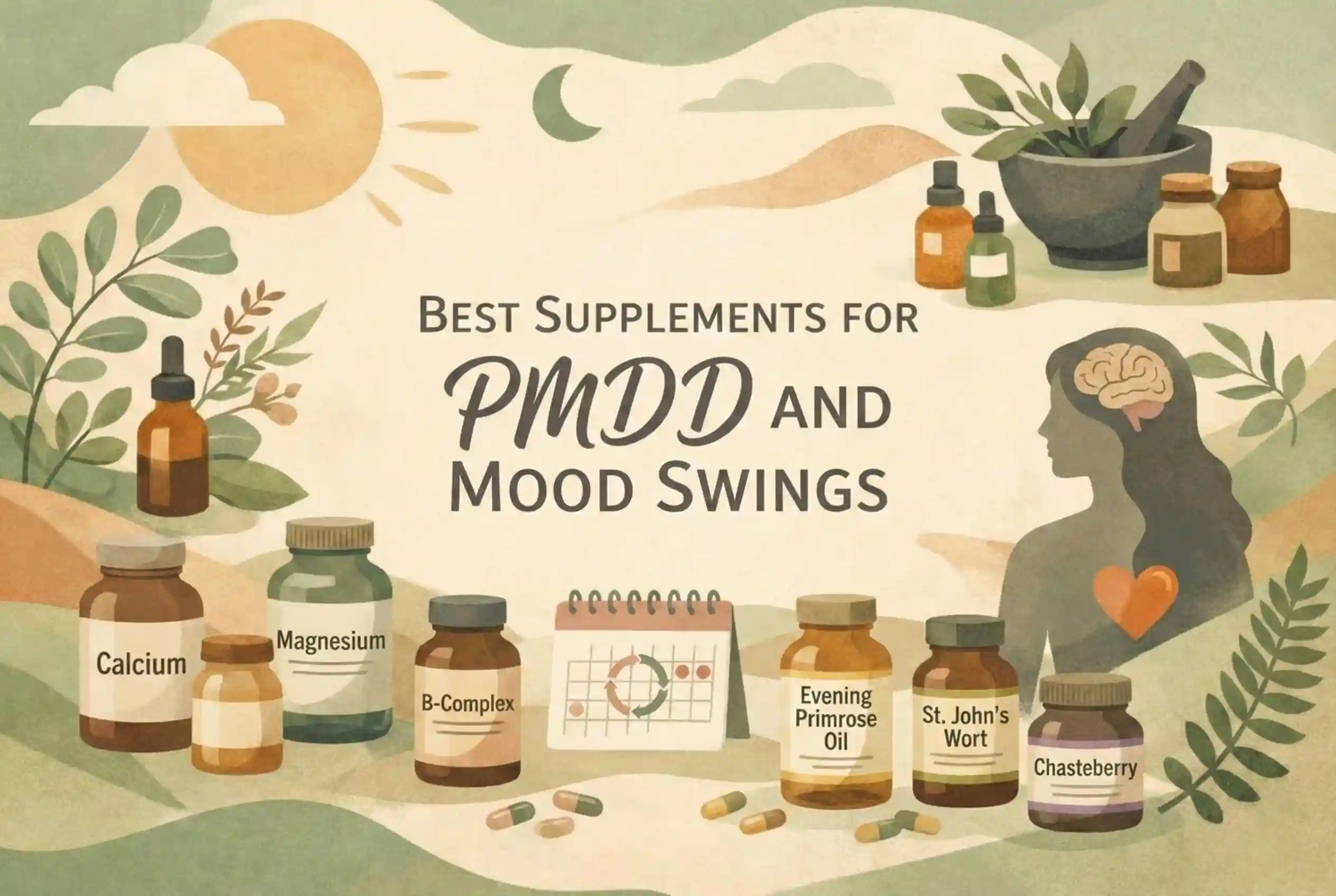
I’ll never forget the client who told me she’d started keeping her credit cards with a trusted friend during the week before her period. Not because of reckless spending, but because the rage and despair were so intense she couldn’t trust herself to make decisions. She’d quit jobs, ended relationships, and said things she deeply regretted, all in that narrow window between ovulation and menstruation.
That’s PMDD. And if you’re reading this because you recognize yourself in that description, I want you to know: this isn’t weakness, it isn’t being dramatic, and it’s not just “bad PMS.”
Premenstrual Dysphoric Disorder is a real, diagnosable condition that affects roughly 5-8% of menstruating people. It’s marked by severe mood symptoms in the luteal phase (the two weeks before your period) that genuinely interfere with work, relationships, and daily functioning. We’re talking about emotional overwhelm that feels completely out of proportion to what’s happening around you.
Supplements can help, sometimes significantly. But they’re only part of the picture, and not every supplement marketed for “hormones” or “mood” actually does anything useful. After 12 years of working with clients experiencing PMDD and severe mood swings, I’ve learned what tends to work, what’s overrated, and crucially, when you need more support than supplements alone can provide.
This article will walk you through the evidence-based options I use regularly in practice, what doesn’t live up to the hype, and how to build a practical protocol that actually makes sense for your situation.
Understanding PMDD vs Regular Mood Swings
Before we dive into supplements, let’s get clear on what we’re dealing with.
PMDD isn’t just sensitivity or having a bad day. It’s characterized by severe symptoms that show up predictably in the luteal phase (after ovulation, before bleeding) and resolve within a few days of menstruation starting. Common experiences include:
- Intense irritability, anger, or rage (often the most prominent symptom)
- Deep sadness or hopelessness
- Overwhelming anxiety or feeling on edge
- Complete emotional numbness or detachment
- Physical tension, joint pain, or muscle aches
- Severe fatigue or lack of motivation
- Food cravings and sleep disruption
The key distinction: these symptoms are severe enough to impact your work, relationships, or ability to function normally. If you’re mostly fine and then suddenly can’t get out of bed, pick fights with everyone you love, or feel like you’re watching your life from outside your body for a week each month, that’s PMDD territory.
That said, not all cyclical mood swings are PMDD. I’ve seen patterns that look hormonal but are actually:
- Thyroid dysfunction (especially subclinical hypothyroidism)
- Blood sugar dysregulation (reactive hypoglycemia mimics mood swings)
- Chronic stress depleting cortisol reserves
- Perimenopause (can start earlier than you think)
- Iron deficiency (worsens premenstrually when inflammation rises)
When to See Your GP First
- Thoughts of self-harm or suicide (even fleeting ones)
- Symptoms that don’t clearly resolve when bleeding starts
- First onset after age 40 (might be perimenopause)
- Severe physical symptoms alongside mood changes
- No clear pattern when you track for 2-3 cycles
If you’re experiencing suicidal thoughts, please reach out to Lifeline (13 11 14) or Beyond Blue (1300 22 4636) immediately.
The Foundation: Why Supplements Alone Won’t Cut It
I need to be honest with you from the start: if your blood sugar is all over the place, you’re sleeping four hours a night, and stress is through the roof, no supplement is going to fix PMDD.
Blood sugar stability matters more than most people realize. When glucose crashes (which happens easily if you’re skipping meals, eating mostly carbs, or stressed), your body releases cortisol and adrenaline to bring it back up. That triggers anxiety, irritability, and mood swings that compound hormonal sensitivity. In the luteal phase when progesterone is already affecting blood sugar regulation, this becomes even more problematic.
Sleep disruption compounds everything. Progesterone should have a calming, sleep-promoting effect, but when your nervous system is fried or your blood sugar drops overnight, you wake up wired. Poor sleep tanks serotonin production, increases inflammation, and makes emotional regulation nearly impossible.
The stress-hormone-mood triangle is real. Chronic stress depletes the nutrients needed for neurotransmitter production (magnesium, B vitamins, zinc), disrupts the HPA axis, and can suppress progesterone production. You end up with less resilience right when you need it most.
I always address these basics before layering supplements. That means:
- Eating protein and fat with every meal
- Not going more than 4 hours without food during the day
- Prioritizing 7-8 hours of sleep (even if it’s not perfect)
- Some form of nervous system regulation (walking, breathwork, anything that works for you)
If you’re dealing with chronic stress or cortisol dysregulation, this guide on natural ways to lower cortisol covers the foundational work in more detail.
Magnesium: The Most Reliable Starting Point
If I could only recommend one supplement for PMDD and mood swings, it would be magnesium.
Why magnesium works: It supports GABA production (your main calming neurotransmitter), regulates the HPA axis, reduces muscle tension, and improves sleep quality. Magnesium levels naturally drop in the luteal phase, and deficiency is incredibly common. Many PMDD symptoms (anxiety, insomnia, muscle tension, irritability) overlap perfectly with magnesium deficiency symptoms.
The forms that actually make a difference:
- Magnesium glycinate – best absorbed, gentle on digestion, calming effect. This is my go-to for most clients.
- Magnesium threonate – crosses the blood-brain barrier effectively, particularly good for anxiety and brain fog. More expensive but worth it for some people.
- Magnesium citrate – decent absorption but can cause loose stools (which some people actually want). Less ideal for PMDD specifically.
Avoid magnesium oxide. It’s poorly absorbed and mostly just expensive urine.
Dosing: I typically start clients at 300-400mg of elemental magnesium daily, taken in the evening. Some people do better splitting the dose (morning and night). During the luteal phase, you can increase to 400-600mg if needed.
What to expect: Most people notice improved sleep within a few days to a week. Mood benefits are usually apparent within 2-3 weeks. Physical tension (tight jaw, shoulder pain, period cramps) often improves noticeably in the first cycle.
Who responds best: Pretty much everyone benefits from magnesium, but I see the most dramatic shifts in people with significant muscle tension, insomnia, or anxiety as primary symptoms. If rage and irritability are your main issues, magnesium helps but you’ll likely need additional support.
Vitamin B6 (P5P): Helpful But Overhyped
Vitamin B6 shows up constantly in PMDD protocols, and while it can help, it’s not the miracle solution it’s often marketed as.
The mechanism: B6 is a cofactor for converting tryptophan to serotonin and tyrosine to dopamine. Both neurotransmitters are involved in mood regulation, and they can be affected by hormonal fluctuations. The theory is that supplementing B6 in the luteal phase supports better neurotransmitter production when you need it most.
Why the active form (P5P) matters: Regular B6 (pyridoxine) needs to be converted to its active form (pyridoxal-5-phosphate or P5P) in the liver. Some people don’t convert it efficiently. P5P is already active and more reliably effective.
Dosing concerns: This is where people get into trouble. More is absolutely not better with B6. Doses above 100mg daily can cause nerve damage (peripheral neuropathy) over time. I typically use 25-50mg of P5P daily, only in the luteal phase, not continuously.
When I use it vs when I skip it: B6 works best when combined with magnesium for people who have clear serotonin-related symptoms (low mood, crying spells, carbohydrate cravings). If anxiety and rage are the primary issues, I often skip it in favor of other options.
The research on B6 for PMS is actually quite mixed. Some studies show benefit, others don’t. In practice, I find it helpful for maybe 50% of clients, usually as part of a broader protocol rather than a standalone solution.
Vitex (Chasteberry): Controversial But Sometimes Game-Changing
Vitex is probably the most debated herb in women’s health, and for good reason. It can be incredibly effective for some people and completely backfire for others.
How vitex works: It acts on dopamine receptors in the pituitary gland, which can reduce prolactin secretion and indirectly support progesterone production. The theory is that better progesterone levels in the luteal phase reduce PMDD symptoms.
Who it works well for: In my experience, vitex is most effective for people with:
- Short luteal phases (less than 10 days)
- Spotting before their period
- Breast tenderness as a major symptom
- Confirmed low progesterone on testing
Who should avoid it:
- Anyone on hormonal birth control (vitex can interfere)
- People with a history of psychiatric conditions (can worsen anxiety or depression in some cases)
- Those with PCOS driven by high LH (vitex can increase LH)
- If you have excess progesterone relative to estrogen
The patience required: Vitex is slow. I tell clients to commit to at least 3-6 months before deciding if it’s working. It’s regulating your cycle, not just masking symptoms, so it takes time.
My honest take: After years of prescribing vitex, I’ve seen it be genuinely life-changing for about 30% of clients, moderately helpful for another 30%, and ineffective or problematic for the rest. It’s not a first-line supplement for PMDD unless there are clear signs of progesterone deficiency. When it works, though, it really works.
Omega-3s: Underrated for Mood Regulation
Fish oil doesn’t get enough credit for mental health support, probably because it’s not as sexy as exotic herbs or trendy adaptogens.
Anti-inflammatory effects on brain chemistry: Chronic low-grade inflammation affects neurotransmitter production and receptor sensitivity. Omega-3 fatty acids (particularly EPA) are powerfully anti-inflammatory and support healthy brain cell membrane function. They also influence serotonin and dopamine receptor activity.
EPA vs DHA ratios for mood support: For mood-specific benefits, you want a higher EPA ratio. Look for supplements with at least 2:1 EPA to DHA, ideally higher. For PMDD, I typically recommend formulas that are 3:1 or even pure EPA.
Quality matters: Not all fish oil is created equal. Look for:
- Third-party testing for heavy metals and purity
- Triglyceride form (better absorbed than ethyl ester)
- High concentration (so you’re not swallowing six giant capsules daily)
- Stored properly (omega-3s are fragile and oxidize easily)
Dosing and realistic timeframes: I usually start with 2000-3000mg of combined EPA/DHA daily, which typically means 1000-1500mg of EPA specifically. Take with food for better absorption.
Mood benefits take 6-8 weeks minimum to become apparent. This isn’t a quick fix, but it’s addressing underlying inflammation and brain chemistry, not just masking symptoms.
For more context on omega-3s and other evidence-based supplements for anxiety and mood, this article covers the broader landscape.
Calcium and Vitamin D: The Supportive Duo
These two don’t get as much attention for PMDD, but the research is actually quite solid.
Why calcium keeps showing up in PMDD research: Several well-designed studies have shown that calcium supplementation (1200mg daily) can reduce mood and physical symptoms of PMS and PMDD. The mechanism isn’t entirely clear, but calcium is involved in neurotransmitter release and hormonal fluctuations affect calcium metabolism.
Food sources vs supplementation: I always prefer food sources when possible. Dairy, leafy greens, sardines with bones, fortified plant milks, and tahini are all good options. But if you’re consistently undereating calcium-rich foods, supplementation makes sense.
Vitamin D’s role in mood: Deficiency is extremely common (especially in Australia during winter) and mimics PMDD symptoms: low mood, fatigue, poor sleep, muscle aches. Vitamin D receptors are present in brain regions involved in mood regulation.
Testing before supplementing: With vitamin D specifically, I strongly recommend testing first. Optimal levels for mood are 75-100 nmol/L (some say even higher). If you’re at 40 nmol/L, you’ll need therapeutic dosing (5000 IU daily or higher) to get into optimal range. If you’re already at 90 nmol/L, supplementing won’t add much benefit.
Calcium doesn’t need testing, but if you’re getting adequate dietary intake (3 serves of calcium-rich foods daily), you probably don’t need a supplement.
Herbal Support: When and What I Use
Beyond the well-known options, there are several herbs I reach for depending on symptom patterns.
Saffron for mood and irritability: This is genuinely one of the most underrated supplements for mood. Multiple studies show saffron extract (30mg daily of standardized extract) is as effective as low-dose SSRIs for mild to moderate depression, with far fewer side effects. For PMDD-related irritability and low mood, I’ve seen excellent results. It’s expensive, but you need a small dose.
St John’s Wort: powerful but complicated: This herb is legitimately effective for depression, but it interacts with many medications (birth control, antidepressants, blood thinners, immunosuppressants). If you’re on any prescription medication, St John’s Wort is off the table. If you’re not, it can be very helpful for luteal phase low mood, but you need to work with a practitioner.
Rhodiola for stress resilience: When stress is compounding PMDD symptoms (which is nearly always), rhodiola can help. It’s an adaptogen that supports cortisol regulation and improves stress resilience without being overly stimulating. I use it in the morning, 200-400mg of standardized extract.
Passionflower and skullcap for tension and sleep: Both are gentle nervines (herbs that calm the nervous system) that work well for anxiety, racing thoughts, and difficulty winding down. They’re particularly useful if insomnia or physical tension worsens premenstrually. I often combine them in a tea or tincture for evening use.
For more information on how I use herbal medicine in practice and what to expect, check out this page.
What Doesn’t Work (Or Isn’t Worth the Hype)
Let’s save you some money and disappointment.
Evening primrose oil: This was everywhere in the 90s and early 2000s for PMS. The research is weak at best, and multiple reviews have found no significant benefit for mood symptoms. It might help with breast tenderness in some people, but for PMDD specifically, it’s not worth it.
Random “hormone balancing” blends: If a product claims to “balance hormones” but doesn’t specify which hormones or how it’s working, it’s marketing fluff. Hormones are complex, and vague promises about “balance” usually mean the formula is throwing everything at the wall hoping something sticks.
Mega-dose B complex formulas: These often contain 50-100 times the RDI of various B vitamins. Your body can’t use that much, especially of the synthetic forms commonly used. You end up with expensive urine and potentially some side effects (B6 toxicity, nausea, skin reactions). Targeted, moderate doses of specific B vitamins make more sense.
Trendy adaptogens that aren’t specific enough: Ashwagandha, maca, holy basil… they’re all fine herbs with legitimate uses, but they’re not particularly targeted for PMDD. They might support general stress resilience, but if you’re looking for specific mood support in the luteal phase, there are better options.
The Testing Worth Considering
Not everyone needs extensive testing, but sometimes it clarifies what’s actually going on.
When hormone testing makes sense (and when it doesn’t):
Standard blood tests for hormones are notoriously unreliable for PMDD because:
- Levels fluctuate throughout the cycle
- “Normal” ranges are broad and don’t capture individual patterns
- The issue with PMDD is often receptor sensitivity, not absolute hormone levels
That said, testing can be useful for:
- Ruling out thyroid dysfunction
- Confirming perimenopause if you’re over 40
- Checking progesterone if you have signs of deficiency (short luteal phase, spotting)
Thyroid, iron, and vitamin D: the baseline three
These are worth checking for nearly everyone with PMDD-like symptoms:
- Thyroid (TSH, free T4, free T3) – subclinical hypothyroidism mimics PMDD
- Ferritin – optimal is 70-100 μg/L for mood and energy; many people are low-normal
- Vitamin D – as mentioned earlier, 75-100 nmol/L is the target
DUTCH testing for complex cases:
If symptoms are severe, you’ve tried multiple approaches without success, or there are signs of significant hormone imbalance, DUTCH (Dried Urine Test for Comprehensive Hormones) can provide detailed information about:
- Estrogen and progesterone metabolites throughout the cycle
- Cortisol patterns
- Neurotransmitter metabolites
It’s expensive and not essential for everyone, but for complex presentations it can guide treatment more effectively.
Learn more about functional testing options here.
Putting It Together: A Practical Starting Protocol
Here’s how I typically structure supplement protocols for PMDD in practice.
Month 1: Foundations
Start with:
- Magnesium glycinate 300-400mg nightly
- Omega-3s (high EPA) 2000-3000mg daily with food
- Focus on blood sugar stability (protein with every meal, no skipping meals)
- Track your symptoms using a cycle mapping app or journal
What to watch for:
- Improved sleep quality within 1 week
- Reduced physical tension (jaw clenching, muscle aches) within 2 weeks
- Mood shifts are slower, usually 3-4 weeks minimum
Month 2: Assessing Response and Adding Targeted Support
If Month 1 helped but wasn’t enough, add:
- Vitamin B6 (P5P) 25-50mg daily (luteal phase only if you prefer targeted dosing)
- Saffron 30mg daily if irritability and mood are prominent
- Consider calcium 600mg twice daily if dietary intake is low
If Month 1 didn’t help at all:
- Recheck the basics (blood sugar, sleep, stress)
- Consider testing (thyroid, iron, vitamin D)
- Re-evaluate whether this is actually PMDD or something else
Tracking Symptoms Properly
You cannot know what’s working without tracking. Cycle mapping is essential:
- Rate mood, anxiety, irritability, physical symptoms daily (0-10 scale)
- Note where you are in your cycle (use an app or calendar)
- Track for at least 2-3 cycles before making major decisions
- Look for patterns: are symptoms actually worse in the luteal phase, or is something else going on?
When to Pivot and Try Something Different
If you’ve been consistent for 3 months with magnesium, omega-3s, and lifestyle foundations, and you’re seeing less than 30-40% improvement, it’s time to:
- Consider vitex if progesterone deficiency is suspected
- Explore herbal support (saffron, rhodiola, nervines)
- Discuss medication options with your GP
- Work with a practitioner for individualized support
If you’re dealing with significant hormonal mood patterns and want personalized guidance, this is the type of work we’d do together.
When Supplements Aren’t Enough
I need to be very clear about this: supplements are not always enough for PMDD, and that’s okay.
Signs you need medical support:
- Symptoms are severe enough that you can’t work or function normally
- Thoughts of self-harm, even if they’re only present premenstrually
- Relationships are seriously damaged by mood swings
- You’ve tried comprehensive naturopathic support for 6+ months with minimal benefit
- Sleep is severely disrupted despite all interventions
Integrating naturopathic and medical care:
SSRIs (particularly those taken only in the luteal phase) are genuinely effective for many people with PMDD. Hormonal options (birth control, progesterone therapy) work for others. These are legitimate treatment options, and sometimes they’re necessary.
I’ve worked with plenty of clients who use low-dose SSRIs during the luteal phase alongside magnesium, omega-3s, and nervous system support. The combination often works better than either approach alone. There’s no shame in using medication when it’s the right tool for the job.
The role of therapy and nervous system work:
PMDD has a biological basis, but it also affects how you relate to yourself, your emotions, and your capacity to regulate when things feel overwhelming. Therapy (particularly CBT or DBT) can provide tools for managing intense emotions when they arise. Somatic work, trauma processing, and nervous system regulation practices often help more than people expect.
For more on how naturopathic and medical care can work together effectively, this article covers the collaborative approach.
Real Client Outcomes (Anonymous Examples)
Client A: Mid-30s, primary symptom was rage. She described screaming at her partner over minor things (dirty dishes, being five minutes late) and feeling completely out of control. We started with magnesium and blood sugar work (she was skipping breakfast and having coffee on an empty stomach). Within three weeks, the rage episodes decreased by about 70%. She still felt irritable premenstrually, but it was manageable. No other supplements needed.
Client B: Late 20s, crushing low mood and anxiety in the luteal phase, plus significant breast tenderness and spotting before her period. After testing showed low progesterone and short luteal phase, we used vitex alongside magnesium, B6, and omega-3s. It took six months, but her luteal phase lengthened, spotting stopped, and mood improved dramatically. She still has some mild symptoms, but nothing like before.
Client C: Early 40s, severe PMDD symptoms that were affecting her ability to work. She’d tried supplements, diet changes, therapy, and nothing made a significant dent. We worked together for four months while she also saw her GP. Eventually, she started taking sertraline (an SSRI) only in the luteal phase. The combination of medication plus magnesium, omega-3s, and nervous system work gave her relief. She needed the medication, and supplements enhanced the effect.
The common thread: individualized approach, patience, honest tracking, and willingness to adjust when something isn’t working.
Start Simple, Track Honestly, Get Support
PMDD is complex. There’s no single magic supplement, and anyone who tells you otherwise is either oversimplifying or trying to sell you something.
That said, starting with magnesium and foundational work makes sense for most people. It’s safe, evidence-based, addresses common deficiencies, and helps more often than not. From there, you can add targeted support based on your specific symptom pattern.
Tracking helps you know what’s actually working. Without data, you’re guessing. Map your cycle, rate your symptoms, and give interventions at least 2-3 months before deciding they’re not working.
You don’t have to figure this out alone. If you’re struggling to piece together what might help, or you’ve tried multiple things without clear benefit, working with someone who understands both the research and the practical realities can save you time, money, and frustration.
PMDD is real, it’s not your fault, and support is available. Whether that’s supplements, medication, therapy, or all of the above, you deserve to feel stable and functional throughout your entire cycle.
If you’d like personalized guidance on building a protocol that makes sense for your situation, you can book a consultation here.
FAQ
Can I take all these supplements together?
Magnesium, omega-3s, B6 (in moderate doses), calcium, and vitamin D are all safe to take together. If you’re adding herbs like vitex or St John’s Wort, work with a practitioner, especially if you’re on any medications. Start with foundations (magnesium and omega-3s) and add one thing at a time so you know what’s helping.
How long before I see results?
Sleep and physical tension often improve within 1-2 weeks with magnesium. Mood benefits typically take 3-4 weeks minimum, sometimes 6-8 weeks for omega-3s. Vitex requires 3-6 months. If you’re seeing zero change after 3 months of consistent use with foundations in place, reassess.
Will supplements interfere with my birth control or antidepressants?
Magnesium, omega-3s, calcium, and vitamin D don’t interact with birth control or most antidepressants. B6 in high doses (100mg+) can theoretically reduce effectiveness of some medications. St John’s Wort absolutely interferes with birth control and many antidepressants. Vitex can interfere with hormonal birth control. Always check with your prescribing doctor and work with a practitioner when combining supplements and medications.
What if my doctor says PMDD isn’t real?
PMDD is recognized in the DSM-5 (the diagnostic manual for psychiatric conditions) and has substantial research backing. If your doctor dismisses your symptoms, consider seeking a second opinion from a GP who specializes in women’s health or a psychiatrist. You can also track your symptoms for 2-3 cycles and bring the data to your appointment to show the clear luteal phase pattern.
Can diet alone fix PMDD without supplements?
For some people, yes. Blood sugar stabilization, adequate protein and healthy fats, reducing inflammatory foods, and consistent meal timing can significantly reduce symptoms. But many people are deficient in key nutrients (magnesium especially) and need supplementation to get levels optimal. Diet is foundational, supplements are supportive, and sometimes medication is necessary. It’s not either/or.