
I’ll never forget the first time a client came to see me, hands shaking slightly as she held out a genetic test result. “It says I have an MTHFR mutation,” she said, voice tight with worry. “I’ve been reading online and… is this why I’m so tired all the time? Can I even detox properly? Do I need special supplements for the rest of my life?”
She’d fallen down the rabbit hole that so many of my clients find themselves in. Dr. Google had convinced her that this genetic variation was the root of every health problem she’d ever had.
Here’s what I told her then, and what I’m going to share with you now: MTHFR is information, not a disaster. It’s one piece of your health puzzle, and yes, it can explain some things. But the story is far more nuanced than the internet would have you believe.
In this article, I’m going to walk you through what MTHFR actually is, how it might affect your energy and detoxification, and most importantly, what you can actually do about it without the fear-mongering or expensive supplement protocols that may or may not be right for you.
What MTHFR Actually Is (No Jargon Version)
Let’s start with the basics, because the terminology alone is enough to send anyone into a panic.
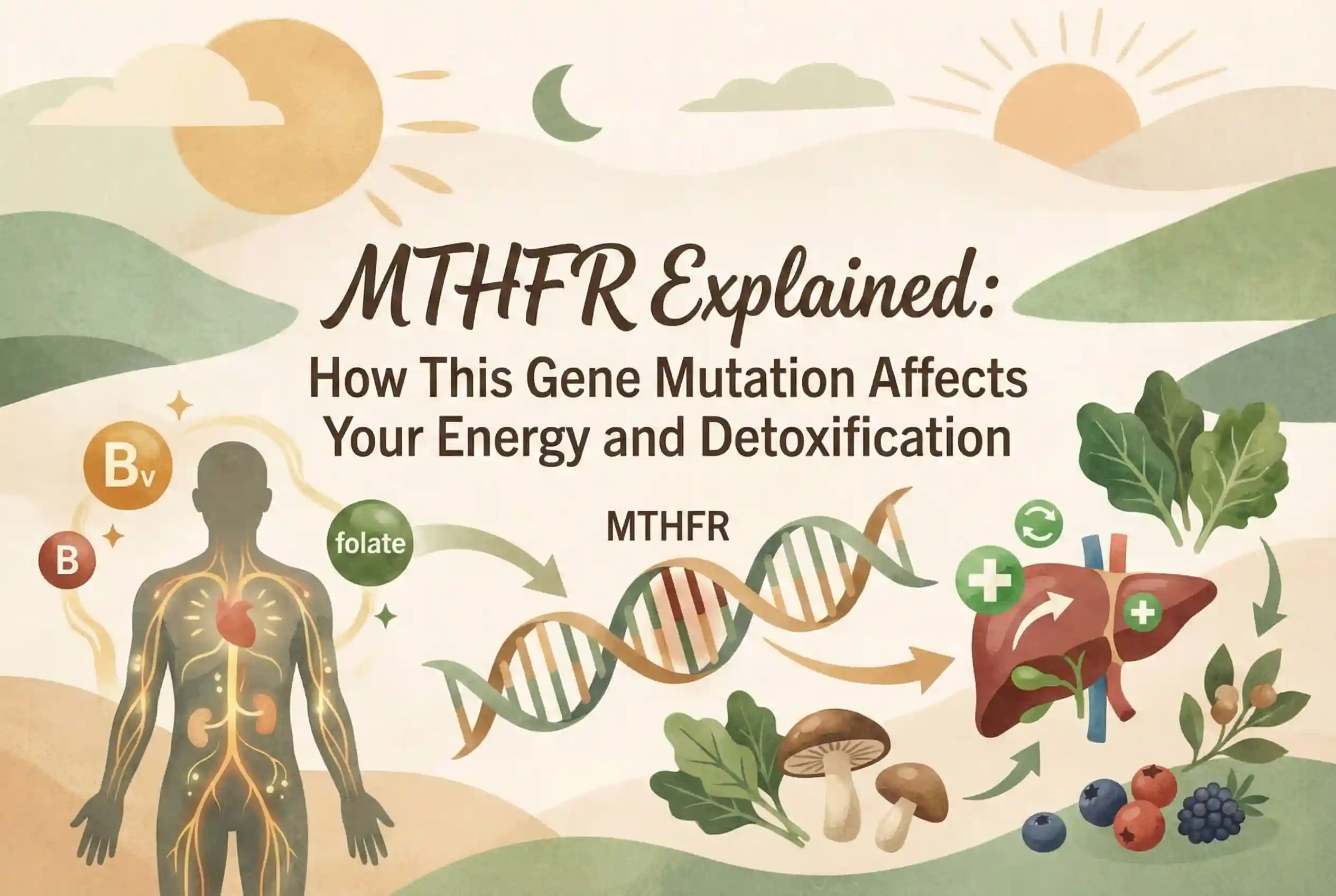
MTHFR stands for methylenetetrahydrofolate reductase. Yes, that’s a mouthful. It’s the name of both a gene you carry and the enzyme that gene produces. This enzyme has one crucial job: converting folate (vitamin B9) from your food into its active form, called methylfolate, which your body can actually use.
Think of it like this: folate from food is like a key that doesn’t quite fit the lock yet. The MTHFR enzyme is the key-cutter that shapes it properly so it can unlock all the doors it needs to.
Now, when people talk about having an “MTHFR mutation,” what they really mean is they have a variation in this gene. I prefer the terms “variant” or “polymorphism” because “mutation” sounds scary and rare. It’s neither.
Here’s the reality: around 40-60% of the population has at least one MTHFR variant. If you have one, you’re in very common company.
The Two Main Variants You’ll Hear About
There are two primary MTHFR variants that get discussed:
C677T – This is the one that tends to have more noticeable effects on enzyme function. When you have two copies (one from each parent), the enzyme efficiency can drop by around 60-70%.
A1298C – Generally has less impact on enzyme function, but can still affect methylation pathways, particularly in combination with other factors.
You’ll also hear terms like:
- Heterozygous – You have one copy of the variant (from one parent)
- Homozygous – You have two copies (one from each parent)
- Compound heterozygous – You have one copy of C677T and one copy of A1298C
In my practice, I see the most pronounced symptoms in clients who are homozygous for C677T, though everyone is different. Some people with double variants feel fine. Others with a single variant struggle significantly. Your genes load the gun, but your lifestyle and environment pull the trigger.
How MTHFR Actually Affects Your Body
This is where we need to talk about methylation, and I promise to keep it simple.
Methylation is essentially a biochemical tagging system. Your body adds tiny chemical tags (methyl groups) to various molecules to activate them, deactivate them, or shuttle them where they need to go. This happens billions of times per day in your body.
Think of methylation like a postal service. The methyl groups are the address labels that tell molecules where to go and what to do when they get there.
When your MTHFR enzyme isn’t working at full capacity, you might not be producing enough methylfolate to keep this postal service running smoothly. The downstream effects can show up in several areas:
Where This Actually Matters
Energy production – Methylation is crucial for mitochondrial function (your cellular power plants). When it’s sluggish, so is your energy.
Detoxification pathways – Your liver uses methylation in phase 2 detoxification to process hormones, neurotransmitters, and environmental toxins.
Neurotransmitter balance – Serotonin, dopamine, and norepinephrine all rely on methylation for proper metabolism. This affects mood, focus, and sleep.
Homocysteine levels – When methylation is impaired, homocysteine (an amino acid) can build up. Elevated levels are a cardiovascular risk marker.
Histamine breakdown – One pathway for breaking down histamine requires methylation, which is why some people with MTHFR variants notice histamine sensitivity.
I worked with a client recently, a 42-year-old woman we’ll call Emma, who’d been struggling with persistent fatigue for years despite doing “everything right.” She ate well, exercised moderately, slept adequately. Blood tests from her GP showed nothing remarkable.
When we tested her homocysteine, it was elevated. Her MTHFR status (homozygous C677T) combined with low active B12 and signs of poor methylation explained why her mitochondria weren’t getting the support they needed. It wasn’t the MTHFR alone causing her fatigue, but it was part of the picture.
The Energy Connection
Let me be clear: having an MTHFR variant doesn’t automatically mean you’ll be exhausted. But when methylation isn’t optimal, energy production can suffer.
Here’s the mechanism: your mitochondria need a constant supply of methylated B vitamins to produce ATP (cellular energy). Folate and B12 work together intimately. If you can’t convert folate to its active form efficiently, and if your B12 status is borderline, your mitochondria are essentially trying to run a marathon on a fraction of the fuel they need.
Common Energy Symptoms I See in Clients with MTHFR Variants:
- Persistent fatigue that doesn’t improve with rest
- Afternoon energy crashes, particularly after lunch
- Slow recovery after exercise
- Brain fog and poor concentration, especially later in the day
- That “tired but wired” feeling
What’s interesting is that many of these clients have tried B vitamin supplements before seeing me and felt worse, not better. This is often because they jumped straight to high doses of methylated B vitamins without addressing the foundations first, or because their unique biochemistry didn’t tolerate aggressive methylation support.
If chronic fatigue is your primary concern, understanding the broader picture of energy metabolism is crucial. MTHFR might be one factor, but it’s rarely the only one.
The Detoxification Angle
The word “detox” gets thrown around constantly, often accompanied by expensive juice cleanses or supplement protocols. Let me reframe this for you.
Detoxification isn’t something you do occasionally. It’s something your body does constantly, every single day, primarily through your liver.
Your liver has two main phases of detoxification. Phase 1 breaks down substances (think: alcohol, medications, hormones, environmental chemicals). Phase 2 makes them water-soluble so you can excrete them through urine or bile. Methylation is one of the key pathways in phase 2.
When methylation is compromised, this can affect:
Hormone Metabolism
Particularly oestrogen. Your body needs to methylate and package oestrogen metabolites for elimination. If this process is sluggish, you might experience:
- Heavy or painful periods
- Significant PMS or mood swings
- Breast tenderness
- Oestrogen dominance symptoms
Chemical and Medication Sensitivity
Clients often tell me they can’t tolerate alcohol like they used to, or they’re extremely sensitive to medications. One glass of wine and they feel terrible the next day. Half a dose of medication gives them side effects.
This can be related to sluggish phase 2 detoxification pathways.
Sluggish Elimination Overall
Some people just feel generally “toxic” or sluggish. Headaches, skin issues, bloating, brain fog that comes and goes.
I want to be really clear here: supporting detoxification doesn’t mean buying expensive “detox” products. It means giving your liver what it needs to do its daily job effectively. This includes adequate protein, specific nutrients, good gut function, and reducing unnecessary burden where you reasonably can.
If this resonates and you’re dealing with stubborn hormonal symptoms or chemical sensitivities, supporting your liver and detoxification pathways might be worth exploring more deeply.
What MTHFR Doesn’t Mean (Myth-Busting Time)
I need to pump the brakes here because there’s a lot of misinformation floating around. Let me address some common myths I hear weekly:
“I have an MTHFR mutation, so I can’t detox.”
Not true. You can absolutely detoxify. Your pathways might need more support, but they’re not broken.
“I need to avoid all folic acid forever.”
The synthetic folate story is more nuanced. While it’s true that if you can’t convert folic acid to methylfolate efficiently, it might not be the best form for you, moderate amounts in fortified foods aren’t going to destroy your health. Context and individual tolerance matter.
“Everyone with MTHFR variants has symptoms.”
Absolutely not. I’ve seen plenty of clients with homozygous variants who feel completely fine. Genetics load the gun, but lifestyle, diet, stress, gut health, and other factors determine whether it fires.
“Supplements will fix my MTHFR.”
If only it were that simple. Methylated B vitamins can be helpful, but they’re not magic pills. I’ve seen more clients made worse by inappropriate supplementation than I’ve seen helped by it without proper foundational work.
“MTHFR is a diagnosis.”
It’s not. It’s genetic information that might help explain certain patterns, but it’s not a disease or condition in itself.
The danger I see is people making MTHFR their entire identity or using it as an excuse for why nothing works. Your genetics are one small piece of who you are and how your body functions.
Should You Even Get Tested?
This is a question I get constantly, and my answer might surprise you: maybe not.
When MTHFR Testing Makes Sense:
- You have concerning symptoms (chronic fatigue, mood issues, hormonal problems) that haven’t responded to standard approaches
- You have a family history of cardiovascular disease, recurrent pregnancy loss, or other conditions associated with elevated homocysteine
- Your homocysteine is elevated on standard blood work
- You’ve had adverse reactions to folate or B vitamin supplements
When It Probably Doesn’t:
- You have no symptoms and are just curious
- You’re looking for a single explanation for everything
- You’re going to use it as justification for expensive supplement protocols without professional guidance
Here’s what I actually do in practice: I look at functional markers first. Homocysteine, methylmalonic acid (MMA), active B12, red blood cell folate. If someone has symptoms consistent with impaired methylation and their functional markers support this, I can work with that information whether or not we know their MTHFR status.
Sometimes we test MTHFR. Sometimes we don’t. The genetic information is interesting, but the functional picture tells me what’s actually happening in your body right now, which is what I need to know to help you effectively.
If you’re curious about what functional testing might reveal about your individual biochemistry, this page explains my approach to testing and when it’s genuinely useful versus when we can work without it.
Key Points to Remember
About MTHFR:
- It’s a common genetic variation, not a rare mutation or disease
- 40-60% of people have at least one variant
- Having it doesn’t automatically mean you’ll have symptoms
How It Can Affect You:
- May impact energy production, detoxification, hormone metabolism, and neurotransmitter balance
- Effects depend on which variant(s) you have, plus your overall health status
- Lifestyle and nutrition play enormous roles in how this expresses
What Actually Helps:
- Support through real food first (folate-rich vegetables, B12 sources)
- Address foundations: gut health, stress, sleep, nutrient status
- Methylated B vitamins can help but should be introduced carefully and individually
- Professional guidance prevents common supplementation mistakes
Red Flags to See a Practitioner:
- You’ve tried methylated supplements and felt significantly worse
- You have complex symptoms affecting multiple body systems
- Your homocysteine is elevated
- You’re on medications that might interact with methylation support
What Actually Helps (Practical Steps)
Right. You’ve made it this far, and you’re probably thinking: “Okay Sarah, but what do I actually do with this information?”
Let me walk you through the same approach I use with clients. We always start with foundations before jumping to supplements.
Dietary Support (Start Here)
Your body needs folate and B12 from food, regardless of your MTHFR status. The beautiful thing is that food-based folate is already in forms your body can use more easily.
Folate-rich foods to emphasise:
- Dark leafy greens (spinach, kale, rocket)
- Legumes (lentils, chickpeas, black beans)
- Eggs (particularly the yolks)
- Asparagus, broccoli, Brussels sprouts
- Liver and organ meats (if you tolerate them)
- Avocado
Active B12 sources:
- Animal foods are your primary source: meat, fish, eggs, dairy
- Shellfish and sardines are particularly high
- If you’re plant-based, supplementation is necessary regardless of MTHFR status
Supporting nutrients matter too:
- B2 (riboflavin) – needed for MTHFR enzyme function: dairy, eggs, almonds, mushrooms
- B6 – works alongside B12 in methylation: chickpeas, salmon, chicken, potatoes
- Magnesium – cofactor for hundreds of enzyme reactions: pumpkin seeds, dark chocolate, leafy greens
- Zinc – supports methylation pathways: oysters, beef, pumpkin seeds
I had a client who was convinced she needed high-dose methylfolate supplements. When we tracked her food intake, she was eating virtually no folate-rich foods and was chronically undereating protein. We increased her food-based folate and protein intake first, and her energy improved noticeably before we even discussed supplements.
The Supplement Conversation
I’m going to be really honest with you: this is where people get into trouble.
They read online that they need methylfolate and methylcobalamin (active B12), order them from the internet, take the recommended dose on the bottle, and feel absolutely awful. Anxiety, insomnia, irritability, headaches, heart palpitations.
This is called overmethylation, and it’s surprisingly common when people supplement aggressively without guidance.
When methylated B vitamins make sense:
- Your functional markers indicate need (low active B12, elevated homocysteine)
- Dietary intake alone isn’t sufficient
- You have symptoms consistent with impaired methylation
- You’ve addressed gut absorption issues first
How I approach supplementation differently:
- Start low and slow. I mean really low. Sometimes 200mcg of methylfolate, not the 5mg some protocols recommend
- Monitor response carefully. How’s your sleep? Mood? Energy? Any new symptoms?
- Adjust dose based on individual response, not textbook protocols
- Quality matters enormously. Not all methylated B vitamins are created equal
- Consider forms and cofactors. Sometimes hydroxocobalamin (B12) is better tolerated than methylcobalamin
- Always assess whether the person can actually absorb what they’re taking
I’ve worked with clients where we discovered through comprehensive digestive health assessment that they had significant gut inflammation and malabsorption. No amount of supplementation helps if you can’t absorb it. We addressed the gut first, and suddenly moderate doses of nutrients were effective.
Lifestyle Factors That Support Methylation
This is the part people often skip, wanting to jump straight to supplements. But honestly, these factors can make or break your methylation status.
Stress management – Chronic stress burns through B vitamins at an accelerated rate. Your adrenals need methylation to produce stress hormones. If you’re constantly stressed, you’re constantly depleting your methylation capacity.
I see this all the time: someone comes in, their life is incredibly stressful (demanding job, young kids, aging parents, financial pressure), and they wonder why supplements aren’t working. We need to address the stress response, or we’re just pouring water into a bucket with holes in it.
If stress and burnout are significant factors for you, this is worth exploring as part of your bigger picture.
Sleep quality – Your body does its restoration and repair work during sleep. Methylation pathways are active during cellular repair. Poor sleep = impaired recovery at every level.
Gut health – I’ve mentioned this several times because it’s that important. Your gut produces some B vitamins. Your gut absorbs B vitamins from food and supplements. If your gut lining is inflamed or damaged, if you have dysbiosis or SIBO, if your digestive function is compromised, methylation support won’t work optimally no matter what you take.
Reducing toxic load – And I don’t mean becoming obsessive or anxious about this. I mean practical, reasonable steps:
- Choose organic for the “dirty dozen” produce where practical
- Filter your drinking water
- Use cleaner personal care products when you can
- Avoid unnecessary medications or supplements
- Limit alcohol consumption
- Address mold exposure if it’s present in your environment
The goal isn’t perfection. The goal is reducing unnecessary burden on your detoxification pathways where it’s reasonable and accessible for you.
When to Work with a Practitioner
Look, I’m obviously biased here because this is what I do. But let me tell you when I genuinely think professional support makes a difference versus when you might be fine figuring things out on your own.
Signs You’d Benefit from Professional Support:
You’ve tried methylated supplements and felt worse – This is really common and usually means dosing, timing, or form needs adjustment, or that foundations need addressing first.
You have a complex symptom picture – Fatigue plus hormonal issues plus digestive problems plus mood symptoms. When multiple systems are involved, you need someone who can see the whole picture and prioritize appropriately.
You’re on medications – Methylation support can interact with certain medications. Antidepressants, blood pressure medications, and others can be affected.
Your symptoms are significantly impacting your quality of life – If you’re barely functioning, trial and error on your own isn’t the best approach.
You’ve spent months or years trying different things without improvement – Sometimes you need fresh eyes on your situation and someone who can connect dots you’re missing.
What I Do Differently:
This isn’t about selling you a MTHFR protocol. It’s about understanding your unique situation.
I look at your complete health history, your current symptoms, your diet and lifestyle, your stress levels, your sleep quality, your gut health. MTHFR is just one data point in a much larger picture.
If we test, I’m looking at functional markers to understand what’s actually happening biochemically right now. Homocysteine, active B12, MMA, sometimes methylation metabolites or neurotransmitter metabolites. These tell me what your body is doing, not just what your genes might suggest.
Then we address foundations systematically. Often this means:
- Gut healing and optimizing absorption
- Dietary improvement for nutrient density
- Stress and sleep optimization
- Targeted, carefully dosed supplementation based on your specific needs and response
I monitor how you respond and adjust accordingly. Some people feel better quickly. Others need several months of foundational work before methylation support is appropriate. There’s no one-size-fits-all protocol, despite what the internet might tell you.
If you’re curious about how this works in practice, this page walks through my consultation process and what you can actually expect.
Real Client Story: Emma’s Journey
Let me share a real example (details changed for privacy) because it illustrates how this actually unfolds.
Emma came to see me at 38, struggling with exhaustion that had been building for about three years. She’d been to her GP multiple times. Standard blood work was “normal.” She’d tried various supplements based on internet research, including methylfolate, but felt jittery and anxious when she took it, so she stopped.
Her main complaints: persistent fatigue despite 8 hours of sleep, heavy painful periods, significant PMS with mood swings and brain fog, difficulty losing weight despite eating well and exercising, and general feeling of being “toxic” and sluggish.
The Assessment:
Her genetic testing (done before seeing me) showed homozygous C677T MTHFR. But more importantly:
- Homocysteine was elevated at 14 (optimal is under 10)
- Active B12 was low-normal
- Ferritin (iron stores) was 22 (very low)
- Inflammatory markers suggested gut inflammation
- She had signs of oestrogen dominance
The Approach:
Notice what I didn’t do: immediately prescribe high-dose methylfolate.
Month 1-2: We addressed her iron deficiency (this alone causes fatigue and heavy periods) and began gut healing. Anti-inflammatory diet, removal of trigger foods she’d identified, gut-healing nutrients, probiotics.
Month 2-3: Started very low-dose methylated B vitamins (400mcg methylfolate, 500mcg methylB12) along with cofactors (B2, B6, magnesium). She tolerated this well, no anxiety or jitteriness like before.
Month 3-4: Supported liver detoxification through food (cruciferous vegetables, adequate protein, fiber), added DIM for oestrogen metabolism, and continued methylation support at the same dose. Worked on stress management and sleep hygiene.
The Outcome:
By month 4, Emma reported:
- Energy was 70% better (her words: “I feel like myself again”)
- Periods were lighter and less painful
- PMS was significantly reduced, mood more stable
- Brain fog lifted
- Lost 5kg without changing exercise, which she’d been trying to do for years
Her homocysteine rechecked at 8. Iron improved to 65. She was sleeping better, managing stress better, and finally feeling like she had her life back.
The key wasn’t just addressing MTHFR. It was addressing MTHFR in the context of her iron deficiency, gut inflammation, hormone imbalance, and stress response.
This is why I get frustrated with one-size-fits-all MTHFR protocols. Emma’s neighbor might have the exact same genetic variant and need a completely different approach.
Final Thoughts
Here’s what I want you to take away from this article:
MTHFR is information, not a life sentence. It can help explain certain patterns and guide support, but it’s not a diagnosis and it’s not destiny.
Most people with MTHFR variants live perfectly healthy, energetic lives without ever knowing they have the variation. For others, understanding this piece of their biochemistry is genuinely helpful in putting together their health puzzle.
The goal isn’t to “fix” your MTHFR or fight against your genetics. The goal is to support your body’s needs, whatever they happen to be.
Start with foundations. Real food, adequate protein, nutrient density, gut health, stress management, quality sleep. These matter for everyone, MTHFR or not.
If you do need additional support through carefully selected, well-dosed supplements, work with someone who understands individual biochemistry and won’t just hand you a generic protocol.
Your genetics are one small part of who you are. Your daily choices, your environment, your stress levels, your gut health, your nutrition – these are the factors that determine how your genes express themselves.
And please, if you have MTHFR variants, don’t let them become your identity or your excuse. You are not broken. You are not defective. You might just need slightly different support than someone else, and that’s completely okay.
Take Action Today
If this article resonated and you’re dealing with persistent fatigue, hormonal imbalance, or that general feeling of not quite being right despite doing everything “right,” I can help you make sense of your individual picture.
Ready to stop guessing? Book a consultation and we’ll look at your complete situation – not just MTHFR, but all the factors affecting your energy, hormones, and overall health.
Not sure if naturopathic support is right for you? Check out my FAQ page for answers to common questions about how I work and what to expect.
Want to understand what comprehensive support actually looks like? Read about my consultation process and approach.
The right support makes all the difference. You don’t have to figure this out alone.