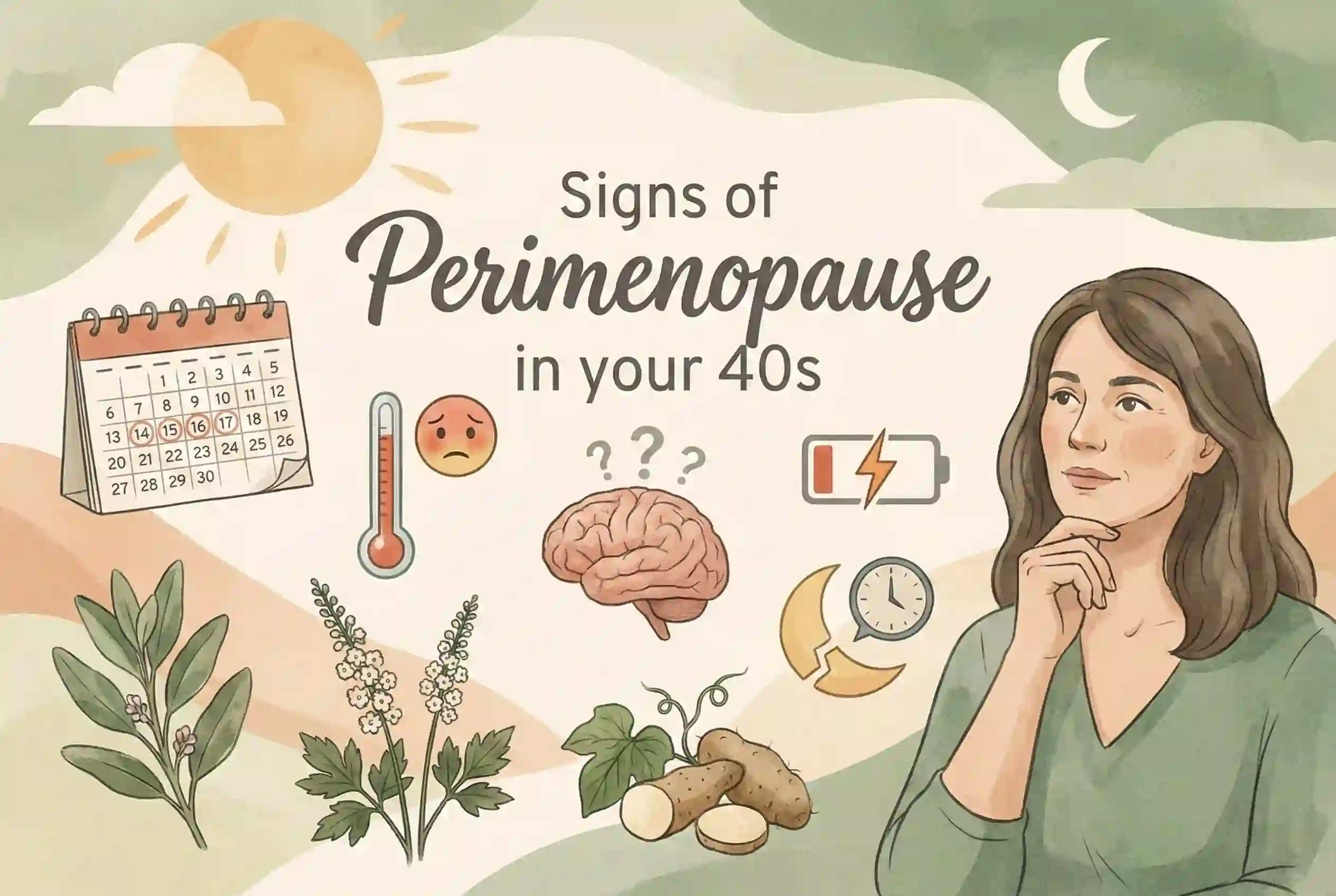
I hear some version of this at least once a week: “I don’t know if I’m going crazy, or if it’s stress, or if something’s actually wrong.” The woman sitting across from me (virtually, these days) is describing periods that have gone haywire, sleep that’s fallen apart, and a mood that swings from fine to furious over nothing. She’s in her early 40s. She’s perimenopause, and she had no idea it could start this young.
Here’s what I wish more women knew: perimenopause often begins in your late 30s or early-to-mid 40s. It’s not something that suddenly appears at 50. And those symptoms you’ve been dismissing as stress or poor sleep or just getting older? They might be hormonal, and there are practical, evidence-based ways to manage them.
This article walks through the real signs of perimenopause, why they happen, and when it’s worth getting support rather than white-knuckling through.
What Actually Is Perimenopause?
Perimenopause is the transition phase before menopause. Menopause itself is defined as 12 consecutive months without a period. Perimenopause is everything leading up to that point, and it can last anywhere from 4 to 10 years.
During this time, your ovaries gradually produce less oestrogen and progesterone, but the decline isn’t smooth. Hormones fluctuate wildly, sometimes surging, sometimes dropping, rarely staying steady. This unpredictability is why symptoms can feel so confusing and inconsistent.
One month you might have a textbook cycle. The next, you skip a period entirely or bleed for two weeks straight. Your body is recalibrating, and it’s rarely a gentle process.
The Signs Most Women Notice First
Period Changes
This is usually the first red flag. Your periods might become:
- Shorter cycles (21-24 days instead of your usual 28-30)
- Longer cycles (35+ days, or skipping months entirely)
- Heavier bleeding with clots
- Lighter, shorter periods
- Completely unpredictable
Why this happens: As ovulation becomes irregular, progesterone levels drop. Without enough progesterone to balance oestrogen, the uterine lining can build up unevenly, leading to heavier or more erratic bleeding.
Important note: Heavy bleeding that soaks through a pad or tampon every hour, or bleeding that lasts longer than 7-8 days, should be checked by your GP to rule out other causes like fibroids or polyps.
Sleep Disruption
Many of my clients describe waking around 3am, wide awake and wired, unable to fall back asleep. Or they struggle to fall asleep in the first place, even when exhausted. Others wake feeling like they haven’t slept at all, despite being in bed for 8 hours.
The progesterone connection: Progesterone has a calming, sedative effect on the nervous system. When it drops, sleep architecture falls apart. Add in fluctuating cortisol and the occasional night sweat, and you’ve got a recipe for broken sleep.
This compounds everything else. When you’re not sleeping, mood tanks, concentration suffers, and resilience disappears.
If sleep disruption is a major issue for you, we cover this in detail on our energy and fatigue page.
Mood Shifts
One client described it perfectly: “I feel like I’ve lost my shock absorbers.” Things that wouldn’t normally bother her, minor frustrations with her partner or kids, now set her off. She’s tearful over nothing. Flat when she used to feel engaged.
This isn’t depression, though it can look similar. And it’s not just stress, though stress makes it worse. It’s biochemical. Oestrogen influences serotonin, dopamine, and GABA (your calming neurotransmitter). When oestrogen fluctuates, so does your mood.
Key Point:
Perimenopause symptoms aren’t “all in your head.” Hormonal fluctuations have real, measurable effects on neurotransmitters, sleep architecture, and metabolic function. Recognising this helps you address the root cause rather than just managing symptoms in isolation.
The Physical Symptoms That Catch People Off Guard
Hot Flushes and Night Sweats
These are the stereotypical perimenopause symptoms, but not everyone gets them, and they don’t always look the way you’d expect. Some women experience intense heat that rises from the chest to the face, leaving them drenched in sweat. Others get milder warmth that’s more annoying than debilitating.
Night sweats can wreck sleep. You wake up soaked, throw off the covers, then get cold and pile them back on, only to repeat the cycle an hour later.
Why they happen: Oestrogen influences the hypothalamus, your body’s thermostat. When oestrogen drops, the hypothalamus misfires, interpreting normal body temperature as overheating and triggering a cooling response.
If hot flushes or night sweats are making life difficult, we have specific pages on hot flushes and night sweats with practical strategies.
Brain Fog and Poor Concentration
Forgetting words mid-sentence. Walking into a room and having no idea why you’re there. Losing your train of thought during meetings. Reading the same paragraph three times and retaining nothing.
This is common in perimenopause, and it’s linked to oestrogen’s role in cognitive function and neuroplasticity. It’s frustrating, especially if you’ve always prided yourself on mental sharpness.
For more on this, see our brain fog page.
Energy Crashes
Not just tired. Bone-deep, hit-a-wall-at-2pm fatigue. The kind where you could cry at the thought of cooking dinner or making one more decision.
Sleep disruption plays a role here, but so does thyroid function (which can shift during perimenopause) and adrenal health. If you’ve been running on stress hormones for years, perimenopause can be the straw that breaks the camel’s back.
We work with this extensively. See our chronic fatigue page for more.
Weight Changes
Particularly around the middle. Even if your diet and exercise haven’t changed, your body composition shifts. Oestrogen influences where fat is stored, and as it declines, more fat deposits around the abdomen.
Insulin sensitivity can also drop during perimenopause, making blood sugar regulation harder. This isn’t about willpower or eating less. It’s metabolic.
Our weight management page covers this in more detail.
Joint Aches
New stiffness in the mornings. Soreness in your hips, knees, or fingers that seems to come from nowhere. Oestrogen has anti-inflammatory properties, so as it declines, inflammation can increase, particularly in joints.
The Emotional and Mental Load
Anxiety That Feels New or Worse
Racing thoughts at night. Physical tension in your chest or stomach. Worrying about things that wouldn’t normally bother you. Some women experience their first panic attack in their 40s and have no idea why.
Oestrogen influences GABA, your primary calming neurotransmitter. When oestrogen drops, GABA function can drop with it, leaving you feeling wired and anxious even when there’s no obvious stressor.
If anxiety is a major symptom, our anxiety and stress page has targeted strategies.
Feeling “Not Yourself”
This is harder to describe but very real. A sense that something has shifted. You don’t feel like the person you were a year ago. Your tolerance is lower, your patience thinner, your confidence shakier.
Clients often say, “I just don’t feel like me anymore.”
That’s valid. Hormones influence personality, mood regulation, and stress resilience. When they’re all over the place, you can feel unmoored.
Reduced Stress Tolerance
Things that used to roll off your back now feel overwhelming. Minor disruptions, your partner leaving dishes in the sink, kids arguing, work emails after hours, hit harder than they should.
This isn’t about being dramatic or overreacting. Your nervous system is genuinely less resilient when sleep is broken, hormones are fluctuating, and cortisol regulation is compromised.
Loss of Confidence or Decisiveness
Second-guessing yourself more than usual. Struggling to make decisions that would normally be straightforward. Feeling less certain about your abilities or your place in the world.
This can be particularly hard for women who’ve always been capable and self-assured. It feels like regression, but it’s temporary and manageable with the right support.
Quick Reality Check:
If you’re in your early-to-mid 40s and experiencing several of these symptoms, especially if they started gradually over the past year or two, perimenopause is very likely. Blood tests aren’t always reliable at this stage because hormone levels fluctuate so much, but clinical signs tell the story.
Why Some Women Breeze Through and Others Struggle
This is a question I get constantly: “Why is my friend fine and I’m falling apart?”
Several factors influence how you experience perimenopause:
- Genetics and individual hormone patterns: Some women have a gentler decline. Others experience more dramatic swings.
- Adrenal health and stress levels: If you’ve been chronically stressed for years, your adrenals may struggle to pick up the slack when ovarian hormone production drops.
- Lifestyle factors: Sleep quality, nutrition, movement, and alcohol intake all influence how symptoms manifest.
- Pre-existing health conditions: Thyroid issues, blood sugar imbalances, or gut dysfunction can intensify perimenopause symptoms.
Here’s what’s important: you’re not doing it wrong if you’re struggling. This isn’t about discipline or toughness. It’s about biology, and everyone’s biology is different.
When to Actually See Someone
You don’t have to wait until symptoms are unbearable. In fact, earlier intervention often means easier management.
Consider getting support if:
- Symptoms are affecting your work, relationships, or daily function
- You’re unsure whether it’s perimenopause, thyroid issues, anaemia, or something else
- You want to be proactive rather than wait it out
- You’ve tried basic lifestyle changes (better sleep, less caffeine, more movement) and they haven’t been enough
What About Testing?
Hormone testing during perimenopause can be tricky. Levels fluctuate so much day to day that a single blood test might not capture what’s happening. That said, testing can be useful to rule out other issues (thyroid, iron, vitamin D) or to get a baseline if you’re considering hormone therapy.
In a naturopathic consultation, we focus on clinical signs, symptom patterns, and your health history as much as (or more than) lab results. See our how it works page for what to expect.
What Actually Helps (From 12+ Years of Client Work)
I’m going to be honest: there’s no magic bullet. But there are strategies that work consistently, and most women feel significantly better within weeks to months when we get the foundations right.
Foundations First
Sleep hygiene becomes non-negotiable. This means:
- A cool, dark room
- Consistent bedtime and wake time
- No screens an hour before bed
- Managing blood sugar to avoid 3am cortisol spikes
Blood sugar balance influences energy, mood, and weight. Eating protein and fat with every meal, avoiding long gaps between eating, and reducing refined carbs makes a measurable difference.
Stress management doesn’t mean bubble baths and candles (though those are nice). It means addressing chronic stress, setting boundaries, and supporting your nervous system through breathwork, movement, or vagal tone exercises.
Herbal Support
Certain herbs have strong evidence for perimenopause symptoms:
- Black cohosh for hot flushes and mood
- Sage for night sweats
- Withania (ashwagandha) for stress resilience and sleep
- Vitex (chaste tree) for supporting progesterone in early perimenopause
- St John’s wort for low mood (with caution around medication interactions)
These aren’t one-size-fits-all. Prescribing depends on your specific symptoms, health history, and any medications you’re taking. See our herbal medicine page for more.
Nutritional Strategies
Specific nutrients support hormone metabolism and symptom management:
- Magnesium for sleep, muscle tension, and mood
- B vitamins for energy and neurotransmitter production
- Vitamin E for hot flushes
- Omega-3 fatty acids for inflammation and brain function
- Zinc for immune function and hormone balance
Again, dosing and form matter. Generic multivitamins rarely cut it. Targeted supplementation based on your needs is more effective.
Our nutrition and dietetic page covers dietary strategies in detail.
Lifestyle Adjustments
Some things matter more in perimenopause than they did in your 30s:
- Movement: Strength training helps maintain muscle mass and bone density. Gentle movement supports stress regulation.
- Alcohol: Tolerance often drops. What used to be fine (a glass of wine most nights) now disrupts sleep and worsens hot flushes.
- Caffeine: Can exacerbate anxiety and sleep issues. Many women find they need to cut back or switch to decaf after midday.
These aren’t fun truths, but they’re practical ones. Small adjustments often have outsized impact.
When to Consider HRT
Hormone replacement therapy (HRT or MHT) can be incredibly effective for some women, particularly for hot flushes, night sweats, and sleep disruption. It’s not either/or. Many of my clients use HRT alongside naturopathic support.
If you’re considering HRT, talk to your GP or a women’s health specialist. And know that natural support can work alongside it to address areas HRT doesn’t fully cover (like stress resilience, gut health, or inflammation).
Realistic Expectations
You’re not going to feel 25 again. That’s not the goal. The goal is to feel functional, resilient, and more like yourself. To sleep through the night. To have energy for your day. To not snap at your family over nothing.
Most women notice meaningful improvement within 4-8 weeks when we get the approach right. It’s about managing symptoms, not eliminating them overnight.
Worth Remembering:
Perimenopause is a transition, not a medical emergency. But you don’t have to suffer through it just because it’s “natural.” Natural doesn’t mean pleasant, and there’s no virtue in unnecessary discomfort. Support exists, and it works.
Final Thoughts
If you’re in your 40s and recognising yourself in this article, you’re not imagining it. You’re not overreacting. And you’re certainly not alone.
Perimenopause can feel like your body has turned on you, but with the right support, most women find it manageable. The earlier you address symptoms, the easier they are to work with.
I’ve worked with hundreds of women through this transition. The ones who do best are the ones who get support early, who address foundations alongside targeted interventions, and who give themselves permission to prioritise their health.
You don’t need to have all the answers right now. You just need to start.
If you’d like personalised support, book a consultation. We’ll work through what’s happening, why, and build a practical plan that fits your life.