After 12 years in practice, I’ve learned that honesty matters more than selling a perfect picture. And here’s the thing: if someone tells you naturopathy is the answer to everything, run the other way.
I’m writing this because prospective clients deserve to know what they’re signing up for. A few years back, a client asked me point-blank during our first consultation: “What won’t this help with?” That question changed how I practice. She wasn’t being difficult, she was being smart. She’d already been burned by overpromising practitioners and wanted the truth upfront.
So let’s talk about the real limitations, misconceptions, and practical challenges I see regularly. Not because naturopathy doesn’t work (when applied appropriately, it genuinely helps), but because you deserve to make an informed decision with your eyes wide open.
It takes time (and that’s frustrating)
There are no quick fixes in naturopathy. Unlike grabbing antibiotics for an infection or painkillers for a headache, naturopathic protocols unfold over weeks and months. We’re not suppressing symptoms, we’re addressing underlying patterns, and that takes time.
I had a client with IBS who nearly quit after two weeks because “nothing was happening.” She was exhausted, frustrated, and ready to give up. I talked her into sticking it out for another month. By week six, she noticed she could eat dinner without planning her evening around bathroom access. By week twelve, she’d forgotten what daily bloating felt like.
But here’s the hard part: those first few weeks required patience she didn’t think she had. Weekly check-ins, gradual adjustments, tracking her responses to different foods and supplements. It’s not passive. It’s not quick. And sometimes, that’s genuinely a problem.
If you’re dealing with an acute situation where you need immediate relief, naturopathy probably isn’t your first port of call. Severe infections, acute injuries, sudden onset symptoms… sometimes you genuinely need conventional medicine first, naturopathy second. I’ve never pretended otherwise.
It’s not covered by Medicare
Let me be blunt: consultations typically run $120 to $180, and that’s not government subsidised. Then there are quality supplements, functional testing if needed, and follow-up appointments. It adds up quickly.
This impacts young families hardest. People on fixed incomes. Anyone managing chronic conditions long-term. Some private health funds offer rebates, but it’s limited and varies wildly depending on your level of cover.
I’ve watched brilliant treatment plans fall apart because clients couldn’t sustain the cost. They’d do well for two months, see real improvement, then have to stop because the financial reality caught up. It’s heartbreaking, and pretending money doesn’t matter does nobody any favours.
If you want context on what exactly does a naturopath do and what you’re actually paying for, that might help you decide if the investment makes sense for your situation. But the reality remains: this is the biggest barrier I see, and it’s a legitimate one.
The evidence base is patchy
Let’s acknowledge the elephant in the room. Not everything we use in naturopathy has gold-standard research backing it. That’s just the truth.
Why does that happen? Funding priorities tend to favour pharmaceutical research. You can’t patent a herb, so there’s less financial incentive to study it. Individualised treatment is complex to research in standardised trials. These aren’t excuses, they’re explanations.
Some things do have solid evidence: specific nutrients for specific conditions (like magnesium for migraines, zinc for immune function), certain herbal medicines (St John’s wort for mild to moderate depression, ginger for nausea), dietary interventions (low FODMAP for IBS, Mediterranean diet for cardiovascular health).
Other things are more theoretical: some traditional uses passed down through generations, certain combination protocols that make sense clinically but haven’t been formally studied.
How do I navigate this? I lean on what’s well-researched where possible. I’m upfront about evidence gaps. I never claim certainty I don’t have. But I understand that some people find this uncertainty uncomfortable, and fair enough. If you need everything backed by multiple randomised controlled trials before you’ll consider it, naturopathy might frustrate you.
Quality control varies wildly
Here’s what keeps me up at night: training standards for naturopaths differ enormously. Someone can complete a weekend course and call themselves a naturopath. Someone else might have a four-year degree. To the public, we look the same.
Look for degree qualifications (like my BHSc in Naturopathy), professional memberships with actual standards (ATMS, ANTA), and an evidence-informed approach. Check if they’re actually legally practicing in Australia with proper professional indemnity insurance.
Then there’s the supplement issue. Not all products are created equal. Some are frankly rubbish, with poor absorption, contaminants, or dosages that won’t do anything.
A client came to me taking 14 different supplements prescribed by her previous practitioner. Fourteen. When I asked about the rationale for each one, she had no idea. Neither did I when I looked at the combination. It was expensive, overwhelming, and probably doing very little.
This drives me mad because the few practitioners who overpromise and over-prescribe make it harder for everyone else. You need to do your homework on who you’re seeing, and you shouldn’t have to, but you do.
It’s not a substitute for emergency care
This should be obvious, but it’s worth stating clearly: naturopathy won’t fix a broken bone, stop anaphylaxis, or treat acute appendicitis.
Less obvious examples: undiagnosed chest pain, sudden vision changes, severe infections, high fever in a young child. These need immediate medical assessment, not a naturopathic consultation.
A few years ago, a client booked in for “digestive issues.” Within ten minutes of our consultation, I stopped her and said, “I need you to see your GP today, not next week, today.” The pain pattern she described, the location, the sudden onset… it didn’t sound like something I should be treating. Turned out she needed surgery. That’s not my area. That’s not naturopathy’s area.
The best outcomes often come from working alongside conventional medicine, not instead of it. I support clients through chemotherapy, help manage medication side effects, address what pharmaceuticals don’t cover. But client safety always trumps professional ego, and knowing when to refer out is part of doing this job properly.
Lifestyle changes are non-negotiable
You can’t supplement your way out of chronic stress and terrible sleep while expecting miracles. I see this all the time: clients wanting the magic pill approach, just using herbs instead of drugs.
Naturopathy requires active participation. Sleep habits matter. Stress management matters. Movement matters. What you eat matters. I can create the perfect protocol on paper, but if you don’t implement it, nothing happens.
The clients who get frustrated are usually the ones hoping for passive treatment. They want me to fix them without them having to change anything. That’s not how this works.
But when it works beautifully? It’s the people ready to make changes who just need guidance and accountability. Someone who says, “I know I need to sort out my sleep, I just don’t know where to start,” is going to do better than someone who says, “Just give me something to take so I don’t have to think about it.”
Results aren’t guaranteed (even when you do everything right)
This is uncomfortable to admit, but bodies are complex and individual responses vary enormously. I’ve had two clients with similar PCOS presentations, given them identical protocols, and seen completely different outcomes. One regulated her cycle within three months. The other saw minimal change after six.
Genetics play a role. Environmental exposures we can’t control. Undiagnosed underlying conditions. Stress levels that fluctuate. So many factors outside our influence.
This is why I never promise specific results in specific timeframes. I can’t. Nobody honestly can. And watching someone invest time and money without the breakthrough they hoped for is hard for both of us.
What do I do when it’s not working? Reassess. Test differently. Refer to specialists. Sometimes admit we’ve hit my limits. That’s the honest approach, even if it’s not the profitable one.
Whether you’re dealing with stress and mental health, digestive issues, or women’s health concerns, the uncertainty remains the same. Some people respond beautifully. Some don’t. We work with what we’ve got and adjust as we go.
You might not gel with the holistic philosophy
Not everyone wants to explore root causes. Some people just want symptom relief, full stop. They’re not interested in discussing why the symptom exists or what else might be connected.
There’s also what some people call the “woo” factor. Aspects of holistic health can feel too alternative for certain personalities. If you’re naturally skeptical about anything that isn’t strictly pharmaceutical, you’re probably going to find naturopathy frustrating.
The whole-person approach means I’ll ask about your sleep, your relationships, your work stress, not just your physical symptoms. That requires energy and openness that not everyone has or wants to give.
I had a client who thrived with a straightforward medical approach. She found our consultations overwhelming, too many questions, too much to think about. She needed clear instructions and minimal discussion. That’s completely valid, but naturopathy wasn’t the right fit for her worldview.
Better to know this upfront than persist with something that doesn’t suit how you want to approach your health.
It can enable avoidance of necessary conventional treatment
This is the dangerous side of naturopathy, and I take it seriously. Sometimes people use natural medicine to delay or avoid needed medical intervention.
I’ve seen uncontrolled diabetes where someone refused medication because they wanted to “do it naturally.” Undiagnosed thyroid conditions getting worse while someone took iodine supplements instead of getting proper testing. Mental health crises where someone needed psychiatric support but was trying to manage with herbs alone.
Why does this happen? Fear of pharmaceuticals. Previous negative medical experiences. Genuine mistrust of doctors. I get it, but it doesn’t make it safe.
My responsibility includes screening for red flags and insisting on medical assessment when appropriate. Understanding how naturopathy works alongside conventional medicine, not instead of it, is crucial.
Naturopathy shines when supporting you through conventional treatment, managing side effects, and addressing what medication doesn’t cover. It’s not meant to replace essential medical care, and practitioners who suggest otherwise are doing real harm.
Misinformation is rampant
Every wellness influencer with a podcast has opinions about what you should be taking. One practitioner says avoid lectins. Another says that’s complete nonsense. Clients arrive confused, overwhelmed, having tried 47 different protocols they found on Instagram.
I spend a surprising amount of consultation time unpicking misinformation and explaining why that viral TikTok about parasite cleanses is misleading at best, dangerous at worst. It’s exhausting, and it makes the whole field look less credible.
From your perspective as a potential client, it’s hard to know who to trust when everyone sounds authoritative. Someone with a weekend certificate and someone with a degree can both have professional-looking websites and confident social media presences.
My approach is evidence-informed, transparent about uncertainty, and I’m willing to say “I don’t know” when that’s the honest answer. But I understand why that’s less appealing than someone promising they have all the answers.
So should you try naturopathy or not?
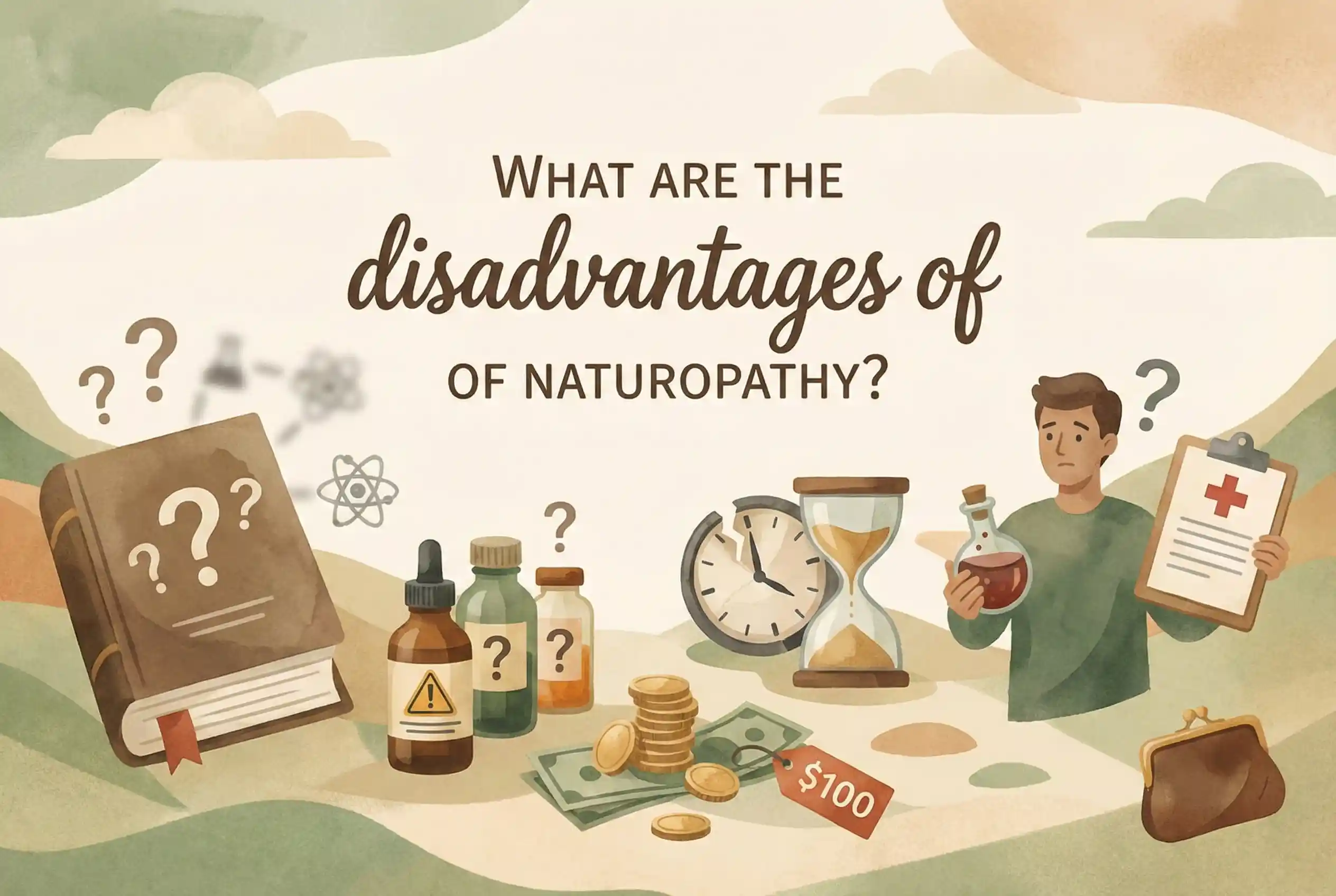
Look, naturopathy has real limitations. It’s not right for everyone. It takes time, costs money, requires active participation, and doesn’t guarantee results.
But here’s why I still practice despite these disadvantages: when it works, it genuinely helps. I’ve watched people reclaim their energy after years of fatigue. Seen digestive systems settle after decades of problems. Supported women through hormonal transitions that conventional medicine wrote off as “just something you have to deal with.”
The ideal scenario is using naturopathy as part of an integrated approach, not the only approach. Work with your GP. See specialists when needed. Use naturopathy to fill the gaps, support the process, and address the underlying patterns.
Who does naturopathy suit? People ready for gradual change. People willing to invest time and money. People comfortable with some uncertainty and an individualised approach.
Who doesn’t it suit? Anyone wanting guaranteed fast results. Anyone wanting passive treatment where you just take something and don’t have to think about it. Anyone who needs everything backed by ironclad research before they’ll consider it.
Better to go in with clear eyes than discover these limitations three months and $1,500 later.
If this hasn’t scared you off and you want realistic, evidence-informed support, you can book a consultation. But I’d rather lose a potential client by being honest than gain one through overpromising.
You deserve to know what you’re getting into. These are the disadvantages. Now you can make an informed choice.