
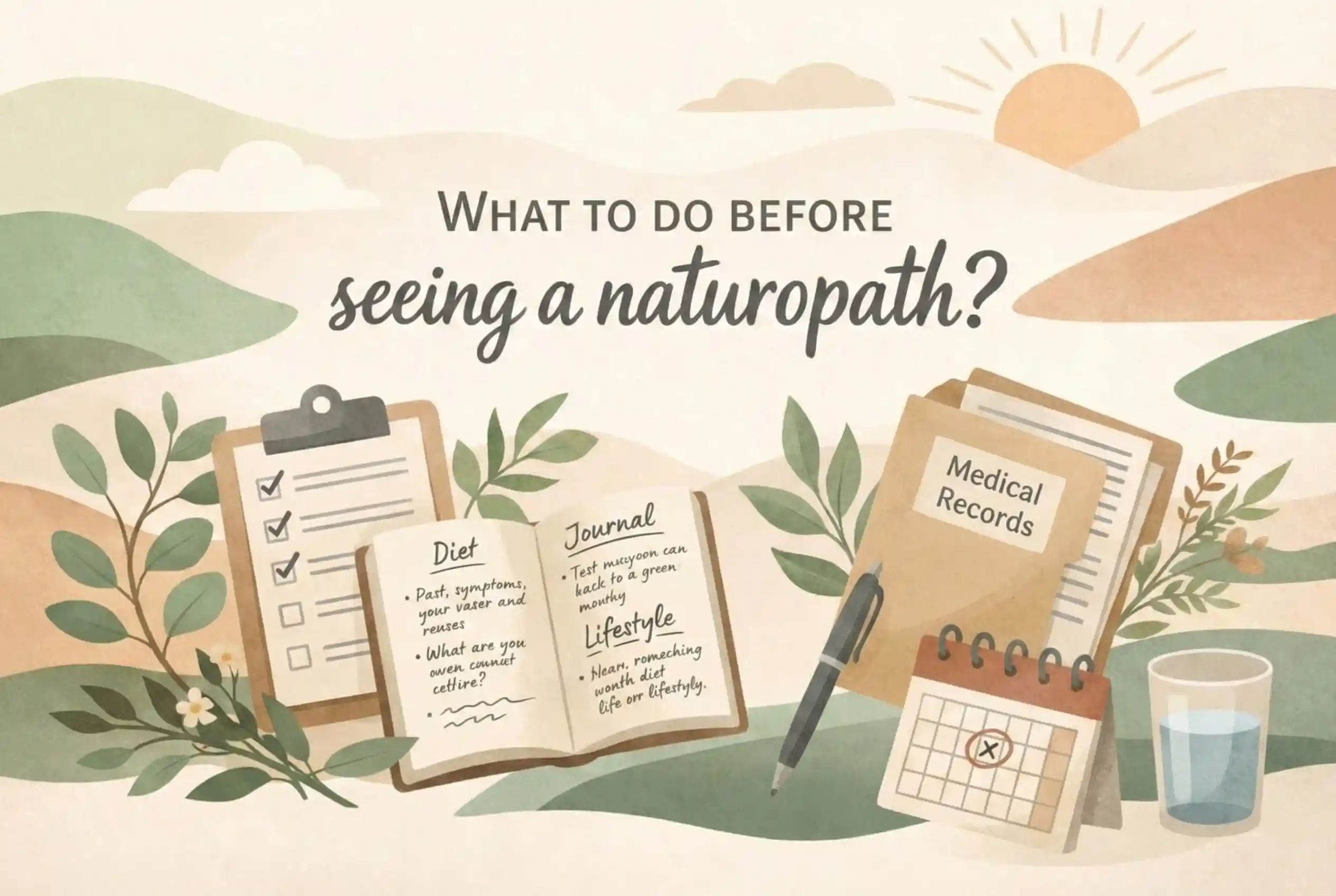
If you’re preparing for your first naturopathy consultation and it’s happening online, you might be wondering what to expect and how to make the most of it. Online appointments have become the norm for many of us, and honestly, they work brilliantly for naturopathy. You get the same thorough assessment, personalised recommendations, and ongoing support without the commute or juggling parking.
That said, a bit of preparation goes a long way. Not because you need to impress anyone or have everything perfectly organised, but because it helps our conversation flow naturally and ensures we cover what matters most to you. Think of it as setting yourself up for a productive chat rather than ticking boxes on a checklist.
Gather Your Health Timeline
Start by jotting down your current symptoms and how long you’ve been dealing with them. Include anything that feels relevant: previous diagnoses, health events (even if they seem unrelated), family health history, and treatments or therapies you’ve tried in the past. If you’ve had recent blood tests, scans, or specialist reports, keep those handy too. You can upload or email them before our appointment.
I remember working with a client who came to me for persistent fatigue. During our first chat, she mentioned in passing that she’d had glandular fever about five years earlier. That seemingly old news turned out to be a crucial piece of the puzzle. Her body had never fully recovered from the viral infection, and it was still affecting her immune function and energy production. Without that detail, we might have spent weeks looking in the wrong direction.
The point isn’t to arrive with a perfectly polished medical history. It’s about giving me the full picture so I can connect dots you might not see yourself.
List Your Current Medications and Supplements
Write down everything you’re taking: prescription medications (with names, doses, and how often), over-the-counter medications you use regularly, and all supplements, vitamins, or herbal products. If you’re using topical treatments or creams that relate to your health concern, include those too.
Here’s a practical tip that saves time: the day before your appointment, take a photo of all your bottles and packets. Or create a quick note on your phone with everything listed. You’d be surprised how easy it is to forget that magnesium powder you take most nights or the antihistamine you’ve been using for months.
This information matters because it helps me make safe, personalised recommendations. Some supplements interact with medications. Others might overlap with what I’d suggest, or they might not be the right form or dose for your situation. Knowing what you’re already taking means we can build on what’s working and adjust what isn’t.
Track Your Patterns for a Week (If Possible)
If you have a week or so before your appointment, spend a bit of time noticing patterns. How’s your energy throughout the day? What’s your sleep like (quality and duration)? Any digestive patterns worth mentioning, like bloating, constipation, or irregular bowel movements? Mood fluctuations? Pain levels or triggers that make your symptoms worse or better?
You don’t need a perfect journal or detailed spreadsheet. Even rough notes or mental observations are genuinely helpful. I’m not looking for what you think you should be experiencing. I want to know what’s actually happening in your day-to-day life.
If you’re dealing with specific concerns like digestive issues or ongoing fatigue, tracking can reveal patterns you hadn’t consciously noticed. Sometimes the timing of symptoms tells us as much as the symptoms themselves.
Think About Your Goals and Priorities
Take a few minutes to consider what success would look like for you. In three months, what would need to change for you to feel this was worthwhile? In six months? What’s bothering you most right now? Are you hoping to reduce reliance on certain medications, prevent flare-ups, or simply understand what’s going on with your body?
Also think about lifestyle factors. What are you genuinely willing to work on, and what are your absolute non-negotiables? There’s no judgment here. I need to know your real life, not an idealised version of it.
I once worked with a client who was dealing with chronic stress and poor sleep. She was honest from the start: overhauling her diet felt completely overwhelming given her work schedule and young kids. But she was willing to focus on sleep hygiene and stress management techniques. Because she was upfront about her priorities, we built a plan that actually fit her life. She made steady progress without the guilt and frustration that comes from trying to do everything at once.
Being honest about what you can and can’t manage right now leads to better, more sustainable outcomes. I’d rather you stick with three realistic changes than abandon ten ambitious ones after a fortnight.
Set Up Your Tech and Space
Before your appointment, test whatever video platform we’ll be using (Zoom, a telehealth portal, or similar). Make sure you know how to join the call and that your camera and microphone work. Choose a quiet, private space where you can talk openly without interruptions. Have a notepad or your phone ready for jotting down recommendations during our chat.
Charge your device or keep it plugged in so we don’t lose connection mid-conversation. If you can, set yourself up with decent lighting, but honestly, don’t stress about being camera-perfect. You’re not being judged on your setup or your appearance. The focus is entirely on you and your health.
Prepare Your Questions
Write down anything you’re unsure about or curious about. Questions about testing options, treatment approaches, timelines, costs, or clarifications about your condition are all fair game. If you’ve come across conflicting information online (and let’s face it, who hasn’t?), bring that up too.
There are no silly questions. If something’s on your mind, it’s worth discussing. I’d rather spend time addressing your concerns than have you leave the appointment wondering about something you didn’t ask. You can check out common questions on the FAQ page if you want a starting point, but don’t limit yourself to what’s already there.
Be Ready to Discuss Lifestyle Honestly
We’ll talk about your typical diet and eating patterns, exercise habits (or lack thereof, genuinely no judgment), stress levels and how you cope, your work schedule and other commitments, and social support or living situation if it’s relevant to your health.
Here’s the thing: this is a no-judgment zone. I need to understand your real life, not a polished version of what you think I want to hear. If your diet is mostly convenient meals because you’re time-poor, tell me. If exercise feels impossible right now, say so. If your stress levels are through the roof and you’re barely holding it together, I need to know that.
Honesty helps me create recommendations that actually fit your circumstances. There’s no point suggesting meal prep Sundays if you work weekends. There’s no point recommending a 6am yoga routine if you’re not a morning person and never will be. Meeting you where you’re at is the whole point.
Know Your Logistics
If you’re planning to claim through your health fund, have your details ready. Know whether you’re eligible for rebates and how the claiming process works (some providers offer HICAPS for instant claims, others require manual claiming). Check what payment methods are accepted and familiarise yourself with the cancellation policy in case you need to reschedule.
You can find information about costs and rebates on the pricing page, but feel free to ask questions about this during our appointment if anything’s unclear.
What You Don’t Need to Do
Let’s be clear about what you don’t need to do before your appointment.
You don’t need to “clean up” your diet beforehand. I’m not interested in seeing your best behaviour for a week. I need to know how you normally eat.
You don’t need to stop all your supplements before the appointment unless your GP has specifically advised you to. We’ll talk through what you’re taking and make adjustments from there.
You don’t need to have all the answers or know exactly what’s wrong. That’s my job to help figure out.
And you definitely don’t need to feel like you’re “good enough” to deserve support. You don’t need to earn the right to get help. Naturopathy works for people at every stage of health, from prevention to managing complex chronic conditions.
Your job is to show up as you are. My job is to meet you where you’re at and build from there.
What Happens During the Appointment
A typical first session usually follows a similar flow. We’ll start with your health history and current concerns. I’ll ask questions to explore your symptoms in detail: when they started, what makes them better or worse, how they affect your daily life. We’ll discuss potential contributing factors and start piecing together what might be going on.
From there, we’ll talk through treatment options and I’ll outline a personalised plan tailored to your situation and goals. This might include dietary changes, specific supplements or herbal medicine, lifestyle modifications, or recommendations for further testing if needed. We’ll also discuss next steps, follow-up timelines, and what you can expect as we move forward.
At the end, there’s always time for your questions. This is your appointment, so if something doesn’t make sense or you need clarification, speak up.
If you want more detail on what naturopaths actually do and how the process works, the How It Works page walks through the whole journey from first appointment to ongoing support.
After the Appointment
Within 24 to 48 hours after our session, you’ll receive a written plan summarising everything we discussed. This includes any supplement or product recommendations with clear instructions on how to take them, dietary or lifestyle suggestions, and the timeline for follow-up appointments.
You’ll also have a clear contact method if questions come up between appointments. Sometimes things only occur to you after you’ve had time to process, and that’s completely normal.
Ready to Take the First Step?
Preparation definitely helps you get the most from your naturopathy appointment, but perfection isn’t required. The most important thing is taking that first step and being willing to work collaboratively on your health.
Whether you’re dealing with specific health conditions or simply want to feel better and understand your body more clearly, online consultations offer a practical, thorough way to get personalised support without leaving home.
If you’re ready to book your first appointment, head to the booking page and choose a time that suits you. I’m looking forward to working with you.